



Best Guide to Operating a Boom Lift on Sloped and Rough Terrain
Best Guide to Operating a Boom Lift on Sloped and Rough Terrain
Working on sloped or bumpy terrain is rarely simple, especially when the job needs a boom lift. The ground may feel stable at first glance, but hidden dips, loose soil or unexpected slope angles can turn a regular workday into a risky situation. For this reason, choosing the right equipment and using it the right way makes all the difference.
YILU LIFT, a manufacturer known for stable lifting platforms and practical engineering design, offers several boom lift options suited for uneven ground. This guide walks through the key things to know, from site checks to product selection to real-world operation tips, helping crews work safer and more efficiently in tricky terrain.
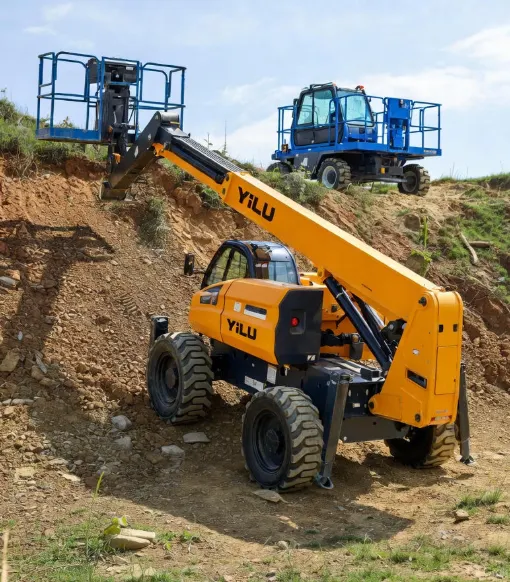
Why Does Slope Matter So Much in Boom Lift Operation?
Before a boom lift even lifts off the ground, the terrain already shapes how safe and smooth the job will be. And the slope angle often decides whether a machine can operate or must stay put.
Small changes in ground angle can shift the lift’s center of gravity more than expected. When the boom stretches outward, this shift gets even bigger. A slight miscalculation on a slope can reduce the rated capacity or affect the machine’s response to sudden movements.
Because of this, operators handling work on sloped and rough terrain need to think not only about how high the lift goes, but also about how the lift “sits” on the ground before the job even begins.
How Should a Worksite’s Slope and Ground Conditions Be Evaluated?
A good terrain evaluation gives the crew a clearer picture before the platform rises. This step helps avoid problems later, especially in unfamiliar outdoor environments.
Measuring the Slope Angle
The first step normally involves a basic inclinometer or digital angle reader. These tools reveal how steep the work area actually is—often steeper than it looks. Even a difference of two or three degrees may matter for certain boom lifts.
Understanding the Ground Type
After checking the angle, the crew should look closely at what’s underfoot. Dry gravel behaves very differently from damp soil or grass. Some surfaces compress under pressure; others may slide.
This matters because a fully extended boom applies significant force to the ground through wheels or outriggers.
Considering Weather and Moisture
Finally, the surface condition can change within hours. Rain softens soil, early-morning dew adds slipperiness, and wind creates movement in the upper boom sections. These small details help determine whether the lift can work safely or needs additional support pads or ground improvements.
Which YILU LIFT Products Suit Sloped and Rough Terrain Work?
Different terrains call for different equipment. YILU LIFT produces several boom lift models with features designed to deal with uneven ground. Each model works best in specific situations, and knowing this helps teams choose more confidently.
10–24m Towable Boom Lift
Towable boom lifts are popular for municipal jobs, tree trimming, or short-term rental tasks. YILU LIFT’s 10–24m model brings several useful features for work on mildly sloped or slightly uneven terrain.
Its torsion axle design keeps the wheels touching the ground more evenly compared with simple rigid axles, offering better balance when towing or setting up on irregular surfaces. The system includes a touch-screen control panel where the operator can set a maximum tilt limit—an extra safeguard that prevents the lift from rising if the angle is unsafe.
Multiple power options—AC, battery, gasoline, diesel—make this series flexible for open fields, outdoor maintenance roads, or locations far from convenient electricity. It performs well when crews need mobility and a platform that can be towed into narrow or awkward sites.
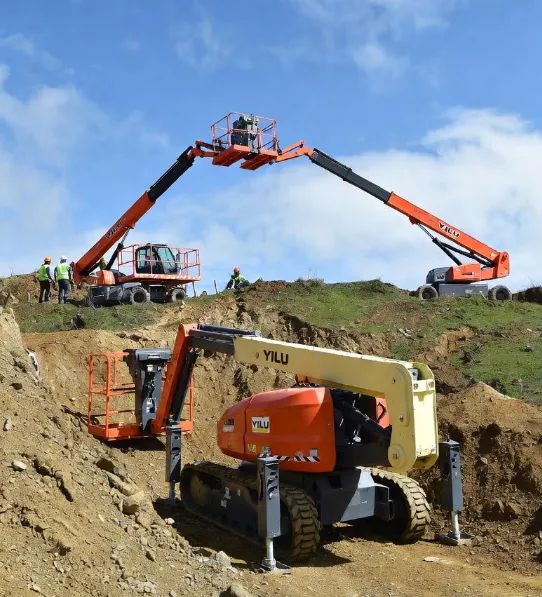
10–22m Crawler Boom Lift
For terrains that do not forgive mistakes—soft soil, steep slopes, farmland edges, construction sites with unpredictable ground—the crawler boom lift becomes far more suitable. The tracked chassis spreads weight over a wider area and grips uneven ground better than wheels.
YILU LIFT’s crawler boom models cover heights from about 12m to 22m with a 200kg platform capacity. The slightly compact platform design (0.9×0.7m or 0.8×1.2m, depending on the model) fits tight outdoor spaces, making it a solid choice for orchards, hillside construction and small agricultural structures.
The machine’s stability on broken or muddy terrain is its biggest advantage, allowing safe travel across areas where wheeled lifts might sink, slide or get stuck.
YILU BOOM LIFT Series (Standard Boom Lifts)
Standard auslegeraufzüge from YILU LIFT, such as the TBL-12A to TBL-24A, are general-purpose models for construction, maintenance and elevated installation tasks. These units typically include 360° rotation and a rotating platform, giving workers greater flexibility when obstacles limit access.
On sloped terrain, these models work best when the slope is modest and the ground is relatively firm. Many units include tilt alarms, emergency descent controls, and large outrigger footprints for better leveling. These lifts are a good match for city projects, building maintenance or industrial zones with mixed but not extreme terrain.
What Are the Key Steps Before Setting Up a Boom Lift on a Slope?
Even the best machine needs proper preparation. Setting up the lift correctly on an uneven worksite dramatically lowers the risk of mistakes later.
Ground Check and Setup Preparations
After identifying the slope angle and surface type, support pads may be placed under the outriggers or wheels if the soil seems soft. Although not required every time, this simple step helps spread weight more evenly.
Some YILU towable models allow operators to input a maximum tilt angle on the screen. This function helps prevent risky movements and adds another layer of safety during setup.
Proper Motion and Adjustment Techniques
Once the lift starts moving, smoother is always better. On a slope, sudden rotation or fast up-and-down movements can shift the machine more than expected. Keeping the boom slightly closer to the base also increases stability.
Crawler lifts offer a low-speed travel mode that becomes very helpful on rough terrain. The extra torque and gentle movement keep the tracks gripping the ground.
Safety Systems and Emergency Measures
Emergency down valves, tilt alarms, and limit switches act as the last line of protection. Operators should confirm these systems work before lifting. Training also plays a decisive role—knowing how to react to a slide, a sudden wind change, or an unexpected alarm may prevent accidents.
Regular checks on hydraulic lines, track tension, and axle components are also useful, especially when machines frequently operate on challenging surfaces.
Are There Real Cases That Show How These Lifts Perform?
Real-world scenarios bring the theory to life. On hillside orchard projects, crews often choose the 10–22m crawler boom lift because the tracked base stays steady on soft farmland. When trimming tall roadside trees along uneven slopes, teams prefer the 10–24m towable boom lift for its mobility and flexible control panel settings.
General building maintenance on sloped residential areas often uses standard boom lifts, especially where outriggers have enough space for wider footing. These examples show how each YILU model fills a different need in terrains that are far from flat.
What Maintenance Helps Keep Boom Lifts Safe on Uneven Ground?
Working day after day on rough or angled terrain puts extra strain on a boom lift. A consistent maintenance habit keeps the machine reliable.
It helps to regularly check the axles, track system, or wheel bearings for wear. Tilt sensors perform better when calibrated occasionally, especially after long transportation or intense outdoor use. Hydraulic oil, filters and seals also deserve scheduled inspection, since rough terrain usually causes more vibration.
Seasonal maintenance is also helpful. During rainy months, crawlers often pick up mud between rollers. In winter, rubber components harden and may need closer attention. Small habits like these extend the working life of the lift significantly.
Conclusion
Operating a boom lift on sloped or rough terrain doesn’t have to be risky or complicated. A careful look at the ground, the right machine match, and steady operating habits all contribute to safer work at height. YILU LIFT offers several choices—towable boom lifts, crawler boom lifts and standard boom models—each suited for different terrain challenges. With thoughtful preparation and the proper equipment, outdoor tasks on uneven surfaces become far more manageable and much safer for the whole crew.
FAQs
Q1: Which type of boom lift is best for steep or soft ground?
A: Crawler boom lifts work best on steep or soft terrain because their tracks spread weight and grip uneven surfaces more effectively.
Q2: Can a towable boom lift be used on sloped terrain?
A: Yes, but only on mild slopes. Towable models with tilt-limit settings and torsion axles, like those from YILU LIFT, improve stability on slightly uneven ground.
Q3: How often should boom lifts used on rough terrain be maintained?
A: Machines used frequently on uneven or rough surfaces should be inspected more often—ideally after each major project and with extra attention to axles, tracks, hydraulics and tilt sensors.
