



Can You Use Towable Boom Lifts on Uneven Ground? Safety Tips & Best Practices
Can You Use Towable Boom Lifts on Uneven Ground? Safety Tips & Best Practices
Towable boom lifts serve many purposes in tree trimming, structure upkeep, fixture setup, and open-air building tasks. A common query arises before gear reaches the location: is it safe to operate towable boom lifts on rough surfaces? The quick reply is affirmative, yet it requires picking the proper unit and adhering to essential safety measures.
Rough landscapes present genuine difficulties, since inclines, loose earth, pebbles, or half-paved spots can influence steadiness and elevation capability. This piece explains key concerns, preparation methods, and which YILU LIFT towable boom lift options fit these situations best.
What Are The Challenges When Using Towable Boom Lifts On Uneven Ground?
Operating on rough surfaces alters the way a boom lift functions. Before exploring fixes, it proves useful to grasp the main dangers and the reason smooth areas remain the top choice.
Equipment Stability Concerns
Steadiness stands as the primary worry on irregular land. Towable boom lifts depend on an even foundation to lift the arm and basket securely. If one edge drops below the rest, the load shifts unevenly, and this strains the frame, support legs, and mounting areas.
Minor elevation variations can become significant when the arm stretches out. For that reason, makers specify that units need leveling prior to use, particularly at greater elevations. Amid these issues, site readying holds as much weight as choosing the right equipment.
Ground Condition Factors
Rough surfaces do not always seem hazardous initially. Compacted soil, turf, stones, or blended areas might look firm, but they respond variably to weight. Following showers, dirt softens rapidly, stones can slide under force, and gentle inclines might turn perilous as the basket ascends.
Towable boom lifts deployed in open settings face such factors routinely. Inspecting surface solidity, water runoff, and incline degree aids in avoiding abrupt shifts while in use.
Risk Of Tip-Over And Operator Safety
Overturning poses the gravest threat during work on irregular terrain, and it often occurs if alignment skips happen, weight thresholds pass, or the unit relocates with the arm raised.
Worker protection relies on maintaining unit firmness constantly, which involves employing tether attachment spots, honoring load ratings, and avoiding pushes beyond intended limits. Rough ground offers slimmer margins for mistakes, so routines play a key role.
How Do You Prepare Towable Boom Lifts For Uneven Terrain?
Solid groundwork cuts hazards more effectively than any lone trait. Several basic actions performed ahead of use can render rough terrain controllable and foreseeable.
Pre-Use Site Assessment And Planning
Each assignment ought to begin with a swift area review. Spot inclines, yielding spots, buried gaps, or barriers that might block support legs. Gauging incline degrees assists in determining if alignment fits within unit boundaries.
Moreover, outlining entry paths counts too, because towable units require secure transport to spot before setup. Abrupt bends or shaky routes can spark problems well before elevation commences.
Proper Use Of Outriggers And Leveling Devices
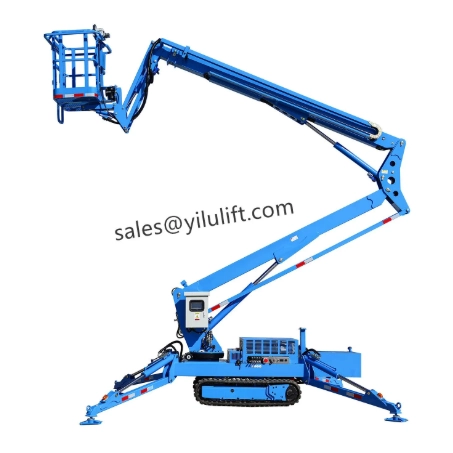
Support legs form the core of secure function on rough land, as they distribute weight and enable the frame to rest even when the base is not. YILU LIFT towable boom lifts come fitted with robust, adaptable support legs crafted for field tasks.
Placing leg pads or metal sheets beneath each base enhances hold and stops sinking. Alignment gauges demand constant verification before elevation starts. When the indicator strays, tweaks become mandatory rather than elective.
Operator Training And Lift Adjustment Techniques
Skilled workers understand how to gauge both the unit and the surface. Minor tweaks, gradual motions, and firm arm handling lessen abrupt load changes. Instruction also addresses halting tasks if situations shift.
Furthermore, gusts, climate, and soil shifts can transform a secure arrangement into a hazardous one, yet trained workers who spot these cues safeguard gear and personnel alike.
Which Towable Boom Lifts From YILU LIFT Are Suitable For Uneven Ground?
Not every towable boom lift handles tough land equally well. YILU LIFT provides variants engineered for field firmness, trustworthy fluid systems, and solid framing, rendering them useful for irregular locations.
10–24m Towable Boom Lift Features And Uneven Ground Adaptations
The 10–24m Towable Boom Lift from YILU LIFT suits demanding elevation needs, particularly in branch care, outer structure fixes, and road upkeep. Offering elevation up to 24 meters alongside weight capacities of 220 kg or 300 kg, this variant merges extension with command.
Additionally, its sturdy build, broad support span, and steady extending arm qualify it for rough land once aligned correctly. CE and ISO approvals indicate reliable construction, which counts during extended field shifts. Thus, for those seeking extension and adaptability, this variant manages varied land superior to numerous smaller options.

High End Mobile Towable Boom Lift Cherry Picker Advantages
The High End 10m / 14m / 18m Mobile Towable Boom Lift Cherry Picker serves as a solid pick for locations where room and base qualities fluctuate. Its smaller form permits entry to confined zones, whereas the leg arrangement style boosts surface touch.
These variants frequently apply to yard work, sign handling, and servicing where base types vary across one area. Fluid motion in systems and exact handling aid workers in functioning securely despite imperfect land. Consequently, the lineup gains favor among builders shifting across task varieties.
Comparisons Between 10m, 14m, And 18m Models For Rough Surfaces
Shorter elevation levels typically yield superior firmness on rough land. The 10m variant fits home zones and basic field duties. The 14m type extends reach yet retains a small base. Meanwhile, the 18m type provides extra height, though it calls for rigorous alignment adherence.
Selecting the fitting elevation minimizes dangers. Hence, overly large units employed without need on rough land generate extra hurdles instead of gains.
What Safety Practices Should Operators Follow On Uneven Ground?
Though the ideal unit matters, security hinges on routine behaviors. Steady protocols aid in stopping minor errors from escalating into major events.
Personal Protective Equipment And Position Awareness
Tethers, head covers, and suitable boots stay vital. On rough land, basket motion might sense altered, notably amid arm stretching. Workers ought to plant feet solidly and steer clear of reaching past barriers.
Besides, noting arm placement against incline orientation assists too. Stretching toward the decline heightens load alteration, whereas upward stretch could shrink the operational range.
Load Limits And Working Heights Considerations
Capacity ratings serve as firm guidelines. Implements, supplies, and personnel all factor into overall weight. On rough land, operating somewhat below the cap provides an extra safeguard.
Moreover, functioning at peak elevation warrants flawless alignment and mild breezes. Should firmness seem doubtful, descending the arm remains the wise choice.
Emergency Procedures And Safe Shutdown Steps
Workers must grasp methods to descend the basket swiftly and securely should fluid issues or soil shifts arise. Obvious halt controls and base commands require testing prior to tasks.
Additionally, powering off and restarting the unit post-relocation prevents hasty choices. Rough land calls for careful pacing over haste.
Why Choose YILU LIFT Products For Tough Jobsite Conditions?
YILU LIFT emphasizes functional units designed for actual field labor, beyond mere display figures. Such focus appears in build decisions and enduring dependability.
Durable Build And Certified Quality Standards
Robust metal frames, firm support legs, and reliable fluid setups let YILU LIFT towable boom lifts cope with varying base states. CE and ISO adherence further enables application in global ventures where security records prove essential.
Versatile Applications In Construction And Maintenance
Spanning branch cutting to storage outer fixes, YILU LIFT towable boom lifts adjust to diverse roles. Their pull ease facilitates simple shifts between sites, while assorted elevation choices match changing location demands.
After-Sales Support And Service Reliability
Steady backing counts when gear operates in field stress. YILU LIFT delivers expert advice, component access, and extended aid, assisting buyers in sustaining units securely and productively.
FAQ
Q1: Can towable boom lifts work on sloped ground?
A: Yes, but only when the lift is properly leveled using outriggers and the slope stays within manufacturer limits. Operating without full leveling increases tip-over risk.
Q2: Which YILU LIFT model is best for uneven outdoor terrain?
A: For higher reach, the 10–24m Towable Boom Lift offers strong stability. For mixed or tight spaces, the High End Mobile Towable Boom Lift Cherry Picker models perform well.
Q3: Is it safe to move a towable boom lift while elevated on uneven ground?
A: No. The lift should always be fully lowered before repositioning, especially on uneven or soft surfaces.
