



Tips for Operating Towable Boom Lifts on Uneven Surfaces
Tips for Operating Towable Boom Lifts on Uneven Surfaces
Working at height is never simple, and uneven ground makes it even more challenging. From landscaping projects to outdoor maintenance and construction work, towable boom lifts are often required to operate on surfaces that are far from flat. Small slopes, soft soil, gravel, or hidden dips can all affect machine stability and job safety. Understanding how to handle these conditions correctly plays a big role in keeping both operators and equipment protected.
This guide shares practical tips for operating towable boom lifts on uneven surfaces, while also explaining how the right equipment choice can reduce risk. Examples are based on YILU LIFT’s towable and crawler boom lift models, which are widely used in outdoor and rough-terrain jobsites.

Why Is Uneven Ground a Major Risk for Towable Boom Lift Operations?
Uneven terrain is one of the most common risk factors in aerial work, especially for towable equipment. Before looking at operation tips, it helps to understand why these surfaces cause problems in the first place. When a boom lift is raised, small ground issues quickly turn into big safety concerns.
Ground Instability and Load Distribution Challenges
On uneven surfaces, weight is rarely shared evenly across all contact points. A towable boom lift may look stable at ground level, but once the boom extends, pressure increases on certain outriggers or wheels. Soft soil or compacted gravel may slowly sink under load, changing the machine’s balance during operation.
This is why ground inspection matters just as much as machine inspection before starting work.
Increased Tip-Over Risk During Boom Extension
As the boom rises and reaches outward, the center of gravity shifts. On flat ground, this movement is predictable. On uneven terrain, even a small slope can increase side-load forces. If the boom is extended without proper leveling, the risk of tipping rises fast.
This risk is higher during sudden movements, quick rotation, or when stopping the boom too abruptly.
Hidden Surface Hazards in Outdoor Job Sites
Outdoor worksites often hide problems below the surface. Drainage channels, loose fill, buried cables, or old concrete edges may not be visible at first glance. These hidden hazards can cause outriggers to settle unevenly after lifting begins, not before. That is why visual checks alone are not enough when working on rough ground.
How Can Proper Equipment Selection Improve Stability on Uneven Surfaces?
Choosing the right boom lift for the terrain is often the first safety decision, long before any operation starts. Not all towable lifts behave the same once they leave smooth pavement.
Wide Outrigger Design for Enhanced Ground Contact
Towable boom lifts with wide hydraulic outriggers create a larger support footprint. This spreads machine weight more evenly and reduces pressure on any single point. YILU LIFT’s 10–24m Towable Boom Lift uses a strong outrigger layout that allows operators to adjust each leg individually, helping compensate for mild slopes or surface dips.
This setup is commonly used in tree work, landscaping, and outdoor lighting maintenance where ground conditions change from job to job.
Low Center of Gravity Structural Advantage
A lower center of gravity makes a big difference when working on uneven surfaces. Compact boom structures and balanced chassis design help reduce side sway during lifting. YILU LIFT designs its towable boom lifts with stability in mind, especially for outdoor tasks where level ground is not guaranteed.
Stable structure does not replace safe operation, but it gives operators more margin to work with.
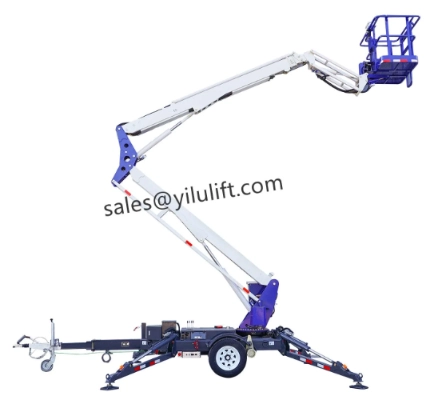
Matched Working Height and Load Capacity
Using more machine than needed is not always safer. Oversized lifts bring extra weight and higher reach, which can increase instability on rough terrain. Selecting a boom lift with a working height and platform load that matches the actual job helps keep forces under control.
For many outdoor tasks, the 10–24m working range offers enough reach without unnecessary size.
What Setup Practices Help Maintain Stability Before Lifting Begins?
Good operation starts before the boom ever goes up. Setup habits directly affect how stable the machine stays during work.
Correct Outrigger Positioning and Leveling Steps
Each outrigger should be placed on firm ground, with pads or solid plates used when necessary. Adjusting outriggers one by one helps achieve proper leveling instead of forcing the machine into position.
Many operators rush this step, but careful leveling is one of the most effective safety habits on uneven surfaces.
Surface Assessment Before Deployment
Walking the work area before positioning the lift helps identify soft spots, slopes, or underground risks. If the surface feels unstable underfoot, it will not improve once the boom is raised.
On questionable ground, extra support plates or repositioning the machine is usually the smarter choice.
Safe Boom Angle Planning
Before lifting, operators should plan how far and in which direction the boom will move. Extending directly uphill or downhill changes load behavior. Keeping movements slow and planned helps prevent sudden balance shifts once work begins.
When Should a Crawler Boom Lift Be Chosen Over a Towable Model?
Towable boom lifts are practical for many sites, but they are not always the best option. Some terrains demand a different approach.
Crawler boom lifts offer clear advantages when ground conditions become more challenging.
Tracked Chassis Adaptability to Soft Ground
Crawler boom lifts use rubber tracks that spread weight across a wider surface area. This reduces ground pressure and helps prevent sinking on soil, grass, or muddy ground. YILU LIFT’s 10–26m Crawler Boom Lift is often used in agriculture, landscaping, and undeveloped construction areas where wheeled machines struggle. Tracks allow stable travel without damaging the surface as much as tires.
Superior Traction on Slopes and Muddy Surfaces
Tracked movement improves grip on slopes and uneven terrain. This makes positioning safer and more controlled, especially when frequent repositioning is needed during work. Instead of towing and resetting outriggers, crawler lifts can move smoothly across the site.
Self-Propelled Movement Without Repositioning
Unlike towable models, crawler boom lifts are self-propelled. This means operators can adjust position without lowering the boom fully every time. On rough terrain, fewer repositioning steps often lead to safer and more efficient work.
What Operating Habits Reduce Safety Risks on Uneven Terrain?
Even with the right equipment, safe habits remain essential. Uneven surfaces demand more attention during every movement.
Controlled Boom Movement at Low Speed
Slow, steady movement reduces sudden load shifts. Fast rotation or quick stops can increase side forces, especially when the boom is fully extended. Smooth controls help keep the machine stable and predictable.
Maintaining Centered Platform Loads
Tools and materials should stay within the platform’s rated capacity and remain evenly placed. Side-loaded platforms increase tipping risk, especially on uneven ground. Keeping loads centered helps the boom lift behave as designed.
Continuous Monitoring of Ground Conditions
Ground conditions can change during the day due to rain, vibration, or repeated movement. Operators should keep checking outriggers and tracks during breaks and after repositioning.
If something looks off, stopping work early is better than pushing forward.
Conclusion
Operating towable boom lifts on uneven surfaces requires more than basic skills. It calls for proper equipment selection, careful setup, and steady operating habits. By understanding terrain risks and choosing machines designed for outdoor stability, jobsite safety improves naturally.
YILU LIFT’s towable and crawler boom lifts are built to handle real-world conditions, from soft soil to uneven ground, making them reliable options for outdoor aerial work. With the right planning and operation, uneven terrain does not have to mean unsafe work.
FAQ
Q1: Can a towable boom lift be used on slightly sloped ground?
A: Yes, as long as the slope is within the manufacturer’s limits and proper leveling with outriggers is completed. Extra support plates are recommended on soft ground.
Q2: When is a crawler boom lift a better choice than a towable model?
A: Crawler boom lifts are better for muddy, soft, or highly uneven terrain where towing and repeated leveling would be difficult or unsafe.
Q3: What is the most common mistake when operating on uneven surfaces?
A: Skipping proper ground inspection and rushing the leveling process. These two steps are often underestimated but play a major role in stability.


