



Articulating vs Telescopic Boom Lifts: Key Differences for Construction Projects
Articulating vs Telescopic Boom Lifts: Key Differences for Construction Projects
Introduction
Boom lifts serve as vital tools in current building work, site upkeep, and factory activities. These raised platforms boost output and staff protection during jobs up high. The top choices include articulating boom lifts and telescopic boom lifts. Each brings distinct build and use benefits for various work areas. This piece covers the main contrasts between these two kinds of boom lifts. It also guides on picking the best option for building jobs. That includes solid gear choices from YILU LIFT.
What Is a Boom Lift?
Basic Structure and Function
A boom lift acts as a raised work platform. It lifts staff, tools, and supplies to high spots. These spots are hard or risky to get to with steps or frames. The unit has a bottom part with wheels or tracks for easy movement. It includes a fluid-driven arm (boom) that stretches up or out. Plus, there is a deck or carrier at the tip where users stand.
Current boom lifts run on electric, diesel, or mixed power sources. The choice fits the planned work setting. Electric types suit inside areas well. They make no fumes and little sound. On the other hand, diesel units fit outside building spots better. Those need more strength and easy shifts. Smart control setups, quick drop features, and deck guard sensors add to safe use and smooth work at height. Many boom lift models offer these features for construction, maintenance, and industrial tasks.
Common Industries That Use Boom Lifts
Boom lifts see broad use in many fields:
- Construction– For reaching upper floors during building erection or façade work.
- Building maintenance– For cleaning windows, painting exteriors, or repairing signage.
- Warehouse operations– To access high storage racks safely.
- Industrial installation– For setting up large machinery or electrical systems at height.
These uses show the range of boom lifts. They handle jobs that call for steady hold, exact aim, and up reach.
What Is an Articulating Boom Lift?
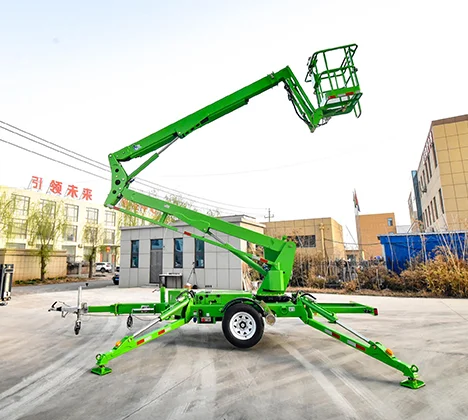
Multi-Joint Arm Design
Articulating boom lifts have several linked parts. These let the arm fold at different spots, similar to a person’s elbow. Such a setup helps users steer past hurdles like supports, barriers, or other builds. It proves handy when straight paths are shut or in spots with tight room.
Certain articulating boom lifts come in crawler or track setups too. These let them work on rough or wet ground. The units mix the bend of linked arms with better floor grip. Thus, they fit tricky outside building settings.
Typical Applications
Articulating boom lifts shine in spots where exact placement matters most:
- Working around complex structures
- Performing maintenance inside factories or warehouses
- Operating within confined spaces such as courtyards or narrow alleys
Their skill to “reach up and over” fits them for tasks needing to pass hurdles. Users avoid moving the whole unit often.
What Is a Telescopic Boom Lift?
Straight Extendable Boom Structure
Telescopic boom lifts, at times known as “stick booms,” employ a direct arm. It stretches right out from the bottom. The parts slide straight to give more side reach than linked types. This build lets users handle very high spots fast. They skip complex steering.
Telescopic boom lifts aim to boost side spread and job height. Their direct boom build stretches out in parts. So, users can soon get to far work zones. Due to this setup, telescopic units often serve in big outside building areas. There, top reach counts. Many mobile scissor lifts from YILU LIFT also complement boom lifts in construction and industrial projects, offering stability and lifting support for materials at height.
Typical Applications
Telescopic boom lifts fit best for:
- Large-scale construction projects
- Outdoor industrial sites
- High-reach maintenance tasks such as bridge inspection or wind turbine servicing
Since they push straight out, telescopic booms span wide side gaps well. This suits work over clear land free of hurdles.
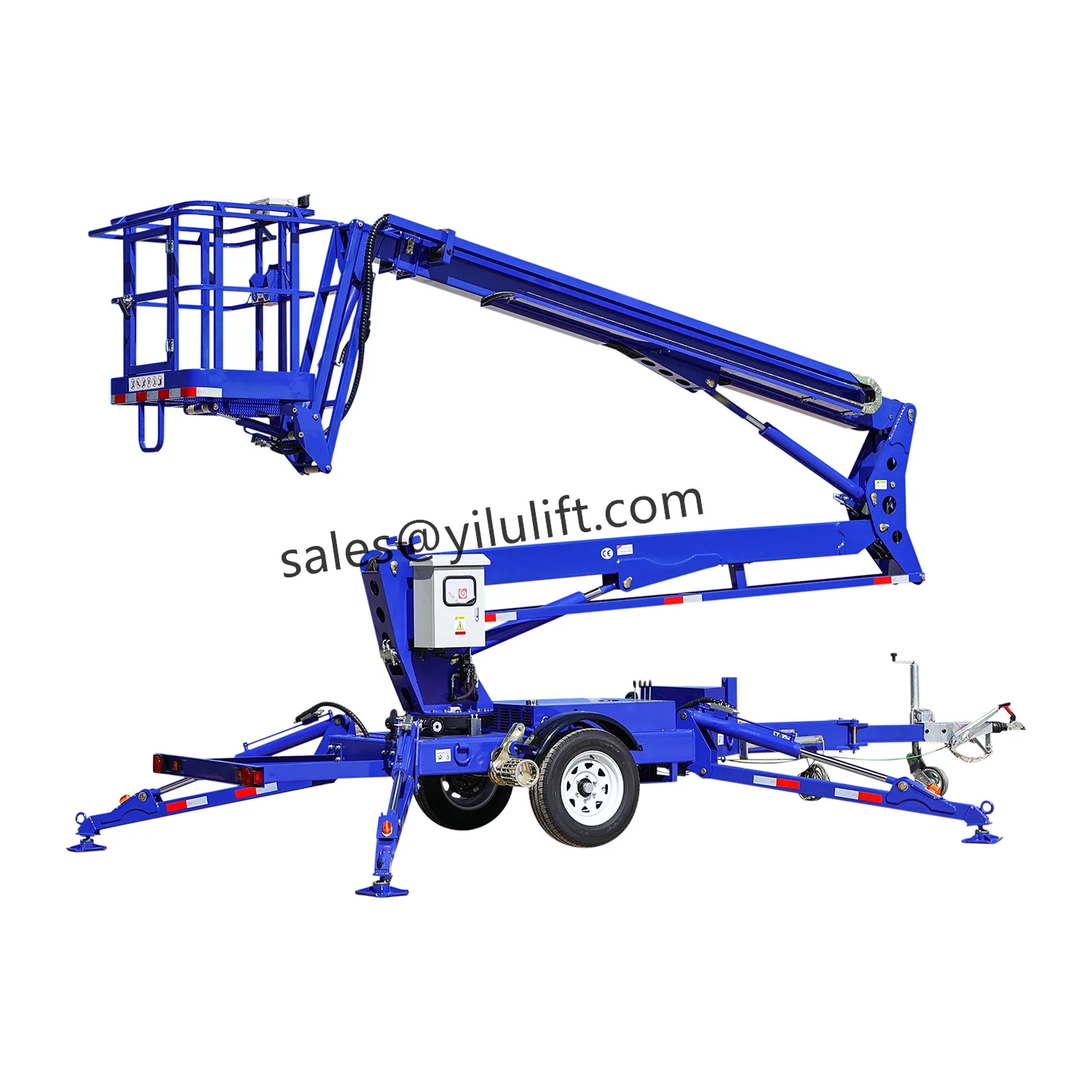
Key Differences Between Articulating and Telescopic Boom Lifts
|
Feature |
Articulating Boom Lift |
Telescopic Boom Lift |
|
Arm Design |
Multi-jointed for flexible movement |
Straight extendable sections |
|
Reach Type |
Better vertical maneuverability |
Longer horizontal outreach |
|
Best Environment |
Tight spaces with obstacles |
Open outdoor areas |
|
Speed |
Slower due to articulation points |
Faster elevation due to linear motion |
Reach and Flexibility
Articulating types give stronger bend thanks to their linked arms. These fold past blocks. Telescopic types focus on span. They go further. Yet, they need wider room to set up.
Working Environment
In close inside areas like storage spots or city sites near builds, articulating units do very well. In contrast, telescopic booms do best outside. There, space allows full stretch.
Speed and Efficiency
Telescopic builds rise quicker usually. This comes from their straight fluid stretch method. Linked types might need more time. However, they give top exactness when placing close to builds.
How to Choose the Right Boom Lift
Picking between an articulating vs telescopic boom lift relies on grasping your job’s space limits and output needs.
Evaluate Job Site Layout
Check if your area has blocks like supports or slim paths. Articulating booms handle these with ease. Telescopic parts might require extra room.
Consider Required Working Height
Various types offer different up reach limits. These go from small inside units hitting 10 meters to tough outside ones over 40 meters. YILU LIFT’s lineup spans this full range. It includes electric and diesel-powered picks made for varied grounds.
Select a Reliable Manufacturer
Picking a solid maker guarantees gear lasting power, use safety, and match to field rules. YILU LIFT provides various articulating and telescopic boom lifts. They are built to handle the tough needs of today’s building jobs. This gives steady output in diverse work settings.
Extra guard traits like carrier lock setups and boom steady systems cut shake and shift in transit. Such build points show how makers like YILU LIFT stress better use safety and gear lasting power.
Conclusion
Both articulating and telescopic boom lifts hold key parts in today’s building fields. Both articulating boom lifts and telescopic boom lifts play essential roles in modern construction and industrial maintenance. Grasping their build contrasts, such as linked arms against straight stretching booms, aids builders in selecting the top gear for set work conditions. By choosing solid units from makers like YILU LIFT, firms can raise output, keep staff safety, and secure steady output in tough work settings.
Preguntas frecuentes
Q1: What is the main difference between articulating and telescopic boom lifts?
A: Articulating boom lifts have jointed arms offering flexible movement around obstacles, while telescopic boom lifts use straight extendable booms providing longer horizontal reach ideal for open spaces.
Q2: Which type of boom lift works best in confined areas?
A: Articulating models perform better indoors or in tight environments since they can bend around barriers without needing excessive repositioning.
Q3: Are telescopic boom lifts mainly used outdoors?
A: Yes, their straight-line extension makes them perfect for large outdoor projects like bridge repair or high-rise façade work where maximum outreach is needed.
Q4: What factors should be evaluated before selecting a lift?
A: Assess job site layout, required working height, available space for maneuvering, load capacity needs, and whether electric or diesel power suits your environment best.
Q5: Does YILU LIFT manufacture both types of boom lifts?
A: Yes, YILU LIFT produces a complete range including articulating crawler models suited for uneven terrain as well as telescopic units built for long-distance elevation tasks—all engineered with robust safety systems for demanding construction projects.
