
ارتفاعات رافعات الذراع المفصلية: كيفية مطابقة ارتفاع العمل، والمدى، والإعداد
ارتفاعات رافعات الذراع المفصلية: كيفية مطابقة ارتفاع العمل، والمدى، والإعداد
Boom lift heights should be compared with the complete work position, not with one headline number. Working height, platform or lifting height, working radius, access width, and the setup area all describe different parts of the job. A machine that reaches the right height may still be unsuitable if the basket cannot reach over the obstacle, the trailer cannot enter the site, or the supporting legs cannot be placed safely.
YILU LIFT’sincludes towable boom lifts and crawler articulated boom lifts. The public range page is the first place to compare the two formats, while theprovides the product-manual entry point for model-level checks. The manual lists towable models TBL-12A through TBL-24A from 12 m to 24 m working height and crawler articulated models TBL-12C through TBL-22C from 12 m to 22 m. These are series examples, not one machine’s combined maximums. Final selection should follow the actual work point, access route, ground condition, and required platform load.
Define the Height the Job Actually Needs
Separate working height from platform height
Working height normally describes the reach available to the operator, while platform height or lifting height describes the height of the basket or working platform itself. Manufacturers may calculate working height differently, so the selected model’s data sheet should control the comparison. The difference is important when the operator must reach above a roof edge, tree canopy, sign, or facade detail.
Measure from the ground or support surface to the highest point that must be reached. Then record where the worker’s feet or platform need to be. Do not choose a 20 m machine simply because the building is 20 m high. The task may require a lower platform position with horizontal reach, or a higher working height because the tool must work above the surface.
Mark the exact work point
Take the height at the actual work face, not only at the base of the building. Note the side of the facade, the offset from the wall, the position of the roof, and any obstruction between the machine and the work point. A simple elevation sketch with one or two measurements can show more than a general statement such as “high-level maintenance.”
YILU LIFT’s boom lift range includes towable and crawler formats for different access conditions. The boom lift product range is useful for comparing those directions, but the model should be chosen from the working position outward.
Check Horizontal Reach as Carefully as Height
Working radius decides whether the basket can arrive at the point
Two machines can offer a similar working height but reach the work area differently. Working radius, boom articulation, platform offset, and the position of the outriggers determine whether the basket can approach the target without being moved repeatedly.
Measure the distance from the proposed support position to the nearest work point and the farthest work point. Include the wall setback, a planted area, a road edge, or any no-go zone that prevents the machine from standing directly below the task.
The linked product manual lists working radii from 5.5 m to 11 m for both the towable and crawler model tables. These values belong to individual models and should not be combined with the maximum working height as though both maxima occur at the same time.
Consider articulation around obstacles
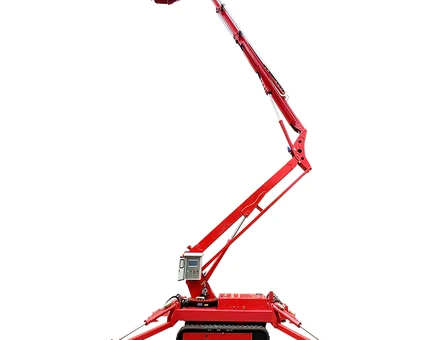
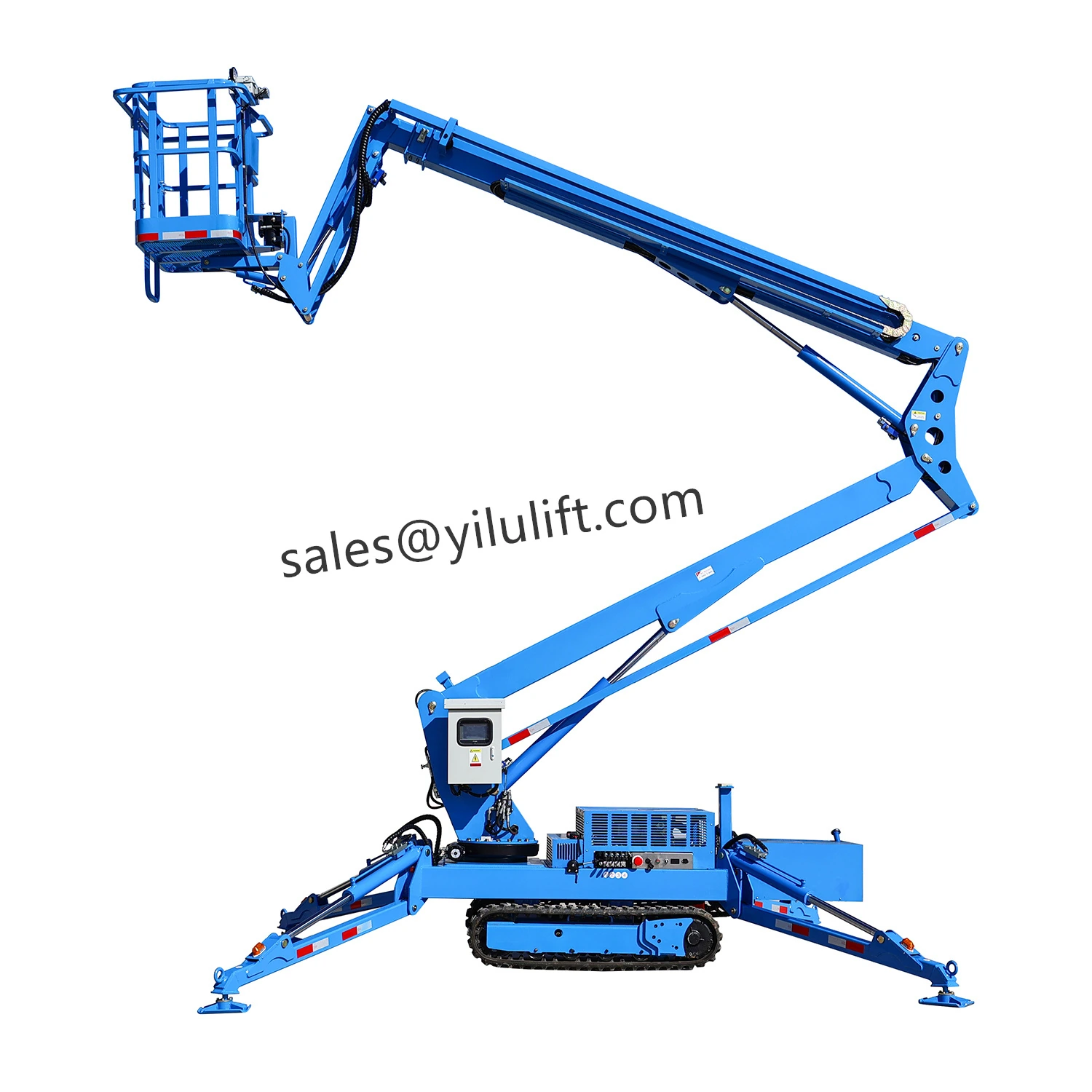
A straight vertical path is not the only job pattern. Tree pruning, lighting, facade maintenance, and plant work may require the basket to travel over a low roof, barrier, or machine. An articulated boom can change the route to the work point, while a towable unit may suit a lighter access arrangement with a different setup footprint.
Describe whether the boom must pass over, around, or between obstacles. This helps the equipment discussion move beyond height and into the actual path of the basket.
Choose Between Towable and Crawler Formats
Towable boom lifts for repeated transport between sites
Towable boom lifts are designed around trailer movement and on-site setup. The linked product manual identifies TBL-12A–TBL-24A with 12–24 m working heights, 220–300 kg platform loads, and AC-electric, diesel, gasoline, or DC battery options. The table is model-specific, so the figures should not be read as one configuration.
This format can make sense when one unit must travel between maintenance locations. Confirm the towing vehicle, trailer connection, braking arrangement, stored length, width, and the time available for deployment. A model that is technically tall enough but difficult to tow or position may slow the work cycle.
Crawler articulated boom lifts for uneven or soft access routes
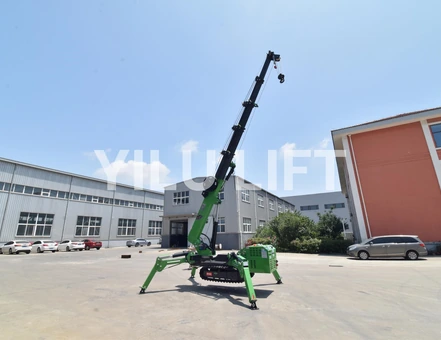
A crawler boom lift uses a tracked base and can be considered where a wheeled or trailer-based machine cannot move easily across the approach route. The linked product manual identifies TBL-12C–TBL-22C with 12–22 m working heights, 200 or 300 kg platform loads, and support-leg footprints from about 3 × 4.7 m to 3.9 × 4.9 m. The selected model and configuration still govern the final footprint.
The track is only one part of the decision. Check the route width, surface pressure, slopes, thresholds, turning area, and whether the final work position can accept the outrigger spread. If the machine will work indoors, confirm floor protection, ventilation, access height, and power mode before selecting a diesel-capable model.
Match the Platform Load to the Task
The platform load includes people, tools, materials, and any temporary equipment carried into the basket. The manual shows towable models with different load figures, while crawler articulated models are presented with 200 or 300 kg platform capacity depending on the series.
List the normal crew and the heaviest tool set separately. A two-person task may need a different platform from a one-person inspection, even when the working height is the same. Wind, tool reach, and material handling can also affect how the work is planned.
Do not treat the platform load as a substitute for a task-specific operating limit. The selected model’s instructions, local requirements, and site plan still govern the use of the equipment.
Allow for the Setup Footprint and Ground Conditions
Measure support-leg space
Towable and crawler boom lifts use support legs or outriggers to establish the working position. Measure the usable rectangle around the proposed base, including the space needed to open each leg, place pads, and keep people away from the movement area.
The crawler articulated product table lists supporting-leg spans that vary by model. A taller machine may therefore need more room even when its tracked body can reach the entrance. Record the narrowest point, nearby walls, traffic routes, overhead clearance, and any edge or excavation that limits the placement.
Check the ground before choosing a height
Ground condition can change the practical height decision. Soft soil, paving blocks, slopes, drains, ramps, and unfinished floors may require a different base arrangement or a different machine format. A high-reach model is not a safe choice if the required support area cannot be prepared.
Send a site photo from the proposed setup position, plus the approximate slope or surface description. If there is a floor-loading or access restriction, mention it at the same time.
Compare Power Options Around the Worksite
Towable models in the manual are shown with AC-electric, diesel, gasoline, DC battery, and dual-power options. Crawler articulated models are shown with diesel, gasoline, or battery power options depending on the series.
Choose the power arrangement from the environment and work rhythm. Indoor work may favor a quieter or lower-emission mode, while a remote outdoor site may need an engine option. A dual-power unit can be useful when the same equipment moves between different locations, but the added configuration should be confirmed with the selected model.
Power is also linked to charging, refueling, cable routing, ventilation, noise, and emergency descent planning. It should be discussed together with the route and the work duration rather than treated as a separate catalogue checkbox.
التعليمات
Is working height the same as lifting height?
No. Working height describes the highest point the operator can generally reach, while lifting or platform height describes the basket or platform position. Use both values with the working radius and the actual task position.
Which is better, a towable or crawler boom lift?
A towable model may suit repeated transport between prepared sites. A crawler articulated model may suit a restricted or uneven access route. The better choice depends on towing, route width, ground condition, support-leg space, power, and the work point.
What should be included in a boom lift height enquiry?
Provide the highest work point, platform position, horizontal offset, obstacle description, route width, support area, ground condition, crew and tool load, working duration, and available power. A marked photo or elevation sketch is useful.
For a quick enquiry checklist, record: height to the work point; platform height; horizontal offset; obstacle and route limits; support-leg area; platform load; working duration; and available power.
Prepare a Boom Lift Enquiry Around the Work Point
Start with the height and offset of the real work point, then add the route and setup restrictions. With those details, YILU LIFT can compare the relevant towable or crawler format, working radius, platform load, support-leg arrangement, and power configuration.
Once the measurements are clear, send the work-point details through YILU LIFT’s contact form. A short description of the height, radius, load, access route, and setup area makes the discussion more useful than choosing by the largest number in a table. Include a marked photo or simple site sketch when the boom must reach around an obstacle or set up close to a boundary. Even a short note is enough when the main dimensions are known.