

Critères de sélection des monte-charges pour les entrepôts et les usines
Critères de sélection des monte-charges pour les entrepôts et les usines
Le choix d'un équipement de levage industriel représente un investissement important qui influe sur la productivité, la main-d'œuvre, l'utilisation des sols, les besoins de maintenance et la continuité de la production. L'acquisition doit être axée sur la charge et le flux de travail plutôt que sur un type de machine particulier. La capacité, la hauteur de levage, la trajectoire, la fréquence d'utilisation, l'environnement, les commandes, les exigences d'inspection et le service après-vente doivent être évalués comme un système intégré. Pour les projets de levage complexes, YILU LIFT, fabricant basé à Qingdao, propose des plateformes élévatrices, des grues, des grues araignées, des ventouses, des équipements de levage par aspiration et des tables élévatrices à ciseaux innovantes et automatisées.
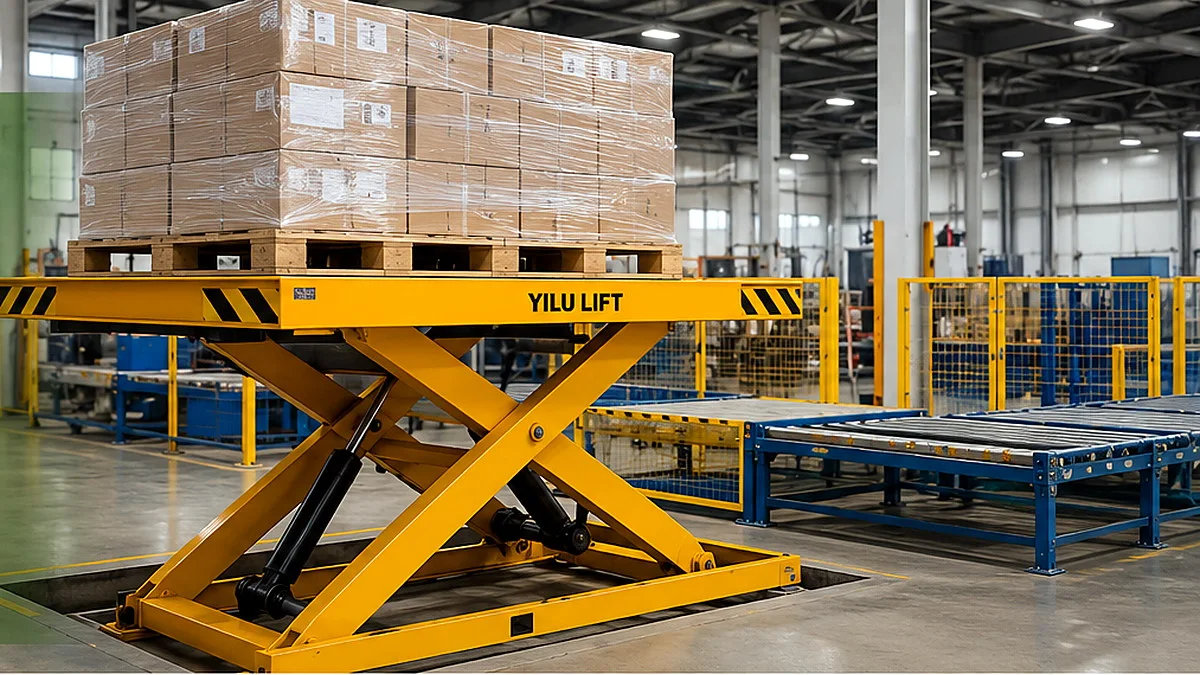
1. Définir les exigences en matière de manutention des matériaux
Enregistrez le profil de charge complet
Le choix d'un système de levage doit commencer par une analyse des charges prenant en compte le poids minimal, moyen et maximal, les dimensions, le centre de gravité, l'état de la surface, la rigidité, la fragilité et l'emballage. La capacité nominale seule est insuffisante. Une charge irrégulière ou décentrée peut réduire la capacité utile, même si le poids brut semble acceptable. Les recommandations de l'OSHA indiquent que la répartition du poids, les dimensions, la forme et la position influent directement sur la stabilité, tandis qu'un centre de gravité plus long réduit la capacité admissible.
Cartographiez chaque mouvement du processus
Le cahier des charges doit préciser le point de départ et le point d'arrivée de la charge, ainsi que les opérations intermédiaires. Les données clés incluent la dénivellation verticale, le déplacement horizontal, la hauteur de transfert, le sens de chargement, la rotation, l'inclinaison, la précision de positionnement, le temps de cycle et les interfaces avec les rayonnages, convoyeurs, cellules de production, mezzanines, quais ou véhicules. Ce schéma distingue la simple élévation des opérations de transport, de manutention et de positionnement de précision.
2. Choisir le type d'ascenseur adapté à l'application
Évaluer les fonctions des monte-charges d'entrepôt
Un monte-charge d'entrepôt peut faciliter le transfert de palettes, la préparation des commandes, le chargement des quais, l'accès pour la maintenance, le réapprovisionnement des mezzanines ou le positionnement ergonomique. Tables élévatrices à ciseaux fixes Adaptées aux transferts verticaux répétables et au réglage en hauteur des postes de travail, les plateformes mobiles offrent un accès flexible à plusieurs zones. Les plateformes à flèche télescopique sont indispensables pour les travaux en hauteur nécessitant d'atteindre des zones autour de rayonnages, de machines ou d'obstacles structurels. Les équipements d'accès pour le personnel ne doivent pas remplacer les appareils de levage de charges, sauf s'ils sont spécifiquement conçus et homologués pour cette tâche.
Aligner l'équipement avec la manutention des matériaux de l'usine
La manutention des matériaux en usine implique souvent des cadences de production plus élevées, une intégration plus poussée et des charges spécifiques. Les matrices, les composants de machines, les tôles, le verre, les panneaux, les assemblages et les dispositifs de fixation peuvent nécessiter un levage, une rotation ou un positionnement précis et contrôlé. Systèmes de vide Il est possible de réduire le contact direct avec des charges planes appropriées, mais la porosité, la propreté de surface, l'état du joint, la réponse en cas de perte de puissance et la rétention secondaire doivent être vérifiés. Les recommandations HSE considèrent les appareils à vide comme des équipements spécifiques à une application, nécessitant une évaluation des risques pour la charge et l'environnement prévus.
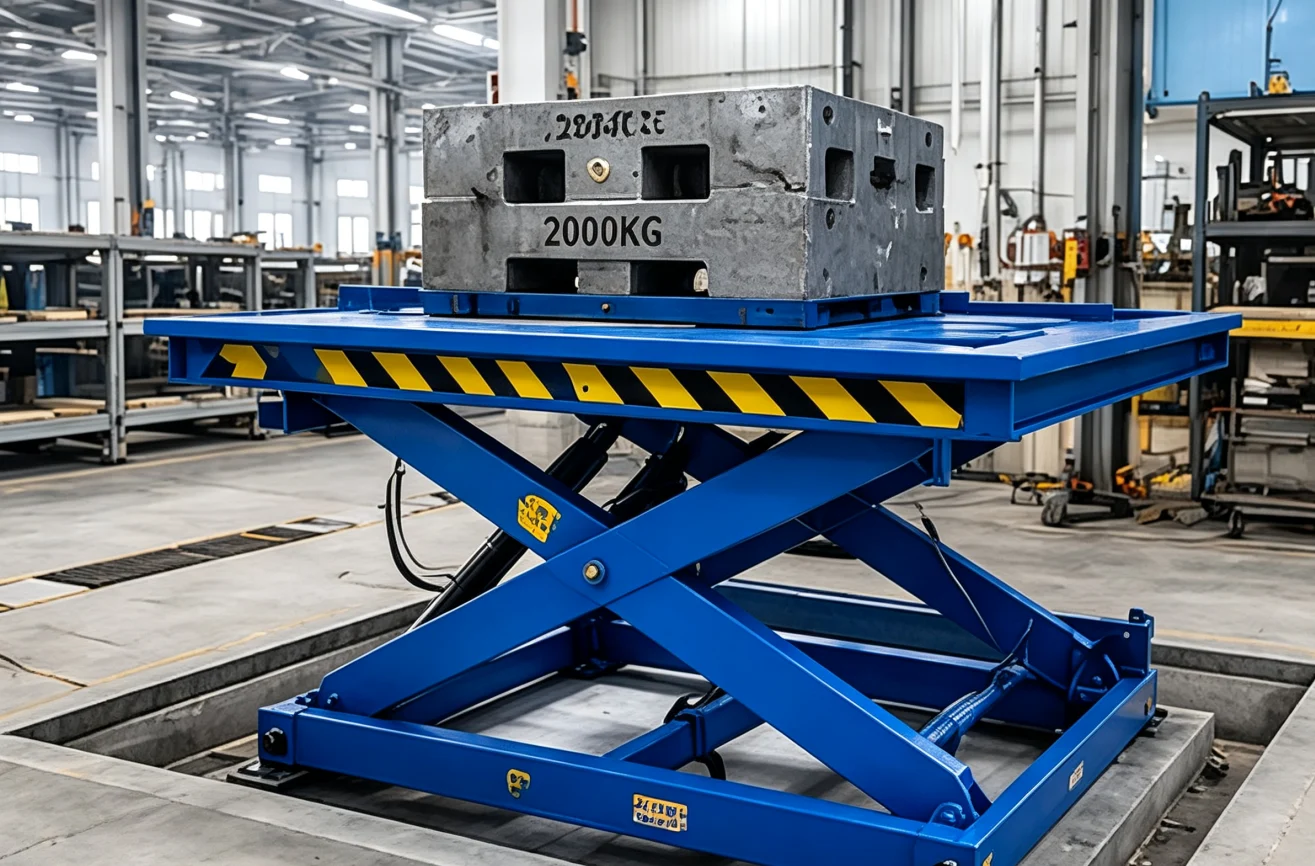
3. Vérifier la géométrie du bâtiment et les conditions du plancher
Mesurer les dégagements d'accès et d'exploitation
Une inspection du site doit confirmer la largeur des allées, la hauteur des portes, le rayon de braquage, le débordement des rayonnages, l'espacement des colonnes, les bords des quais, les voies de circulation piétonne, les sorties de secours et les installations aériennes. Les directives de l'OSHA relatives aux entrepôts exigent des dégagements suffisants dans les allées, les quais, les portes et les points de braquage, ainsi que des passages dégagés et propres. Les dimensions des équipements doivent être vérifiées en configuration de transport, de travail, de stockage et de déploiement complet.
Vérifier la hauteur, la portée et la charge au sol
La hauteur maximale de la plateforme ou du crochet ne correspond pas toujours à la hauteur de transfert pratique. Les spécifications doivent tenir compte de la profondeur de fixation, de l'épaisseur de la plateforme, de la hauteur de charge, du dégagement sous plafond et de la portée requise. L'analyse du sol doit prendre en compte la masse totale de la machine, la charge utile, les charges sur les roues, les réactions des stabilisateurs, les joints de dalle, les pentes, les excavations et les dommages de surface. Ces facteurs influent sur la stabilité et l'adéquation au bâtiment ; une résistance et une stabilité adéquates sont des critères de sélection fondamentaux.
4. Dimensionner l'équipement en fonction du cycle de service et du débit
Calculer la fréquence et l'utilisation
Deux ascenseurs de même capacité nominale peuvent présenter des performances différentes en production continue. L'analyse du cycle de service doit prendre en compte le nombre de levages par heure, la distance parcourue, la charge utile moyenne, la demande de pointe, les roulements d'équipe, le temps d'inactivité et le temps d'attente admissible. Des cycles répétés, des chocs, la chaleur ou la contamination peuvent nécessiter une construction renforcée. La réserve de capacité doit refléter les variations réalistes, tandis qu'un surdimensionnement excessif peut accroître la consommation d'énergie, l'emprise au sol, les coûts et la charge au sol.
Sélectionnez le système d'alimentation et de propulsion
Le choix de la source d'énergie influe sur les émissions, le bruit, la charge, la ventilation, la maintenance et la disponibilité des équipes. Dans les entrepôts intérieurs, on privilégie souvent les équipements électriques, car le faible niveau sonore et l'absence d'émissions au point d'utilisation répondent aux exigences de l'installation. Les systèmes hydrauliques peuvent fournir une force de levage importante, mais leur évaluation doit porter sur l'étanchéité, la compatibilité des fluides, la plage de températures, la protection des flexibles, la descente d'urgence et l'accessibilité pour la maintenance. La capacité de la batterie doit être adaptée au profil des équipes, aux plages de charge, à l'alimentation électrique et à la durée de vie prévue de la batterie.
5. Considérer la sécurité et la conformité comme des spécifications
Vérifier la capacité nominale et les fonctions de protection
Chaque appareil de levage doit afficher sa capacité nominale ou sa charge maximale d'utilisation pour les configurations concernées. Vérifiez la protection contre les surcharges, l'arrêt d'urgence, la descente d'urgence, les interrupteurs de fin de course, les garde-corps (le cas échéant), les dispositifs anti-chute, la protection contre l'éclatement des flexibles, les stabilisateurs, les alarmes, les interverrouillages et les dispositifs de retenue de charge. Les recommandations HSE exigent une résistance et une stabilité adéquates et préconisent de positionner l'équipement de manière à réduire les risques de choc, de dérive, de chute ou de déclenchement accidentel. Le levage par le vide nécessite également des mesures efficaces d'avertissement et de retenue en cas de perte de vide.
Planification, inspection, formation et contrôle
Même une machine adaptée peut présenter des risques en l'absence d'une utilisation contrôlée. Les documents d'acquisition doivent définir les vérifications avant utilisation, la maintenance planifiée, l'inspection périodique, le signalement des défauts, les procédures de consignation, l'autorisation des opérateurs, la séparation du trafic et les modalités de récupération. Les recommandations de l'OSHA relatives aux équipements de levage industriels insistent sur la stabilité du positionnement, l'intégrité des garde-corps, les procédures d'utilisation appropriées et la formation du personnel. Il convient de vérifier la législation et les normes du marché de destination avant tout achat.
6. Comparer le coût total et les capacités du fournisseur
Coût du cycle de vie du modèle
Une comparaison B2B doit prendre en compte le prix d'achat, le transport, l'installation, la mise en service, l'énergie, les inspections, la maintenance préventive, les pièces détachées, la main-d'œuvre de réparation, les temps d'arrêt, la formation, le financement, la valeur résiduelle et la mise au rebut. Un devis bas peut engendrer des coûts d'exploitation plus élevés si les composants sont difficiles d'accès, si les délais de livraison des pièces détachées sont longs ou si le diagnostic des pannes est insuffisant. La disponibilité est essentielle, car un seul ascenseur indisponible peut paralyser une chaîne de production ou une opération de chargement.
Utilisez une demande de devis basée sur une application
Une demande de devis professionnelle doit inclure des schémas de charge, des photographies, des plans d'étage, la hauteur de levage, la trajectoire de déplacement, la cadence de cycle, l'alimentation électrique, l'environnement d'exploitation, les commandes requises, les normes, la destination, la quantité et les exigences de mise en service. L'évaluation des fournisseurs doit porter sur l'analyse technique, les capacités de production, la maîtrise des personnalisations, la documentation, les rapports de tests, l'emballage, les délais de livraison, la garantie, le support technique et la gestion des pièces de rechange. Cette approche permet d'obtenir des devis plus comparables et de limiter les modifications de spécifications après commande.
FAQ
Quel est le facteur le plus important dans le choix d'un système de levage de matériaux ?
L'ensemble des exigences opérationnelles est plus important que le seul poids maximal de la charge. La géométrie de la charge, le centre de gravité, la hauteur de levage, la trajectoire, la fréquence, l'état du sol et la méthode de manutention déterminent la stabilité, la productivité et la conformité de l'appareil de levage.
Quelle capacité de levage de réserve est appropriée ?
La marge doit tenir compte des variations de charge, des accessoires, des effets dynamiques, des modifications de configuration et des données de capacité nominale. Un pourcentage générique ne saurait remplacer une analyse technique, car un centre de charge déplacé ou une portée étendue peuvent réduire la capacité disponible.
Quel ascenseur est le mieux adapté à un entrepôt ?
La tâche à accomplir détermine la solution. Les tables élévatrices fixes conviennent aux transferts verticaux répétés ; les plateformes élévatrices mobiles à ciseaux permettent un accès en hauteur flexible ; les grues à flèche offrent une portée accrue ; et les élévateurs spécialisés permettent une manutention contrôlée des matériaux. L’équipement doit être adapté à la charge et à la géométrie de l’installation.
Quelles informations doivent figurer dans une demande de renseignements concernant un ascenseur industriel ?
Une demande de renseignements doit comprendre le poids et les dimensions de la charge, le type de matériau, les données du centre de gravité, la hauteur cible, le mouvement requis, les mesures du site, les conditions du sol, le cycle de service, l'alimentation électrique, l'environnement, le marché de destination, la quantité et les exigences de conformité.
Concevoir un système de levage industriel plus fiable
Commencez par des données de candidature vérifiées
Pour une analyse des spécifications, une recommandation de modèle, une personnalisation ou un devis d'usine, ASCENSEUR YILU L'entreprise peut évaluer les données des projets industriels et faciliter l'approvisionnement B2B depuis son site de production à Qingdao, en Chine. Son catalogue de produits comprend des plateformes élévatrices aériennes, des grues, des grues araignées, des ventouses de levage, des équipements de levage par aspiration, des nacelles élévatrices mobiles et des tables élévatrices à ciseaux. Les équipes d'approvisionnement peuvent soumettre les détails de la charge, les conditions du site, la capacité requise, la hauteur de levage, la quantité et la destination via [nom de l'entreprise ou du service]. le canal de contact officiel.
