

Towable Boom Lift vs Self-Propelled Boom Lift: Rental Fleet Cost Guide
Towable Boom Lift vs Self-Propelled Boom Lift: Rental Fleet Cost Guide
UN nacelle élévatrice can look right on the quote and still become the wrong fleet asset.
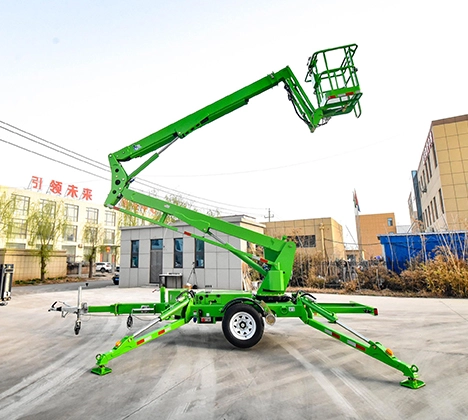
That usually happens when the machine does not match the rentals coming through the door. A self-propelled boom lift may be more machine than a small contractor needs for a two-day lighting job. A towable boom lift may look cost-friendly until it is sent to a wide site where the crew has to move all afternoon.
For rental companies, contractors, and equipment dealers, this comparison should not start with “Which lift is better?” It should start with a colder question: which lift gets rented more often, fits the customer base, and returns value with less friction?
A fleet earns money through use. Not through maximum reach. Not through a spec sheet. Use is the part that decides whether the machine is an asset or just another idle unit in the yard.
Fleet Cost Starts with Utilization
A cheaper machine still needs enough bookings
A towable boom lift often gives rental fleets a lower entry point. That does not automatically make it the cheaper choice. If local customers rarely ask for fixed-position access, the unit may sit too much.
The same logic applies to a self-propelled boom lift. It can carry a higher cost, but if large contractors keep it booked for long jobs, it may return money faster than a lower-cost unit with weak demand.
For rental companies, boom lift rental cost is not only the rate customers see. It also depends on how often the machine is booked and how well it fits the job.
Rental fleet cost comes down to a few practical numbers:
- how many days the machine is rented each month
- how far it travels for typical jobs
- how often the customer moves it during the workday
- whether the working height matches repeat requests
- which customer group brings the most revenue
These numbers do not need to look fancy. They just need to be real.
Short rentals and long rentals behave differently
Short rentals usually favor simple access. A contractor may need a platform for signage, exterior lighting, facade cleaning, low-rise repair, or a municipal task. The job is important, but the machine may stay in one main position.
Longer rentals work differently. A contractor on a warehouse, industrial plant, or construction site may care more about moving across the site than saving on the daily rate. That is where a self-propelled boom lift can make sense.
This is the first split in the towable boom lift vs self-propelled boom lift decision: fixed work versus moving work.
When a Towable Boom Lift Reduces Fleet Cost
It fits the small jobs that repeat
Many rental yards make steady money from ordinary jobs. A storefront sign. A row of parking lot lights. A school maintenance task. A cleaning company working on one building side. These rentals are not dramatic, but they come back again and again.
A towable boom lift fits that part of the market. It gives customers height access without pushing them into a heavier equipment class. For price-sensitive contractors, that matters. For rental companies, it creates a machine category that can be easier to sell into everyday access work.
The value is not only lower cost. The value is fit.
Dispatch can make or break the margin
A short rental can lose its appeal if delivery becomes complicated. A heavy self-propelled boom lift may require more planning, more space, and a tighter delivery window. That can be fine for a high-value project. For a small local job, it may be too much dispatch cost.
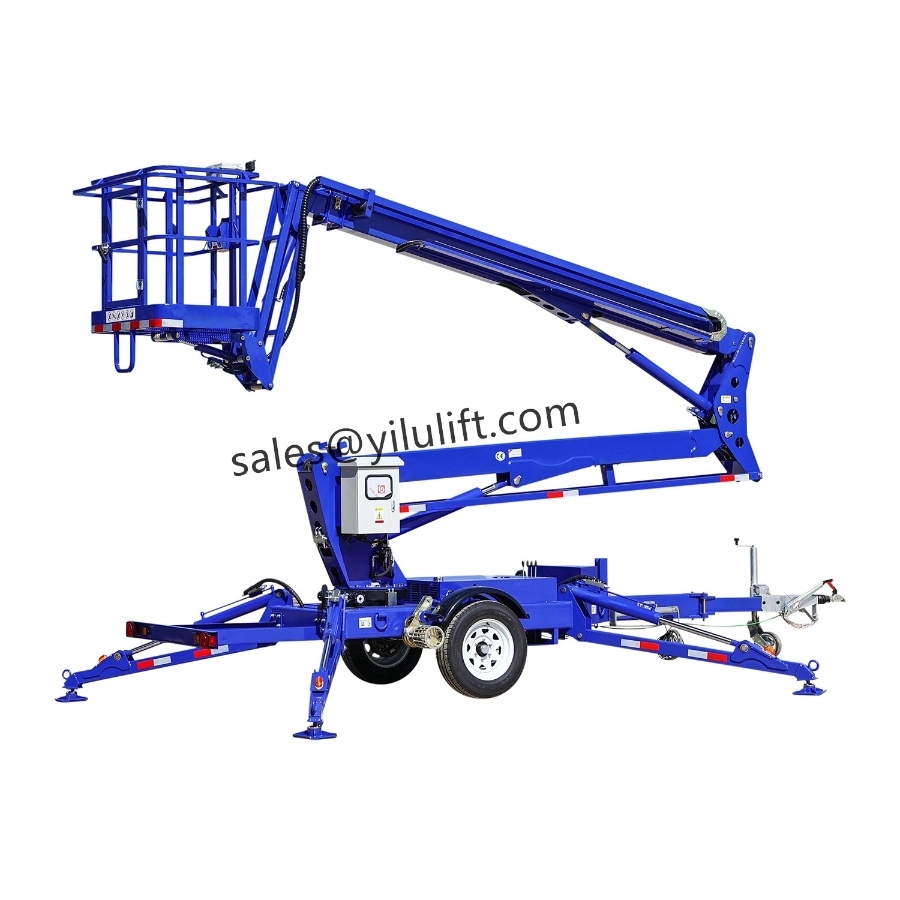
A towable boom lift can be easier to place into the schedule when the route, towing setup, and local rules are suitable. Rental yards with many local customers often care about this more than the brochure does.
There is another plain detail: space. A crowded yard does not love awkward machines. Equipment that can be moved, staged, and dispatched without blocking half the row has its own kind of value.
When Towable Is Not the Cheaper Choice
A towable boom lift is not the right answer just because the first cost looks better.
If the customer works across a large site and needs to reposition every hour, reset time starts to hurt. Lowering the platform, moving the unit, setting it again, and checking the position can slow the crew down. On a busy job, that delay can cost more than the rental savings.
This is where a self-propelled boom lift earns its rate. Movement is not an extra feature on these jobs. It is the reason the machine is there.
When a Self–Propelled Boom Lift Is Worth the Higher Cost
Mobility has a price, and sometimes it pays
Large warehouses, steel structures, industrial plants, commercial construction, and wide outdoor sites usually need movement. Operators may work in one area in the morning and another after lunch. If the lift cannot move easily, the whole crew feels it.
A self–propelled boom lift gives the operator that movement. The rental rate may be higher, and the machine may carry more ownership exposure, but the customer is not only renting height. The customer is renting job-site speed.
That is why self-propelled boom lift cost should be judged against productivity, not only against the price of a towable unit.
The customer base has to support it
The risk is buying too many self-propelled machines before the market is ready.
A fleet serving large builders and industrial contractors may need them. A fleet serving mainly maintenance teams, signage crews, cleaners, schools, and small contractors may not. Premium machines need premium demand. Without it, the equipment looks strong but delivers low utilization.
One unusual job should not decide the whole yard.
The Fleet Mix Rule: Buy for the Next 50 Rentals
Recent bookings are better than guesswork
A useful way to plan a boom lift fleet is to look at the next 50 likely rentals, not the biggest possible project.
If those rentals are mostly short, local, fixed-position jobs, towable boom lifts deserve more attention. If the bookings are longer, more industrial, and movement-heavy, self-propelled machines should take a larger role.
Fleet buyers should check:
- common working height requests
- average rental length
- delivery distance
- job-site movement needs
- customer type by revenue
The pattern usually shows itself: small contractors often care about a practical daily rate, while industrial customers may pay more for movement and crew efficiency.
Match Each Boom Lift Type to the Right Rental Scenario
Towable and self-propelled boom lifts should not be quoted as if they solve the same rental problem.
A towable boom lift fits fixed-position access work where cost control matters. A self-propelled boom lift fits jobs where movement, speed, and operator productivity carry more value. When the rental team explains that difference clearly, customers compare the machine by job value instead of only by daily rate.
That is how rental companies protect margin. The right machine goes to the right job, and the customer has a better reason to accept the quote.
How YILU LIFT Supports Rental Fleet Planning
ASCENSEUR YILU fits the part of the market where B2B buyers need practical towable boom lift solutions for maintenance, installation, cleaning, municipal access, and light construction work. The important point is not to load the fleet with every possible model. The point is to match working height, platform capacity, power preference, and expected rental use to the jobs that repeat.
Lower-height towable units can suit common service and building tasks. Mid-range units can work for municipal access, commercial maintenance, and outdoor repair. Higher towable models help when customers need more reach for facades, poles, tree-related work, or taller service points.
Power choice should follow the same logic. Electric or battery options can fit quieter or cleaner-use environments. Diesel or gasoline options may make more sense for outdoor work where charging access is limited.
For buyers comparing a towable boom lift for sale with a self-propelled boom lift investment, the best question is still simple: Will this machine get rented often enough by the customers already in the market?
Conclusion
A towable boom lift can reduce boom lift fleet cost when the rental base includes short jobs, local dispatch, fixed-position work, and price-sensitive contractors. A self-propelled boom lift can justify its higher cost when customers need site movement, longer rental periods, and faster production.
The right choice depends on utilization, not just machine type. Rental companies should look at booking history, customer mix, working height demand, transport setup, and rental duration before adding units.
YILU LIFT helps B2B buyers choose towable boom lift configurations for rental fleets, contractor work, municipal access, cleaning, installation, and light construction projects. For fleet expansion or project purchasing, contactez YILU LIFT to match the machine to the job mix, budget, and expected return.
FAQ
Q1: Is a towable boom lift cheaper to run than a self–propelled boom lift?
A: A towable boom lift is often cheaper to run for short, fixed-position access jobs. The final cost still depends on rental utilization, delivery distance, working height, power type, and how often the machine stays booked.
Q2: When should a rental company choose a self–propelled boom lift?
A: A self-propelled boom lift is the better choice when customers work on large sites and need to move the machine many times during the day. It fits construction, industrial work, warehouses, and longer rentals.
Q3: What affects boom lift rental fleet cost the most?
A: Boom lift rental fleet cost is affected by utilization, machine type, working height, transport needs, rental duration, site mobility, and customer mix. A machine with steady bookings usually performs better than a larger machine with weak demand.
Q4: Is a towable boom lift a good choice for small contractors?
A: A towable boom lift can work well for small contractors handling signage, lighting, exterior cleaning, painting, low-rise maintenance, and fixed-position access work. It is less suitable when the job requires frequent movement across a large site.
Q5: How should rental companies plan a mixed boom lift fleet?
A: Rental companies should review recent bookings, common working heights, average rental length, delivery distance, and customer type. Towable boom lifts can cover common short jobs, while self-propelled boom lifts can support larger projects that need more mobility.
