

What Makes a Spider Crane the Best Choice for Indoor Lifting?
What Makes a Spider Crane the Best Choice for Indoor Lifting?
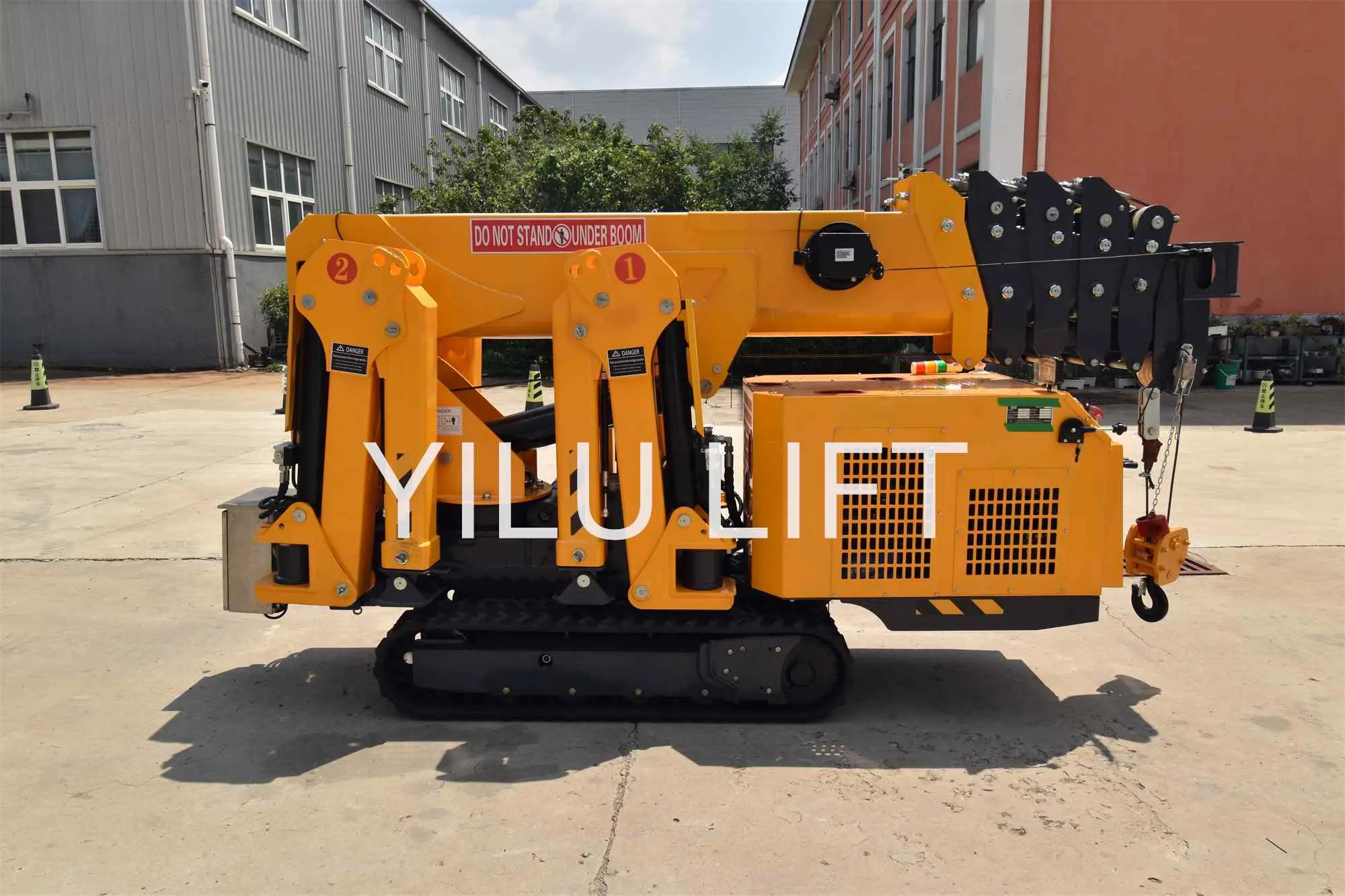
Indoor lifting projects are often constrained less by crane capacity than by doorway width, ceiling clearance, floor loading, setup space, and positioning accuracy. A gru ragno addresses these conditions through a compact travel profile, crawler mobility, a telescopic boom, and stabilizing outriggers. For contractors, glazing specialists, maintenance teams, rental fleets, and distributors, the strongest business case appears when access and lifting performance must be solved by one machine. YILU LIFT is a Qingdao-based lifting-equipment factory focused on the innovation and automation of aerial work platforms, cranes, spider cranes, vacuum lifting equipment, suction-cup lifters, and scissor lift tables.
Indoor Access Is the First Procurement Filter
Compact Travel Dimensions Reduce Structural Disruption
A crane may have sufficient capacity but remain unusable if it cannot pass through an entrance, corridor, or upper-floor access point. A compact crane for narrow spaces can reduce wall removal, enlarged openings, and load transfers between machines. Some mini crawler configurations are designed for standard or double-door access, but every tender should verify folded width, height, length, machine mass, turning space, ramp gradient, and elevator capacity.
Outrigger Geometry Requires Floor Engineering
Deployed outriggers create a wider support polygon than the crawler body alone. Compact size does not remove the need for formal planning: lifting operations should be planned by competent personnel, supervised, and performed with adequate equipment. Outrigger deployment must follow manufacturer procedures and the applicable load chart.
Indoor plans should confirm slab capacity, outrigger point loads, hidden voids, service trenches, basements, floor protection, and any need for spreader plates. A small machine can still create high localized reactions.
Lifting Performance Must Be Checked at Working Radius
Maximum Capacity Is Not a Complete Buying Specification
Maximum capacity normally applies only under defined conditions. Permissible load changes with boom length, operating radius, boom angle, outrigger configuration, attachment weight, and rigging weight. Regulatory guidance treats rated capacity as configuration-dependent and requires load-chart information to remain available to the operator.
A procurement team assessing the best spider crane for indoor lifting should issue a lift matrix stating load weight, dimensions, center of gravity, pickup radius, placement radius, hook height, headroom, boom path, and rigging allowance.
Telescopic Reach Supports Installation Behind Obstacles
Indoor construction often requires lifting over production lines, mezzanines, handrails, atriums, or finished elements. A telescopic boom provides vertical and horizontal reach while the carrier remains in a controlled setup area. This makes a spider crane for confined spaces useful where forklifts cannot provide overhead placement and larger mobile cranes cannot enter. Usable capacity at the required radius matters more than nominal capacity at minimum reach.
Precision Is Critical for Glass and High-Value Loads
Glazing Requires an Integrated Lifting System
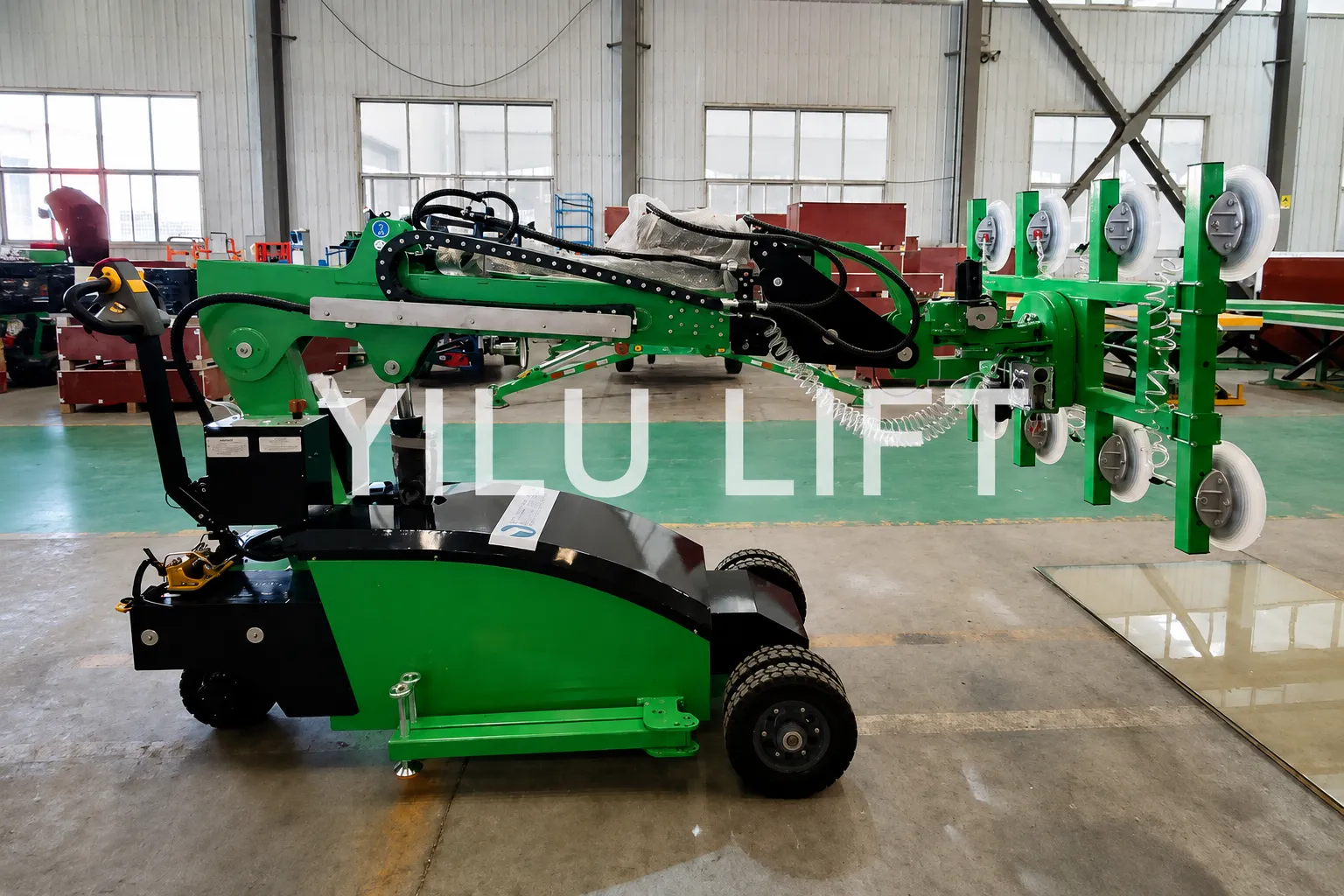
A mini spider crane for glass installation can position curtain-wall panels, interior glazing, doors, stone slabs, or prefabricated facade elements when paired with a suitable attachment. The crane provides reach, while an engineered vacuum lifter or below-the-hook device controls the panel. Each accessory should have an adequate safe working load, current examination status, and compatibility with the load geometry.
Calculations must include the panel, hook block, vacuum device, slings, and any rotation attachment. Exclusion zones, communication methods, tag-line controls, and surface protection should form part of the method statement.
Control Systems Support Accurate Placement
Restricted interiors often create blind corners and limited operator standing space. Remote or flexible control positioning can improve visibility, although it does not replace trained signalers or supervision. Specifications should examine load-moment indication, overload warnings, boom limits, emergency stopping, and interlocks. A load-moment system compares load and radius with rated capacity and can warn of an approaching overload.
Indoor Power Selection Affects Site Acceptance
Electric Operation Reduces Combustion-Exhaust Risk
An electric spider crane for indoor construction may be preferable in factories, warehouses, hospitals, shopping centers, and other enclosed facilities. Carbon monoxide can accumulate rapidly indoors, and workplace guidance recommends avoiding fuel-burning equipment in enclosed areas or considering electric alternatives where practical.
Specifications should state voltage, frequency, connector type, cable routing, battery duty cycle where applicable, and whether dual power is required. Declared sound levels should also be reviewed for active production sites and noise-sensitive buildings.
Building Rules Still Govern the Lift
Indoor lifting equipment for commercial renovation must fit fire controls, public segregation, working-hour limits, emergency routes, floor protection, and facility permit systems. Compact dimensions may reduce disruption, but approval should remain based on a documented method statement and project-specific risk assessment.
B2B Selection Criteria for a Compact Crane
Verify Access, Setup, and Floor Data
Technical evaluation should begin with folded dimensions, total mass, crawler ground pressure, turning space, outrigger footprint, outrigger reactions, tail swing, and overhead clearance. Drawings should show both travel and lifting configurations.
Validate the Complete Lifting Duty
The quotation should include load charts for the proposed boom and outrigger configurations. Procurement teams should confirm hook height, working radius, line speed, slewing range, attachment deductions, environmental limits, and restrictions on travelling with a load. No lift should exceed rated capacity for the actual setup.
Assess Documentation and Lifecycle Support
Supplier evaluation should cover conformity documents, inspection records, manuals, maintenance schedules, spare-parts availability, training materials, warranty scope, and technical-response procedures. Total cost of ownership depends on serviceability as much as purchase price.
High-Value Indoor Applications
Factory Maintenance and Machinery Installation
An indoor crane for factory maintenance can support motor replacement, tooling installation, pipework, production-line modification, and mechanical upgrades. Positioning the carrier closer to the workface can reduce long rigging paths and repeated transfers.
Commercial Renovation and Atrium Work
A small crane that fits through doorways can serve hotels, retail spaces, transport buildings, exhibition halls, and office atriums where finished surfaces restrict conventional lifting. The investment case improves when one machine completes several scheduled lifts across multiple zones.
Warehouse and Building-Services Projects
A compact crawler crane for warehouse equipment installation can assist with HVAC units, structural members, conveyors, tanks, ducts, and overhead equipment. Suitability still depends on floor capacity, access, headroom, load geometry, and the applicable load chart.
FAQ
Is a Spider Crane Always the Best Machine for Indoor Lifting?
No. It is most competitive when restricted access, useful reach, controlled placement, and a small setup area are required together. Gantries, hoists, forklifts, or fixed systems may suit repetitive vertical work better.
Can a Spider Crane Work on a Suspended Floor?
Only after structural capacity and outrigger reactions have been verified. Machine weight, lifted load, boom radius, support arrangement, and spreader-plate design all affect floor demand.
Why Is the Load Chart More Important Than Maximum Capacity?
Maximum capacity describes one condition. The load chart shows allowable loads at different radii, boom lengths, and support configurations. Extended reach can materially reduce available capacity.
What Information Should Be Included in an RFQ?
A complete RFQ should include load weight and dimensions, center of gravity, pickup and placement coordinates, required height, route dimensions, floor data, power availability, attachments, standards, and after-sales expectations.
Can a Spider Crane Support Indoor Glass Installation?
Yes, when crane capacity, working radius, headroom, vacuum attachment, rigging, panel properties, and lift planning are compatible. Total suspended weight must remain within the relevant load chart.
For distributors, rental fleets, contractors, glazing companies, and industrial project teams, the next procurement step is a duty-based review covering access dimensions, floor conditions, lift radius, hook height, power supply, attachments, documentation, and lifecycle support. ASCENSORE YILU itself is a manufacturer, supplier, and factory located in Qingdao, China, offering spider cranes alongside aerial work platforms, cranes, vacuum lifters, suction-cup lifting equipment, and scissor lift tables; qualified B2B inquiries can be submitted with project parameters for model selection and quotation. Contact YILU LIFT to discuss technical requirements, product configurations, delivery terms, and factory-direct purchasing options.
