
Tilting Lift Table: Match the Container and Picking Position
Tilting Lift Table: Match the Container and Picking Position
A tilting lift table should be considered around the container and the work performed at its opening. Start with where the operator’s hands need to reach, what is inside the container and how the load will be supported throughout the proposed movement. Then describe the required lift and tilt functions separately.
For buyers, a platform size and a weight figure are only part of the enquiry. The container’s shape, its contents and the available working space also belong in the specification. The aim is to agree a configuration for a defined picking task, with the working positions and load retention assessed before an order.
Start with the Container and the Hand Task
Describe the container before choosing the table. Include its outside dimensions, empty weight, maximum loaded weight and base shape. Show its opening, rim and any feet, runners or projections. If more than one container will be used, identify the range rather than sending only the most common example.
Next, describe the hand task. Where does the operator stand? Which parts are picked, and where are they placed afterwards? Consider the task with the container full, partly empty and close to empty. Use these positions to discuss posture and reach; do not set a working position solely from the height of the platform.
An enquiry should also describe the goods themselves. Include relevant handling conditions such as hot, sharp or slippery items. Record the frequency of the task and the space available around the station. Equipment selection needs to account for the task, load, environment and people together.
Keep the purpose clear. A station for taking individual components from a bin needs a different description from one intended to discharge the entire contents. State which job is required and what remains inside the container during movement. Do not use “tilting” as a substitute for describing the operation.
Describe Lift and Tilt Separately
In the enquiry, separate the vertical position of the platform from the orientation of the container. Ask for confirmation of the lift range, the proposed tilt positions and the permitted sequence for the configuration under consideration. A general lift-table description does not confirm all three.
Use a sketch to mark the actual picking location. Identify the rim and the area inside the container that the operator needs to reach. Have the proposed positions reviewed with the real container geometry, including the stage of the task when access is most difficult. Avoid selecting a universal angle or working height from a photograph.
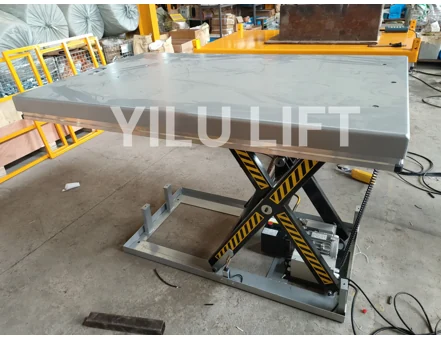
ヘッドリフト tiltable platform scissor lift table information discusses custom platform size and lifting height. The required tilt arrangement and its limits need confirmation for the selected configuration. Do not carry a capacity figure from a general lift-table listing into a tilted operating condition without that confirmation.
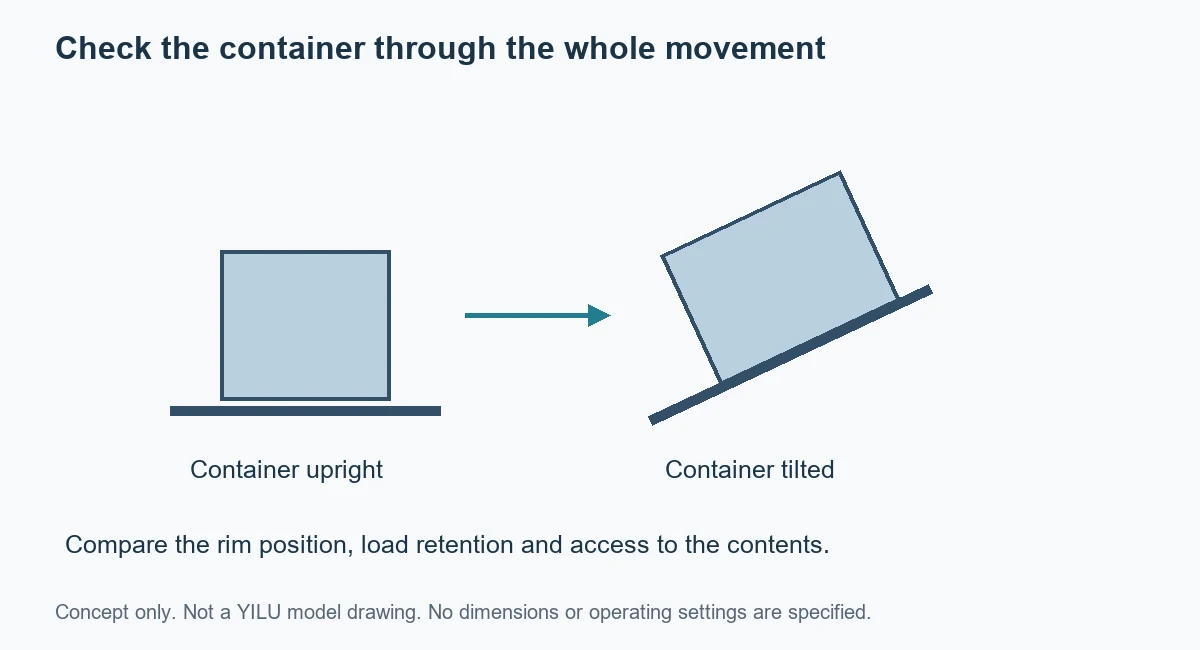
The concept diagram shows two positions to discuss, rather than a recommended setting. It does not represent a YILU model or specify an angle, restraint or working clearance. The useful information is the relationship between the container, its opening and the proposed hand task.
Check the Load Through the Tilt
Describe the complete load, including the container and its contents. Ask for the permitted loading conditions throughout the intended cycle, not just while the platform is level. Include any change in the quantity or arrangement of the contents during picking.
Have the supplier assess how the container is supported and retained in the proposed positions. Show the base contact points and the container features available for any intended restraint. The enquiry should make clear whether a lip, frame, clamp or other retaining arrangement is being proposed; none should be assumed from the product name.
The contents need a separate check. State whether they are loose, stacked, nested or individually located. Ask how movement or falling items will be addressed for the specific goods and task. A statement about retaining the container is not confirmation that every item inside it has been accounted for.
Controls and protection should be reviewed with these loading conditions. Identify access to dangerous moving parts, the risk of falling goods and the starting and stopping functions required at the station. Do not plan for an operator to hold a container in place during powered movement. Restraints and protective measures need to be part of the assessed configuration.
Where a proposed sequence includes loading, lifting, tilting, picking and returning, ask which movements are permitted in each condition. Leave the final operating method to the equipment documentation and installation assessment. A purchasing sketch should not become an improvised operating instruction.
Leave Room for the Container and the Operator
Review the layout at the proposed working positions as well as in the parked position. Show the container, nearby equipment and the operator’s normal standing area. Ask the supplier to confirm the space needed through the intended movement, including any projection beyond the platform.
Include routine access in that discussion. Describe where the container arrives, how it is removed and which side the operator uses. If a trolley or other handling aid is involved, show it on the layout. The transfer into the station is part of the task, even when the main reason for buying the table is picking access.
Cramped working areas and awkward postures belong in the assessment. Note obstacles, restricted approach routes and any task that requires reaching around the container. These details help define what should be reviewed; they do not establish a safe clearance or a suitable working position by themselves.
For the broader decisions about deck dimensions and installation, the stationary lift table selection guide provides a starting point. Add the container positions and picking task to that information when discussing a tilting application.
Discuss the Working Cycle with YILU LIFT
A short description of the cycle is enough to begin the discussion. Explain how the container is loaded, the positions used during picking and how it returns for removal. Include the task frequency and the container condition that needs the closest review, such as a nearly empty bin or an unevenly arranged load.
YILU LIFT’s enquiry guidance asks for material, dimensions and weight. For a tilting application, add a container sketch or photograph and identify the part of the opening used for access. Separate requirements already fixed by the site from positions or features still being considered.
Before accepting a proposal, request confirmation of the loading conditions, available movements, container retention and protective measures included in that offer. Check any interface with existing equipment as well. A comparison is more useful when each proposal describes the same container and work cycle.
に discuss a container picking application with YILU LIFT, start with the container and the hand task. The resulting specification should state what the selected arrangement is intended to handle and which working conditions it covers, rather than relying on a general product title.