
Track Crawler Boom Lift Features for Rough Terrain Construction
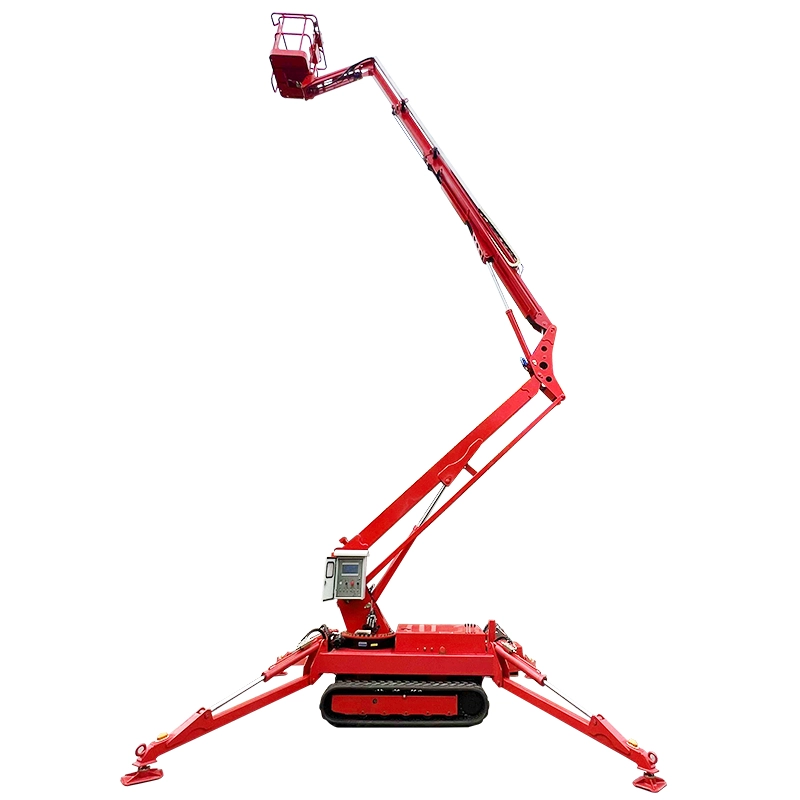
Construction projects on undeveloped sites combine uneven soil, mud, gravel, slopes, restricted access, and changing ground conditions. Machine selection therefore requires more than a working-height comparison. A track crawler boom lift must deliver controlled mobility, stable elevation, suitable outreach, and maintainable systems after rain or excavation. For contractors, equipment distributors, and rental-fleet operators sourcing factory-direct access equipment, YILU LIFT is a Qingdao, China-based manufacturer focused on the innovation and automation of aerial work platforms, cranes, spider cranes, vacuum lifting equipment, suction lifting systems, and scissor lift tables.
Why Tracked Mobility Matters on Construction Sites
Continuous Tracks Improve Contact and Traction
Continuous crawler tracks create a longer contact patch than wheels. Weight distribution can reduce localized ground pressure and improve traction on soft soil, loose aggregate, wet clay, and partially prepared access roads. Ground assessment remains essential, but rutting and immobilization risk may be reduced. Industry guidance emphasizes that soft ground, uncompacted fill, thawing surfaces, and concealed underground structures can compromise mobile elevating work platform stability.
Low-Speed Maneuverability Supports Confined Work Zones
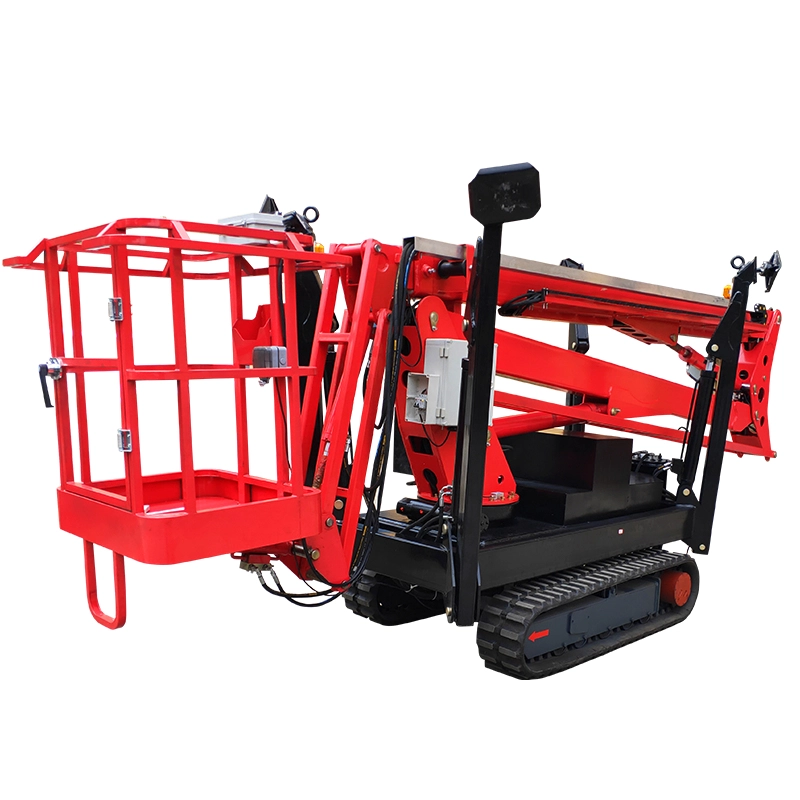
Tracked undercarriages support controlled travel through narrow entrances, congested structural areas, landscaping zones, and early-stage construction sites. A compact crawler aerial lift is relevant where turning space is limited. Procurement teams should compare overall width, stowed height, transport length, machine mass, tail swing, and turning behavior rather than relying only on maximum platform height.
Core Features for Rough-Terrain Performance
Hydraulic Outriggers and Leveling Systems
Crawler mobility reaches difficult locations, while outriggers create the working base. Hydraulic stabilizers should provide adequate deployment range, clear status indication, and setup interlocks. Automatic or assisted leveling can shorten setup time and reduce inconsistent adjustment. Stabilizer pads must still rest on a surface capable of carrying the imposed point loads. Industry guidance recommends correctly positioned outriggers and suitably sized spreader pads where required.
Tilt Monitoring and Motion Interlocks
A rough terrain ブームリフト should detect chassis inclination and limit unsafe functions when thresholds are exceeded. Procurement reviews should distinguish alarm-only systems from motion cut-outs and confirm emergency-lowering behavior. Examined product information describes adjustable maximum tilt settings through a control interface, together with emergency descent and hydraulic protection devices.
Working Envelope, Outreach, and Platform Capacity
Working height is only one productivity factor. Horizontal outreach determines whether façades, steelwork, utilities, or roof zones can be reached without excessive repositioning. Platform capacity must cover personnel, tools, and materials. Published configurations list working heights from 12 to 24 meters, outreach from 5.5 to 11 meters, and rated capacities between 220 and 300 kilograms across several models. Model-level confirmation remains essential because specifications vary within a series.
Rotation and Precision Control
A rotating turret expands the work envelope while reducing chassis movement. Proportional controls, smooth acceleration, basket rotation, and marked upper and lower controls improve positioning. OSHA requirements state that articulating and extensible boom platforms must have both platform and lower controls, with lower controls capable of overriding upper controls in an emergency.
Safety and Compliance Factors in Procurement
Ground Assessment Cannot Be Replaced by Machine Features
Tracks, outriggers, and leveling technology do not make every surface acceptable. Site management must consider soil bearing capacity, excavation edges, covers, backfilled trenches, underground services, and weather deterioration. A procurement specification should request machine weight, maximum point load, allowable slope limits, outrigger reactions, and pad requirements so site engineers can evaluate supporting conditions before deployment.
Load Limits and Pre-Use Inspection
Manufacturer-rated boom and basket limits must not be exceeded. Daily control checks and inspection of hydraulic hoses, tracks, safety devices, emergency lowering functions, and visible structural components should be incorporated into fleet procedures. OSHA requires lift controls to be tested before use and limits operation to authorized personnel.
Rescue Planning and Lower-Control Access
Procurement reviews should include auxiliary power, lower-control access, manual lowering, and recovery documentation. Inadequate rescue arrangements can create delay and risk. Lower controls, emergency stops, and hydraulic rupture protection therefore have operational value beyond checklist compliance.
Matching Specifications to B2B Applications
General Construction and Structural Installation
For steel erection support, cladding, roofing, MEP installation, and exterior finishing, the priority is often a balance of outreach, platform capacity, and repositioning efficiency. Articulated boom geometry can improve access around obstacles, while telescopic sections may provide more direct reach. Selection should follow the real work envelope rather than nominal height.
Infrastructure and Utility Maintenance
Roadside, rail, bridge, airport, and utility projects may require frequent relocation across variable surfaces. Procurement teams should evaluate travel speed, gradeability, track durability, transport dimensions, power options, and setup cycle time. Published factory information identifies AC, DC, diesel, gasoline, and combined power configurations, subject to model availability.
Rental Fleets and Distribution Programs
Rental and distribution buyers require specifications that support broad utilization. Important criteria include intuitive controls, fault diagnostics, parts commonality, multilingual manuals, service access, container loading, commissioning support, warranty terms, and technical response procedures. Official product information states a one-year warranty, email or video technical support, and transport options by sea, air, or rail.
Total Cost of Ownership Beyond Purchase Price
Maintenance Access and Component Protection
Rough-terrain operation exposes tracks, rollers, hydraulic lines, pins, sensors, and electrical connections to mud, impact, dust, and water. Service points should be accessible without major disassembly. Track-tension adjustment, hose routing, cylinder protection, grease-point access, and diagnostic visibility directly affect labor and downtime.
Utilization, Transport, and Site Productivity
The business case depends on utilization across projects. Access without temporary roads or repeated extraction can reduce indirect site costs. Transport weight and dimensions influence trailer selection, freight charges, permits, and container planning. Procurement models should compare delivered cost, setup labor, utilization, maintenance intervals, and residual value rather than purchase price alone.
よくある質問
What Is the Main Advantage of a Track Crawler Boom Lift?
The primary advantage is controlled access across soft, uneven, or loose surfaces combined with elevated outreach. Tracks distribute machine weight over a broader contact area, while outriggers and leveling systems establish a stable operating base after positioning.
Can a Crawler Boom Lift Operate on Any Slope?
No. Every machine has defined travel and operating limits. Ground bearing capacity, slope angle, stabilizer configuration, boom position, wind conditions, and manufacturer instructions must remain within approved parameters. Inclines require formal site assessment rather than visual judgment.
Which Specifications Matter Most for Procurement?
Working height, horizontal outreach, platform capacity, stowed dimensions, machine weight, outrigger footprint, slope limits, point loads, control system, emergency descent, power source, transport method, warranty, parts support, and documentation should be included in the technical comparison.
How Should a Tracked Boom Lift Be Maintained After Muddy Operation?
Tracks and undercarriage areas should be cleaned, inspected for trapped debris, and checked for abnormal wear or tension. Hydraulic hoses, cylinder seals, electrical connectors, stabilizer feet, alarms, and emergency functions should also be inspected according to the maintenance schedule.
Request a Factory-Direct Rough-Terrain Lift Proposal
Build the Specification Around the Actual Job Site
A professional inquiry should include required working height, outreach, platform load, ground description, maximum site slope, access width, transport restrictions, power preference, operating climate, certification destination, order quantity, and delivery terms.
イールーリフト can support B2B procurement with factory-direct model selection, technical parameter confirmation, quotation preparation, customization discussion, and export coordination from its manufacturing base in Qingdao; project teams can submit requirements through the official contact form or email sales@yilulift.com for a commercial proposal.