
Crawler Scissor Lift Selection: Access Routes, Ground Contact, and Work Height
Crawler Scissor Lift Selection: Access Routes, Ground Contact, and Work Height
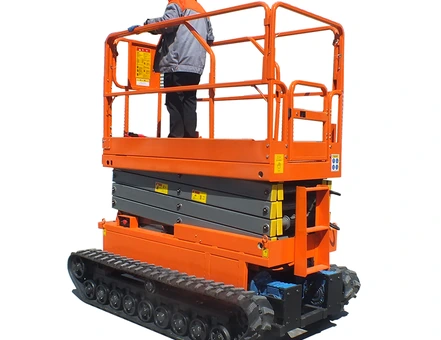
A crawler scissor lift, also called a tracked scissor lift, may suit a job where access or ground contact makes a wheeled machine less practical. Start with the full route and the final working position. Stowed width, turning space, floor protection, platform load, and working height all affect the choice. Tracks alone do not establish whether the machine fits a doorway, protects a finished floor, or can work on a slope.
The first useful question is simple: where must the machine travel, and what will it carry once it gets there? A narrow entrance, a soft route, a finished floor, and a high work point can create different demands. Describing the complete route gives a more reliable starting point than choosing from the phrase “crawler scissor lift” by itself.
Measure the Complete Access Route
Record the narrowest point
Measure the narrowest door, gate or corridor, then record the clear height and each turn. Match these dimensions to the lift in its permitted travel configuration. The space needed for travel can differ from the space needed to raise the platform or use the selected support arrangement. Confirm both before treating a narrow entrance as an access approval.
The YILU LIFT mobile scissor lift range includes crawler and other mobile formats. It helps narrow the discussion, while the selected model still needs a route check with its actual dimensions, controls, and travel position. Review the mobile scissor lift range alongside the route measurements when deciding which format deserves a closer look.
Look at transitions, not just the average surface
Track contact can help spread the machine’s load and maintain movement over some rough or sensitive routes, but thresholds, drainage channels, loose fill, and sharp changes in level remain important. Mark the transition from truck to ground, from outside to inside, and from the route to the final working pad.
If the floor is finished or the route is close to a wall, confirm the permitted ground-contact arrangement and whether protection mats are needed. It is easier to solve this before delivery than after marks or access restrictions appear on site.
Match Work Height and Platform Height
Use the task height, not the building height
Working height describes the approximate reach available to the operator. Platform height describes the deck position. Measure the highest fixing, inspection, cleaning, or installation point, then allow room for the operator to work from the platform without leaning beyond the guardrail.
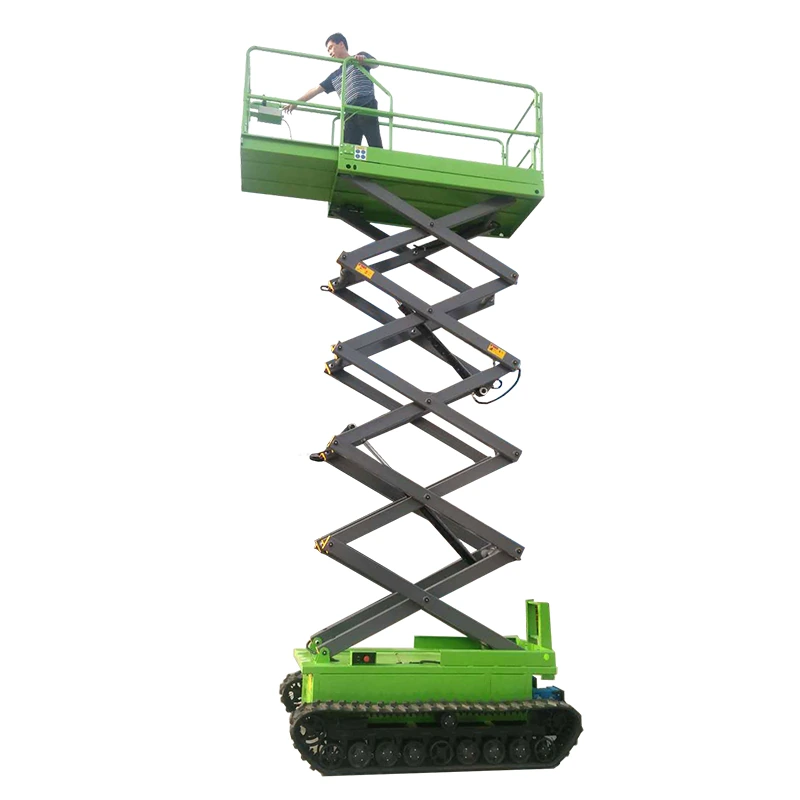
The YILU LIFT crawler scissor lift page describes a 6-14 m working-height range. That range is useful for early selection, but the chosen model’s platform height, stored height, and working envelope still need to be confirmed against the site.
Keep the platform load visible
List every item that will be on the platform: people, tools, cable, panels, lighting equipment, and temporary fixtures. A large work area can encourage more material to be carried than the deck rating allows. When the job involves long items, note their length and where they will be placed.
The product page presents a platform around 1,300 x 740 mm. That gives a useful sense of the working area, but the specific model and any extension or guardrail arrangement should be confirmed before the order. Platform size and capacity must be assessed together.
Check Ground Contact and Protection
Ask what the track is expected to cross
Describe the ground honestly: compacted soil, gravel, grass, concrete, stone, tile, or a protected interior floor. Also note wet areas, loose debris, slopes, and edges. A tracked machine may be a better fit for some routes, but it still requires a stable, suitable surface and the operating limits of the selected model.
For a finished floor, decide whether mats, boards, or another protection method will be used. The turning movement can matter as much as the straight travel path. If the site owner has a maximum floor load or a no-marking requirement, include that in the request for confirmation.
Leave room at the working position
Measure the parking area in the raised and lowered positions. Check the distance to the facade, steelwork, trees, cable trays, and other obstructions. Leave room for the operator to enter, control, and exit the platform, as well as for routine inspection.
A tracked base does not by itself mean automatic levelling. Confirm the chosen model’s levelling method, permitted operating slope, and any space needed for outriggers. Check the bearing conditions at the working position as well as along the route. If the lift will work beside a drop, excavation, or weak edge, include that location in the site review before delivery.
Select the Power Source for the Route
The YILU LIFT crawler scissor lift page describes electric power. That can suit projects where the machine moves between indoor and outdoor areas or where local operating rules limit engine exhaust. The charging point, cable route, duty cycle, and weather exposure should be checked before the machine is assigned to the job.
If the route includes a long travel distance or repeated repositioning, explain the daily cycle. If charging time is limited, request the relevant battery and duty information with the model recommendation. Avoid choosing power only from the platform height; the travel and charging pattern matters just as much.
For mixed indoor and outdoor work, note where charging will take place and whether the machine will be stored under cover. A short description of the normal shift is enough: how far the lift travels, how many times it is repositioned, and how long it stays elevated. These details help separate a machine that only reaches the required height from one that can keep up with the site routine.
Review the Working Sequence and Controls
Confirm where the operator will control the machine while it is travelling and while it is raised. Note whether the route requires a spotter, temporary barriers, or a clear line of sight. The control arrangement should suit the access route rather than forcing the operator to work around stored materials or a blind corner.
Before delivery, plan a basic inspection of tracks, guards, emergency controls, battery condition, and visible hydraulic or electrical components. Any site-specific training or operating procedure should be agreed with the responsible team before the lift is put into service. Keep the inspection record with the site documents. This also helps during handover.
Crawler or All-Terrain Scissor Lift?
An all-terrain scissor lift usually suits larger outdoor routes where four-wheel travel, clearance, outriggers, and a higher platform load are central considerations. A crawler scissor lift is often considered when the route is narrow, the ground contact needs to be distributed, or the machine must move across a more sensitive or mixed surface.
Neither format should be selected from a label alone. Compare the narrowest access point, track or wheel contact, platform height, load, working area, power, and the final floor together. If a project includes a rough exterior route followed by a finished interior floor, include both parts in the same enquiry.
Plan Delivery and Site Handling
Confirm how the machine will arrive, unload, and reach the work area. A delivery plan may need a ramp, forklift, crane, temporary matting, or a second access route. Note the transport height and width, then check the unloading point against the site entrance.
Ask the site team to identify overhead obstructions and temporary restrictions before delivery. A route that is open during the quotation stage may be partly occupied when the lift arrives. A marked plan with the access width, route surface, and parking area can shorten the model discussion.
It is also useful to note the order of operations at the site. The lift may need to unload first, cross a protected floor, wait while another trade clears the route, and then reach the final work point. If the route changes during the day, send the narrowest and most restrictive condition rather than the easiest one. A short video or marked-up plan can show thresholds, turning movements, and overhead clearance more clearly than a single entrance measurement. This keeps the crawler scissor lift recommendation tied to the whole working sequence.
FAQ
What is the main advantage of a crawler scissor lift?
The tracked base can be useful when access, ground contact, and surface protection are more important than road-style travel. Suitability still depends on the exact ground, route, platform load, and model limits.
Is a crawler scissor lift suitable for a finished floor?
It may be, provided the floor, track contact, turning method, and protection plan are checked in advance. Share the floor material and any no-marking requirement before selecting a model.
What should be sent with a crawler scissor lift enquiry?
Send the required working height, platform load, narrowest route width and height, surface types, thresholds or slopes, final working area, power conditions, and transport limits. Photos of the entrance and route are helpful without requiring a formal site survey.
Prepare a Crawler Scissor Lift Enquiry
The strongest first enquiry explains the access route and the work point together. Include the highest task, the people and materials on the platform, the narrowest passage, the ground or floor type, the charging arrangement, and a photo of the final parking area.
Share these details through YILU LIFT’s project enquiry page when a crawler scissor lift configuration needs to be discussed. Clear route information keeps the recommendation tied to the actual project instead of a catalogue label. A short route video or a marked plan is especially useful when the lift must pass through a narrow doorway, cross a threshold, or finish on a protected floor. The first enquiry does not need a formal site survey when the route limits are already marked.