
Pallet Lift Table Selection for Hand Pallet Truck Loading
Pallet Lift Table Selection for Hand Pallet Truck Loading
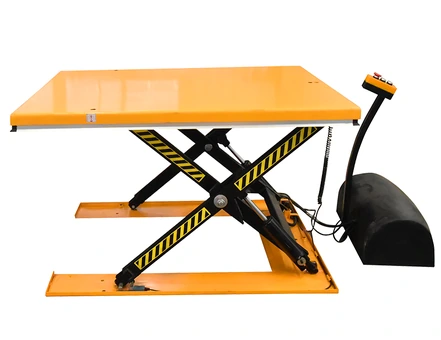
A pallet lift table can bring a loaded pallet closer to a useful packing or assembly height. For a station supplied by a hand pallet truck, the right choice starts at floor level: the truck must approach, place the pallet, and withdraw before the table raises the goods. Platform size, load capacity, ramp access, and the working height all belong in that decision.
YILU LIFT offers low-profile hydraulic lift tables with a loading ramp, alongside spring pallet positioners for a different type of handling task. This guide focuses on choosing a low-profile table around the pallets and trucks already used in a warehouse or production area. The aim is a practical shortlist, with enough application detail to request a relevant configuration and quotation.
Choose a Pallet Lift Table Around the Loading Method
Begin with the truck already on site
A hand pallet truck is often the link between pallet storage and a fixed workstation. Keeping that familiar loading method can be useful, provided the table and ramp fit the truck. Record fork length, outside fork width, lowered fork height, and the position of the small load wheels. A side photograph helps explain details that an overall truck width will miss.
The pallet matters just as much. Bottom boards, runners, blocks, and entry openings determine where the forks pass and how the load settles onto the platform. Include the pallet underside in the enquiry, especially when several pallet types share the same station. A table chosen around the regular production pallet is more useful than one selected from the goods weight alone.
Leave room to place the load and withdraw
Sketch the approach from the aisle to the ramp, including the operator behind the handle. Allow for the loaded truck to enter straight and the empty truck to leave once the pallet is supported. A nearby column or wall can affect the handle movement even when the pallet itself fits.
That sketch also shows where an electric pallet lift table could sit without interrupting adjacent work. For a compact packing area, the ramp footprint may influence the layout more than a small difference in platform length. Settle the approach direction early, before choosing a model from its dimensions.
Match the YILU LIFT Platform to the Pallet
Use the model table to build a shortlist
The YILU LIFT low-profile lift table range includes several platform sizes. Two useful starting points are HY1001, listed at 1,000 kg with a 1,450 × 1,140 mm platform, and HY2001, listed at 2,000 kg with a 1,600 × 1,200 mm platform. The suitable option depends on both the load and its support pattern.
Use the combined weight of the goods, pallet, and any fixture that will stay on the platform. If the proposed method involves carrying the pallet truck during lifting, discuss that arrangement separately with YILU LIFT. The quotation needs to reflect the complete load and intended use, rather than just the weight printed on the goods label.
Look underneath, not only around the edges
Compare the platform with the pallet’s bearing surfaces. An outer rectangle gives a quick size check, but the runners or blocks show where the weight reaches the table. Mark any overhang, unevenly packed cartons, or heavy component concentrated at one end. These details help YILU LIFT assess the proposed platform and loading arrangement.
A larger table can provide more support area, but it also occupies more floor space. Where two sizes both appear suitable, compare access to the goods, aisle clearance, and the regular pallet sizes before choosing. The best starting point is the model that fits the station, not simply the largest capacity in the range.
For example, a workstation handling one repeated pallet size can be assessed around that load’s regular support points. A mixed packing station needs the same check for each pallet base, including any smaller pallet whose runners sit farther inboard. Mark those differences on the enquiry drawing. This gives the model discussion a clear production context without requiring a separate document for every carton or component carried on the pallet.
Pair the Loading Ramp With the Lowered Height
Low profile makes floor-fed loading possible to consider
YILU LIFT lists a minimum height of 85 mm for HY1001 and 105 mm for HY2001. These low platforms are paired with a ramp for the transition from the floor. When looking for a ground level lift table, distinguish this ramp-fed arrangement from a table installed flush with the floor in a pit.
For ramp selection, share the available approach length and the truck’s ground clearance. The ramp width, slope, connection, and permitted wheel loading need to match the loaded truck. The small wheels and fork underside must clear the transition at both ends. A drawing of the table and ramp together is more useful here than a platform drawing on its own.
Compare installation work with available space
A pit-mounted arrangement may be worth discussing where the building and handling method support it. It introduces separate questions about the floor opening, drainage, edge protection, and maintenance access. A floor-mounted table with a ramp avoids a pit, but needs sufficient approach space.
For a leased building or a workstation that may move, those installation differences deserve attention before ordering. Send the site constraints with the enquiry so the proposed loading method can be considered alongside the equipment. Building modifications should be assessed by the responsible site professionals.
Check the Height Where the Work Happens
The working surface is usually the top layer of goods, not the bare platform. When a full pallet arrives, that layer may already be high. As cartons or components are removed, the table can raise the remaining load towards a more useful position. Check both the full pallet and the last layer, including any fixture that changes the handling height.
HY1001 has a listed platform range of 85–860 mm, while HY2001 is listed at 105–870 mm. Compare those ranges with the actual task. As a simple geometry example, a chosen hand-task height of 900 mm with the work surface 250 mm above the platform would require a platform position near 650 mm. This is an illustration, not a universal ergonomic recommendation.
Reach also affects the workstation. Workers may need access from two sides, or a separate arrangement for turning the load. Describe where packing, assembly, or picking takes place. Raising the pallet can address height, but the layout still needs to make the far side of the goods accessible.
Plan the Power Unit and the Daily Cycle
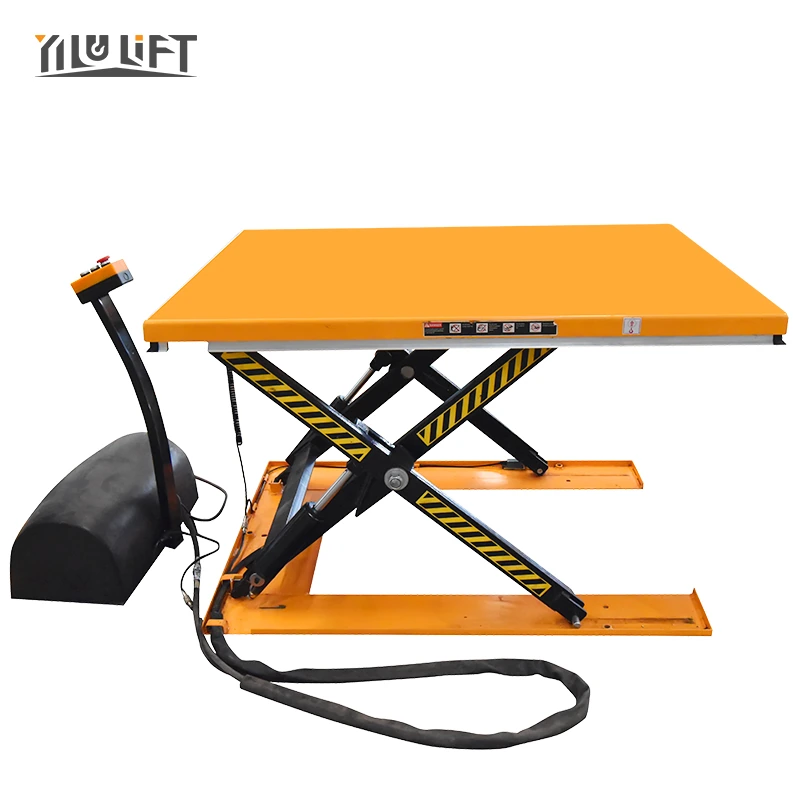
The pictured YILU LIFT configuration has a separate power unit and connecting hose. Include them in the station layout, with a route that stays clear of the ramp, truck wheels, and pedestrian access. Supply voltage, phase, frequency, and the preferred control position are useful details to send before the configuration is agreed.
The model table lists lifting times of 25–35 seconds for HY1001 and 35–45 seconds for HY2001. Those are lifting times, not complete pallet-handling cycles. Include loading, truck withdrawal, the work itself, lowering, and removal when describing the station’s required output. Pallets per hour and the busiest continuous work period give a clearer picture than shift length alone.
Keep the operator’s view of the moving platform clear. Discuss controls, lowering protection, maintenance support, and the equipment’s intended goods-handling use as part of the selected configuration. Operating and inspection arrangements should follow the applicable instructions and site procedures, with people kept away from the scissor mechanism and moving load.
Consider a Spring Positioner for Repeated Layer Handling
A YILU LIFT spring pallet positioner uses spring balancing and a rotating platform. It is worth comparing when the task centres on repeatedly adding or removing layers and turning goods towards the worker. A powered low-profile table is the more relevant discussion when the requirement includes powered positioning at selected heights.
These are different loading arrangements. Share the full and nearly empty pallet weights, the way pallets arrive, and the required working positions before choosing between them. Hand pallet truck access must be confirmed for the proposed setup; a spring positioner is not an automatic substitute for a ramp-fed table.
FAQ
Can an existing pallet jack load the table?
It may be suitable when the forks, wheels, pallet underside, and ramp fit together. Send the pallet and truck dimensions plus a side photo to YILU LIFT. Include the approach space so the discussion covers withdrawal as well as entry.
What should be included in a quotation request?
Start with pallet size, combined load, underside photos, truck dimensions, and the required work height. Add the available floor area, power supply, and expected pallets per hour. Ask the quotation to identify the table, ramp where needed, power unit, controls, and installation requirements.
Discuss the Loading Station With YILU LIFT
A pallet photo, truck dimensions, and a simple floor sketch are enough to start a focused equipment discussion. Add the maximum load and working-height requirement, then contact YILU LIFT about a pallet lift table configuration and quotation. Connecting those details early helps keep the model, loading method, and available space in the same conversation.