
Stone Vacuum Lifter Selection for Slab Handling Projects
Stone Vacuum Lifter Selection for Slab Handling Projects
A stone vacuum lifter needs to suit the slab, its contact surface, and the movement between pickup and placement. For a fabrication shop, that may mean transferring marble or granite with an existing forklift. An installation job can call for a mobile unit with positioning functions. A production station with suitable lifting support may call for a suspended configuration.
YILU LIFT has product families covering these different handling arrangements. Choosing between them starts with the actual application, then moves to capacity, cup layout, and access. This guide explains how to form a useful shortlist and what to send with an enquiry, so the equipment discussion stays close to the work the machine will perform.
Choose the Stone Vacuum Lifter Around the Job
Forklift attachments for an existing handling route
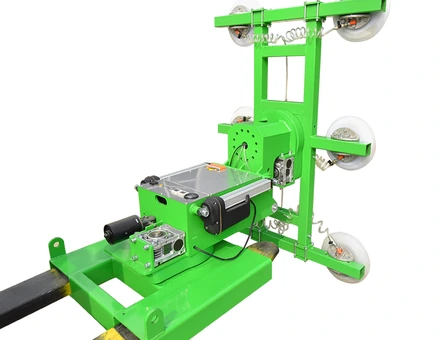
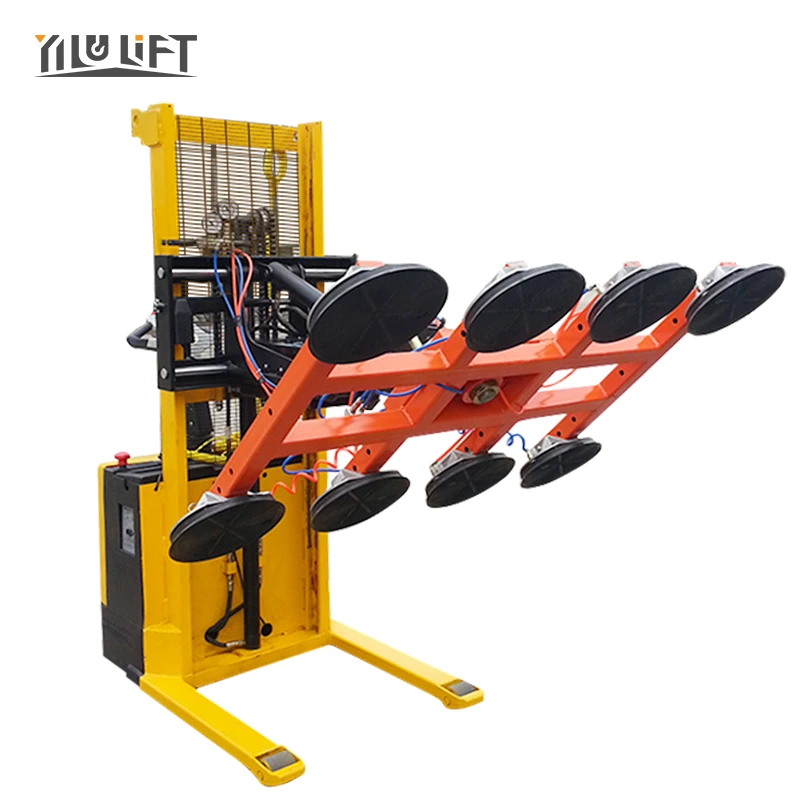
If a forklift already serves the slab storage and fabrication area, a fork-mounted vacuum lifter is a practical starting point for discussion. The YILU LIFT forklift-attached vacuum lifter range lists GL-SC configurations from 300 to 1,200 kg with four to twelve cups. Its listed movement functions include manual 360-degree rotation and 90-degree tilting.
Those functions are useful selection criteria when a slab changes orientation during handling. Match them to the actual pickup and landing positions, then consider the forklift interface. Fork dimensions, spacing, load centre, mast clearance, and turning room determine whether the truck and attachment can work through the planned route. The truck must carry the slab and attachment within its applicable capacity.
Mobile equipment for positioning work
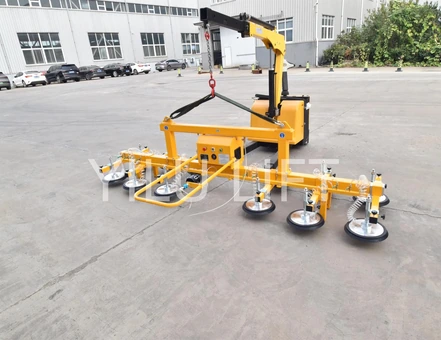
Where the job includes travelling with the load and positioning it near the installation point, start with the YILU LIFT heavy-duty mobile vacuum lifter. Listed features include electric side shift, electric tilt, and manual suction-plate rotation. The model table includes lifting heights of 1,600 or 2,500 mm and four- or six-cup arrangements.
Consider these functions against the last part of the movement. How close can the machine approach, how high must the slab reach, and is there room to turn? A photograph of the installation area can make that discussion much clearer. The suitable configuration depends on the slab and route together, including floor condition and available clearance.
Pneumatic equipment for a supported workstation
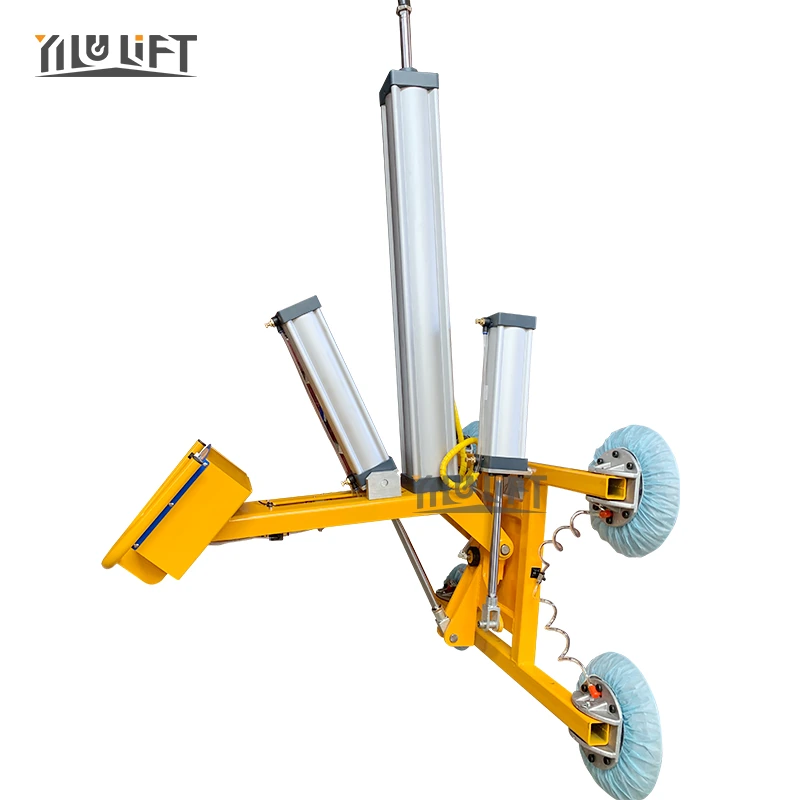
For a production area with suitable lifting support, the YILU LIFT pneumatic vacuum lifter range provides another route to explore. The product page identifies granite and marble applications and lists models from 200 to 500 kg with two, four, or six cups.
Show the crane, jib, or hoist that will carry the unit, together with the pickup and landing heights. Confirm the selected model’s power and air requirements, any hose routing, and the required movement with YILU LIFT. This keeps the quotation aligned with the workstation rather than treating the vacuum unit as a separate item.
Match Capacity to the Slab and Configuration
Use the real range of pieces
Prepare the dimensions, thickness, and weight of the smallest, regular, and heaviest slabs. A marble countertop blank and a large granite panel can place different demands on the frame even if their weights are similar. Include sink openings, unusual shapes, repairs, and any narrow sections that affect support.
Confirmed finished weight is preferable to an estimate. If a calculation is needed during early planning, use the actual material density and dimensions, then verify the result before handling. A drawing with weight marked on it also helps separate the regular production requirement from an occasional oversized piece. That distinction can influence both the model and the proposed cup arrangement.
Read each model’s load figures in context
The YILU LIFT heavy-duty mobile table lists separate maximum load and safe load values. The maximum figures are 400, 600, 800, and 1,000 kg; the corresponding safe load figures are 200, 300, 400, and 500 kg. Keep those columns distinct when building a shortlist, and contact YILU LIFT to confirm the applicable working limit for the chosen configuration and slab.
Capacity also relates to orientation, cup arrangement, and operating position. A higher headline value does not settle the selection on its own. Providing the load dimensions and planned movement lets the conversation focus on a model that fits the application. For a suspended or forklift-mounted unit, include the weight of attachments and rigging in the supporting equipment check.
Plan the Cups Around the Usable Stone Face
Mark where each cup can seal
The cup layout should follow the stone, not simply fill the available frame. Mark openings, grooves, labels, protective film, mesh backing, resin patches, and damaged areas on the slab drawing. A cup needs a suitable contact area clear of the edge and any feature that prevents the required seal.
For a countertop with a sink opening, the pickup centre may differ from the centre of the outer rectangle. Long or irregular panels need the same attention. A marked drawing gives YILU LIFT a useful basis for discussing the frame and cup locations, especially when the same machine must handle several slab sizes.
Consider support as well as lifting force
More cups do not automatically make a configuration suitable. Cup spread affects how the slab is supported between contact points. A thin, narrow, or heavily cut piece may need a different arrangement from a compact slab of the same weight. Any decision about lifting a damaged or fragile piece requires appropriate assessment.
Show the smallest piece as well as the largest. The frame must offer usable cup positions for the work being quoted, with any adjustment or cup isolation confirmed for that configuration. This is particularly useful when comparing a vacuum lifter for marble slabs across a varied fabrication schedule rather than one repeated panel size.
Describe the Surface Before Selecting the Pads
Send a close view of the contact face
Polished marble, honed stone, and a textured granite face should be described separately. Texture and porosity affect air leakage at the cup, while dust, moisture, slurry, and surface treatments can affect contact. Material names alone are not enough to decide which pads suit the job.
Send a close photograph of the face that the cups will touch, including any coating or backing. The OSHA stone-slab handling bulletin advises checking that suction cups are rated for the finish when handling unpolished slabs. That principle supports an application-specific pad discussion; it is not a claim that every stone finish suits every vacuum lifter.
Use a representative piece where compatibility needs checking
For an unfamiliar finish, discuss whether a representative test is needed before selecting the configuration. The piece should reflect the intended contact surface, not a polished sample of a differently finished slab. Any trial should follow the applicable equipment instructions and a controlled handling plan.
Existing surface notes or previous approved tests can help narrow the enquiry, but conditions still matter. Describe whether the slab arrives dry, wet, dusty, or freshly processed. That detail connects pad selection to the working environment and avoids treating a catalogue material description as a complete application specification.
Check the Transfer From Storage to Placement
Walk the route and record pickup height, landing height, doorways, aisles, turning space, and overhead clearance. Include any transition between vertical storage and horizontal placement. For mobile equipment, note thresholds, floor condition, slopes, and the space required around the carried slab.
The landing arrangement belongs in the discussion too. Show what supports the stone before pickup and after release, including racks, A-frames, fabrication tables, or installation supports. Separating a slab from storage may require its own method; the main transfer should not be assumed to cover every task around the rack.
Plan an exclusion area and keep people outside the slab’s possible fall path. Inspection, lifting support, load limits, and operating procedures remain part of the site’s handling arrangements. These precautions complement equipment selection and should be confirmed by the people responsible for the job, rather than inferred from a product photograph.
Make the Enquiry Specific Without Making It Complicated
A useful first enquiry can begin with a slab drawing and a few photos. Add the following where available:
- stone type, contact-face finish, dimensions, thickness, and weight;
- openings, backing, treatments, and usable cup areas;
- pickup and landing orientation, required tilt, and rotation;
- the handling route and available working space;
- forklift or lifting-support details and the available power or air supply;
- typical handling frequency and destination country.
Identify whether the requirement is for a forklift attachment, mobile positioning unit, or supported workstation, or ask YILU LIFT which family is worth considering. The quotation discussion can then cover the selected model, cup arrangement, movement functions, and project requirements. There is no need to resolve every detail before making contact.
FAQ
Can the same vacuum lifter handle marble and granite?
It may be possible with a suitable configuration, but each slab’s surface, weight, dimensions, and cup positions need consideration. YILU LIFT lists both materials within relevant product families. Send the actual contact-face and handling details to discuss their suitability for the intended equipment.
Which equipment type is worth considering first?
Start with the existing workflow. A forklift attachment suits discussion around a truck-fed route; a mobile unit offers a route to explore for positioning work; the pneumatic range is worth discussing for a supported workstation. Final selection depends on the slab, site, and selected model’s supply requirements.
Discuss a Stone Handling Configuration With YILU LIFT
The next step is to connect the stone, movement, and equipment in one enquiry. Send the slab and application details to YILU LIFT to discuss a stone vacuum lifter configuration and quotation. A clear view of the slab and its route is a useful starting point for a more relevant product conversation.