
Types of Vacuum Lifters Used for Glass Handling and Installation
Types of Vacuum Lifters Used for Glass Handling and Installation
Introduction
Dealing with glass sheets in a safe and effective way ranks high in today’s building, window-fitting, and factory sectors. As big building fronts and clever designs pop up more often, the need for spot-on and dependable lifting gear keeps climbing. That’s where YILU LIFT comes into play — a solid maker of cutting-edge glass vacuum lifters built for inside and outside jobs. These devices cut down on hands-on work. They also boost safety rules and let workers place glass pieces with pinpoint exactness, down to the millimeter.
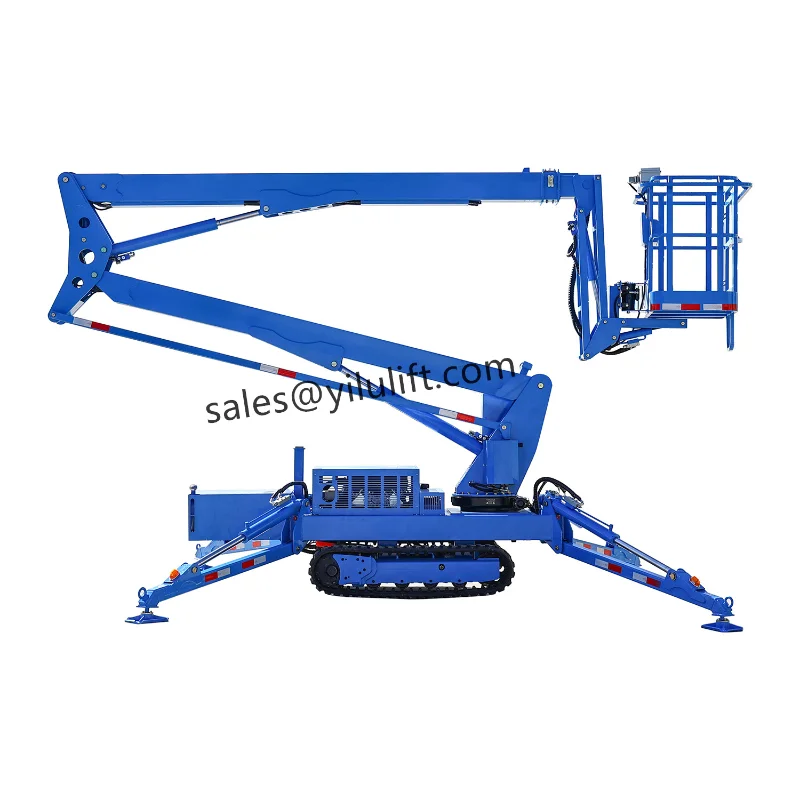
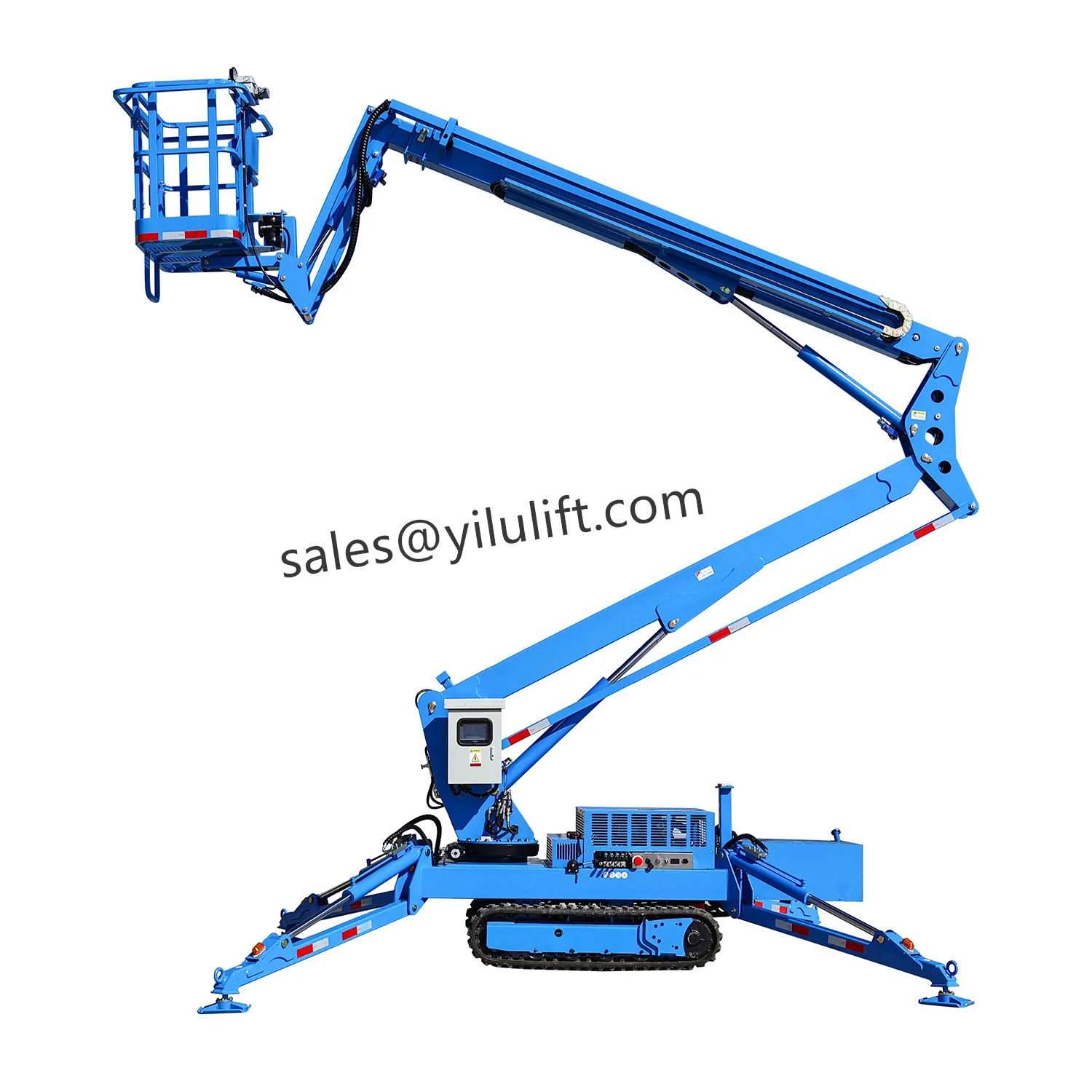
Just like those raised work platforms that demand thorough checks before use — “Before each shift change, the aerial work platform should be carefully inspected to see if there are cracked welds or other structural defects, leakage in the hydraulic system, damage to the cables, loose wire rope joints, and damage to the tires; and the various control systems should be operated to ensure that various actions can be completed.” — gear for handling glass professionally relies on steady inspections and worker training to keep things safe. In fact, skipping those steps can lead to real headaches on site, based on what installers often share from past projects.
How Vacuum Lifters Work for Glass Handling
Vacuum lifters use suction tech to grab smooth surfaces like glass without letting go. The setup usually has suction pads linked to a vacuum pump. That pump could run on electricity, batteries, or compressed air. Once turned on, it pulls air out of the pads. This builds a tight grip that holds hefty glass sheets steady, no sliding around.
Safety sits at the core of it all. Many newer vacuum glass lifters have two separate vacuum lines. These keep the hold firm even if one line quits. Loud buzzers warn folks if the suction dips too low. And shut-off valves kick in automatically to stop any surprise drops if power cuts out — kind of like “Emergency descending device: in case of sudden power failure, opening the emergency descending device can lower the equipment to a safe height.” Such backups make handling reliable, even when surprises hit. For instance, on windy days outdoors, these features have saved more than a few panels from mishaps, according to field reports.
Main Types of Glass Vacuum Lifters
Portable Manual Suction Cup Lifters
Small handheld versions suit light tasks, like putting in windows or doing inside glass work. These one- or two-pad gadgets weigh little. Still, they manage decent loads without trouble.
Battery-Powered Vacuum Lifters
Wireless types bring freedom and ease to job sites. YILU LIFT’s 400 kg battery models draw crowds from wall installers. They offer movement without dropping power, which shines in tight spots like urban builds.
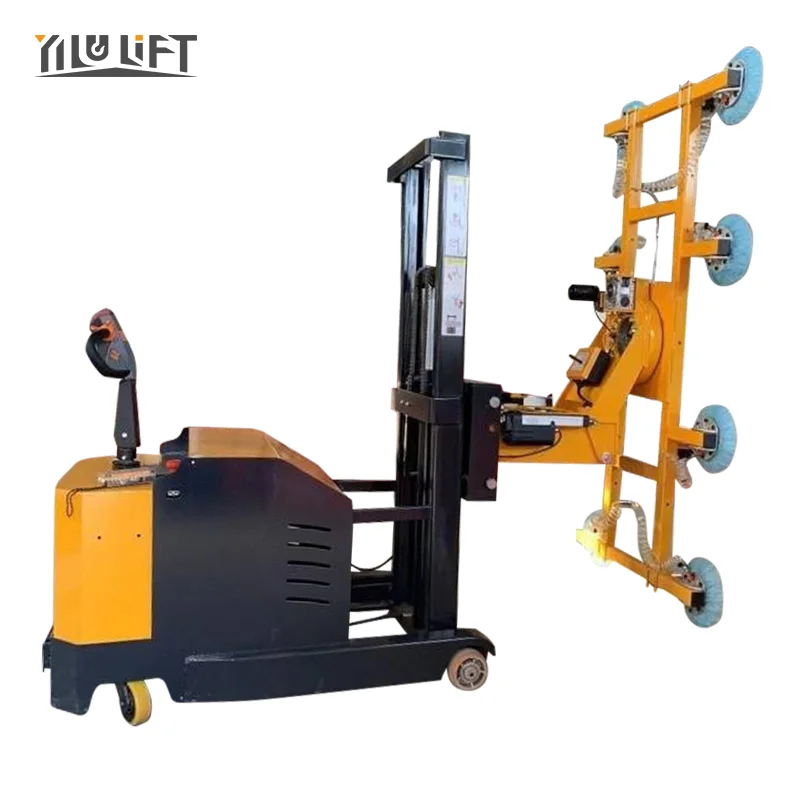
Electric and Pneumatic Vacuum Lifters
For big sheets or plant work, electric or air-powered units deliver steady force. Plenty include flip (0–90°) or spin (up to 360°) options. These make lining up pieces during setup a breeze. Operators appreciate how they cut setup time by half in busy factories, from real-world use.
Self-Propelled / Robotic Glass Lifters
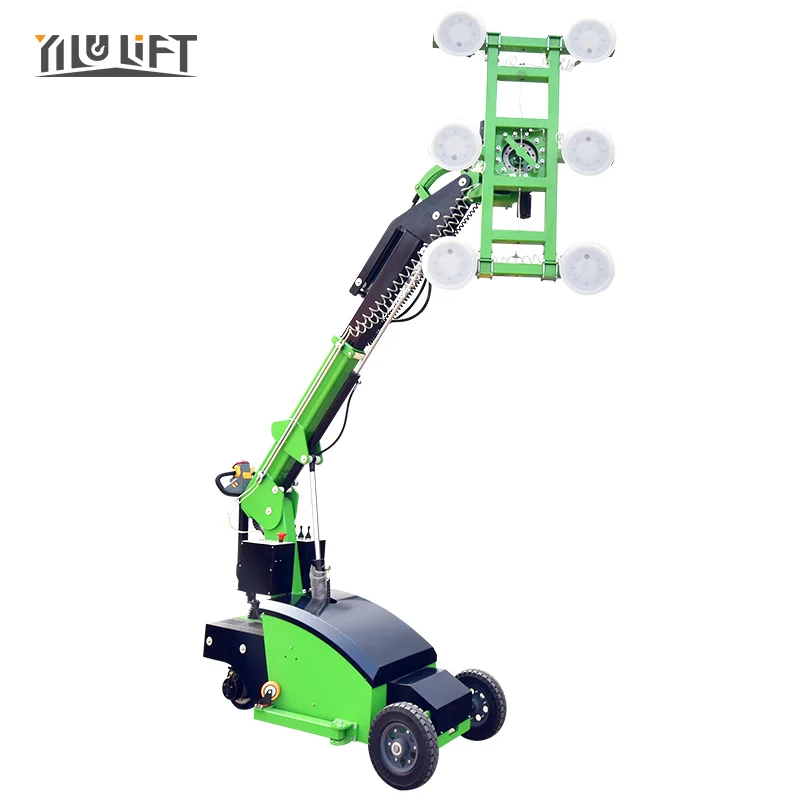
High-tech setups add drive motors and remote controls for smooth site travel. They mix careful gripping with user-friendly builds — a bit like “The scissor structure is made of high-strength manganese steel rectangular tube and is equipped with a power outage emergency descending device.” Toughness pairs with smart moves. And honestly, the remote feature feels like a game-changer on sprawling construction floors.
Crane-Suspended or Overhead Vacuum Lifters
Meant for huge factory lines or tall building glass jobs, these hook right onto cranes or overhead tracks. Their sturdy builds tackle giant panels for wall systems or fancy fronts.
Specialized Variants
Custom kinds cover bent-glass handlers, spinners, flip frames, and ones rated to 1600 kg. They’re spot-on for extra-large toughened or layered glass. Data from industry logs shows these handle 20% more volume in specialty shops.
Key Features and Selection Criteria
Picking a glass handling vacuum lifter hinges on a few key points that shape how well it performs:
|
Feature |
Description |
|
Load Capacity |
Models range from 200 kg up to over 1600 kg depending on configuration |
|
Tilt/Rotation |
Manual or powered motion: 0–90° tilt / 360° rotation |
|
Safety Systems |
Dual-circuit vacuum pumps, alarms, check valves |
|
Power Source |
Electric (AC), battery (DC), or pneumatic options |
|
Application Area |
Indoor assembly lines vs. outdoor facade installation |
The best pick ties to sheet size, lift height, site setup (watch for breezes), and power options nearby. The same thinking fits hydraulic lifts — “Different hydraulic lifts have different requirements for the use environment and their own parameters (such as rated load, lifting height, table size, shaft size).” Projects match gear specs to actual needs. Take a facade job: ignoring wind ratings once led to delays, but proper picks kept things on track.
Applications of YILU LIFT Glass Vacuum Lifters
YILU LIFT’s range fits various fields:
- Curtain Wall Installation:Large glass panels lifted directly into facade frames.
- Window Glazing:Smooth placement without fingerprints or edge damage.
- Architectural Projects:Safe handling of decorative curved glass.
- Factory Use:Efficient movement of sheets between cutting tables and tempering furnaces.
- Maintenance Work:Replacement of damaged panels at height using crane-suspended units.
Their strong make echoes heavy-duty lift platforms noted as “Fixed lifting platform is a cargo lifting equipment with good lifting stability and wide application range.” Stability means safety, plain and simple. In maintenance gigs, for example, these have cut repair times from days to hours on high-rises.
Advantages of Using Professional Glass Vacuum Lifters
Top-notch vacuum setups bring clear gains:
- Enhanced Safety:Cuts down injury chances from heavy hand-lifting.
- Labor Efficiency:Needs fewer hands per setup job.
- Reduced Breakage:Spreads pressure evenly to avoid splits.
- Ergonomic Design:Eases strain on backs and arms for workers.
- Long-Term Savings:Drops ongoing costs, paying back the upfront spend fast.
Like self-driven scissor lifts with “compact structure, large load capacity, strong passability and good maneuverability,” “The scissor lift platform has the characteristics of compact structure, large load capacity, strong passability and good maneuverability.” YILU LIFT’s vacuum lifters blend solid build with simple handling — made for pros who put trust in gear that just works. It’s worth noting how these have trimmed crew sizes by 30% on average installs, per shop floor stats.
Conclusion
Putting money into solid vacuum glass lifters changes how building crews tackle tough glass tasks. From small grabbers to smart carts hauling huge front panels outside, YILU LIFT delivers reliable fixes for all sorts of settings. Every unit shows thoughtful design tweaks over years, zeroing in on safety, exact control, and lasting use — positioning YILU LIFT as a go-to ally for any fresh glass project. For further information or tailored solutions, please contact YILU LIFT.
FAQs
Q1: What are the main types of glass vacuum lifters available?
A: Common categories include portable manual suction cup lifters for small jobs, battery-powered mobile units for fieldwork, electric/pneumatic tilting systems for heavy-duty tasks, self-propelled robotic glass lifters for automated movement, and crane-suspended models used in production lines.
Q2: How much weight can YILU LIFT glass vacuum lifters handle?
A: Depending on configuration, YILU LIFT offers models ranging from 200 kg capacity up to heavy-duty versions rated at 1600 kg suitable for architectural glass projects.
Q3: Are YILU LIFT vacuum glass lifters suitable for outdoor use?
A: Yes. Selected models feature weather-resistant components and stable suction performance designed specifically for outdoor facade installation under variable conditions.
Q4: What safety features do glass vacuum lifters typically include?
A: Most professional units incorporate dual-circuit vacuum systems, low-pressure alarms, automatic shut-off valves during power loss, and durable suction pads providing secure adhesion throughout operation.
Q5: How do I choose the right vacuum lifter for my project?
A: Evaluate factors like panel dimensions, required tilt/rotation functions, access space at site (indoor vs outdoor), and preferred power source. Consulting YILU LIFT specialists helps match each project’s technical requirements accurately.