

Boom Lift Cost Guide 2026: Reduce Downtime and Service Costs
Boom Lift Cost Guide 2026: Reduce Downtime and Service Costs
Boom lift cost is easy to compare on a quotation. The harder part comes after delivery, when the lift has to work every week, move between jobsites, pass daily checks, and stay available when the schedule is already tight.
For many B2B buyers, the first price is not the number that causes trouble. Downtime does. A rental company loses income when a lift sits in the yard waiting for service. A contractor loses time when a crew is ready but the machine cannot work. A facility team may miss a short maintenance window because one hydraulic issue was ignored the day before.
In 2026, many buyers are looking past the first quote and asking what the lift will cost once it starts working. Service costs, spare parts, power type, transport, operator habits, working height, and supplier support all affect the real cost of ownership.
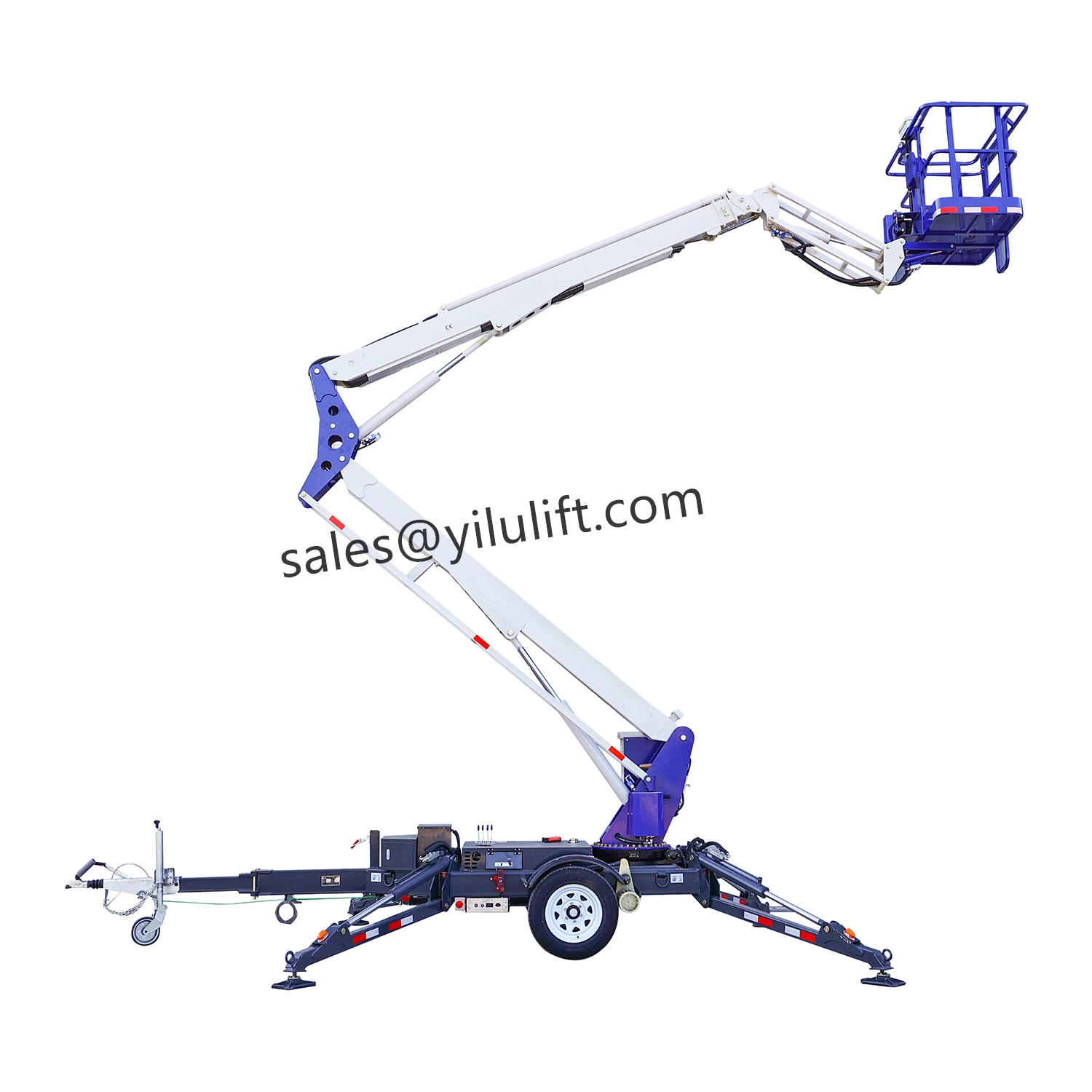
For maintenance crews, contractors, and municipal service teams, YILU LIFT’s towable articulated boom lift range fits many everyday access jobs, from lighting work to installation and building support. In practical terms, the range gives buyers 12m to 26m working height options, with 200kg load capacity depending on the model. Those numbers matter because height, load, and power options can change how much the machine costs to use over time.
What Drives Boom Lift Cost Beyond the Purchase Price?
Why Purchase Price Is Not the Full Boom Lift Cost
A boom lift price usually changes with working height, outreach, platform capacity, structure, power source, and safety configuration. A smaller lift for building maintenance will not carry the same cost as a higher-reach model used for outdoor construction, façade work, or steel structure access.
The quotation only shows the starting point. The rest appears during daily use.
Freight, operator training, routine service, hydraulic parts, batteries, tires, outriggers, replacement parts, and lost labor time all become part of the real cost. These items are not always discussed during the first sales call, but they show up later.
A cheaper machine can become expensive if it needs frequent service, while too much reach can add cost without improving daily work. A 26m unit is useful when the job needs that height. It is not always the right choice for low-rise maintenance, indoor repair work, or simple lighting jobs.
Downtime Can Cost More Than Repairs
Repair cost is visible. Downtime cost is easier to miss.
If the boom lift halts mid-process while doing lighting work, there could be several individuals waiting, such as electricians, maintenance personnel, safety monitors, or subcontractors. Should the boom lift belong to a rental pool, any time wasted equals lost money from renting out.
Downtime also brings the kind of trouble that does not fit neatly into a spreadsheet. A site manager may need to reschedule, rent another lift, or call a technician back twice. Over a year, these small delays can change the real boom lift cost more than buyers expect.
For rental fleets, the most expensive lift is often not the one with the highest purchase price, but the one that misses too many booked days. One missed booking can erase the savings from a cheaper model.
Choosing the Right Boom Lift to Cut Service Costs
Match Working Height and Load Capacity to the Job
Before choosing a model, buyers should check the real working height, side reach, platform load, and site layout. YILU LIFT towable boom lift models cover 12m to 26m working heights, with 200kg load capacity depending on the model. That range can cover many B2B tasks, but the best option depends on how the lift will actually be used.
For example, sign installation may need outreach more than heavy platform load. Warehouse maintenance may need cleaner power, quiet operation, and compact setup. Outdoor building work may require more height and stronger site planning.
A good boom lift cost decision starts with the worksite, not the largest number in the product table.
Electric, Battery, Diesel, or Gasoline: Which Affects Operating Cost?
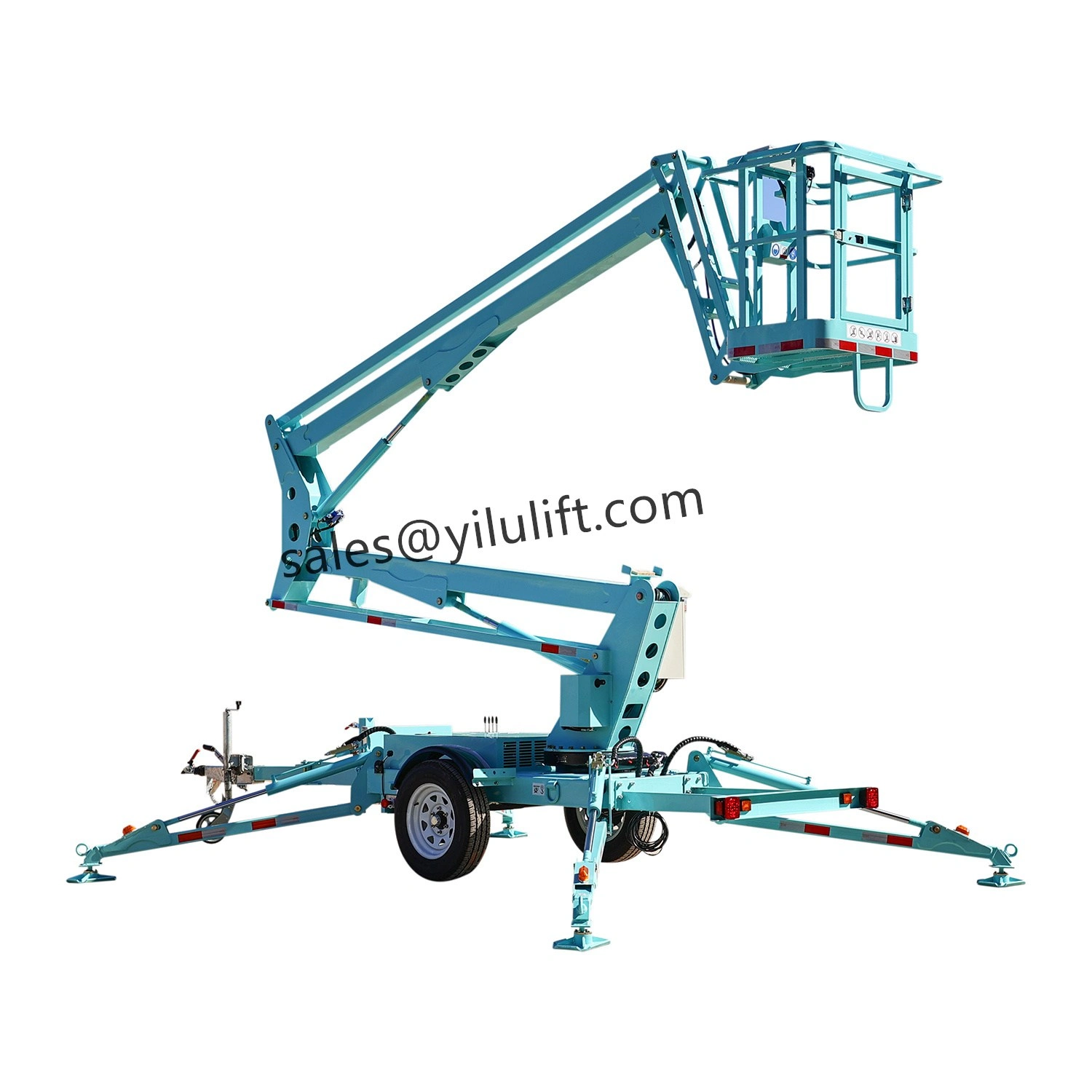
Power choice also changes ownership cost. YILU LIFT’s towable boom lift product page lists AC-electrical, diesel, gasoline, and DC battery power options. Each option fits a different use case.
Electricity or battery power may be more appropriate for indoor tasks, quiet areas, and places where exhaust is a concern. However, diesel fuel or gasoline might be the best option for outdoor tasks where access to a charger may be difficult. The correct choice depends on job frequency, site rules, and service habits.
A good model can still become costly if charging, hydraulic checks, or daily inspection are handled casually. Poor charging routines, dirty hydraulic oil, worn hoses, and ignored warning signs all raise service costs.
For facility maintenance teams, choosing too much working height may increase purchase and storage pressure without improving daily work efficiency. For contractors, choosing too little reach can create the opposite problem: extra rental cost, delayed work, and more site coordination.
How to Reduce Boom Lift Downtime in Real Use
Keep Daily Checks Short but Consistent
Boom lift maintenance does not need to be complicated. It needs to happen before the machine fails.
A practical daily check should cover:
- Battery level and cables
- Hydraulic leaks
- Tires and outriggers
- Platform controls
- Emergency lowering
- Guardrails and basket gate
- Boom joints and visible wear
- Load labels and warning signs
A five-minute inspection is not exciting. It is also much cheaper than a lift parked for two days because a small problem was missed.
Operator Training Helps Reduce Boom Lift Service Costs
Operator behavior has a direct effect on boom lift service costs. Overloading the platform, moving too sharply, setting up on poor ground, ignoring alarms, or charging the battery badly can shorten equipment life.
Training should cover safe setup, load limits, emergency controls, wind conditions, daily inspection, and when to stop work. A trained operator protects people first, but also protects the equipment budget.
For rental fleets, this point is even more important. A machine may be used by different customers every week. Clear handover instructions and basic operation guidance can prevent a lot of avoidable damage.
Why Supplier Support Helps Reduce Boom Lift Downtime
A boom lift supplier should not be judged only by the first price. For B2B buyers, parts support, technical communication, model advice, and service response all affect downtime.
This matters even more in export markets. A small part that is hard to identify can stop a machine longer than expected. Clear product parameters, quick communication, and practical configuration advice help buyers avoid mistakes before the order is placed.
When considering boom lifts cost for the year 2026, YILU LIFT can assist in making decisions based on the work height, load requirements, power type, and application sites. When renting aerial lifts, one that is readily available will be of much higher worth compared to that which appears to be less expensive initially.
Conclusie
Boom lift cost is not just the purchase price. It includes downtime, service costs, transport, operator training, power choice, spare parts, and whether the lift fits the job.
Towable boom lift could make sense for maintenance crews, contractors, rental firms, and municipalities who would benefit from an easily flexible lifting equipment. It is possible to avoid service complications by opting for the correct height, load capacity, and power source.
For B2B buyers planning a new project or fleet purchase, YILU LIFT can help match boom lift specifications with real jobsite needs. Contact YILU LIFT to discuss working height, power options, load requirements, and a suitable boom lift quote.
Veelgestelde vragen
Q1: What is included in boom lift cost besides the purchase price?
A: Boom lift cost includes freight, service, spare parts, battery or hydraulic maintenance, operator training, transport, storage, and downtime. For B2B buyers, downtime is often the cost that hurts most.
Q2: How high should a towable boom lift reach?
A: The right height depends on the jobsite, side reach, platform load, and access conditions. YILU LIFT towable boom lifts cover 12m to 26m working heights for different B2B access needs.
Q3: How can companies reduce boom lift downtime?
A: Companies can reduce downtime through correct model selection, daily checks, trained operators, common spare parts, and reliable supplier support.
Q4: Which parts affect boom lift service costs most?
A: Hydraulic hoses, oil condition, batteries, outriggers, tires, platform controls, boom joints, and emergency lowering systems have the biggest impact on service costs.
Q5: Does an electric boom lift lower operating cost?
A: An electric boom lift can lower operating cost for indoor, quiet, or low-emission jobs. Diesel or gasoline power may still be better for outdoor sites where charging is limited.
