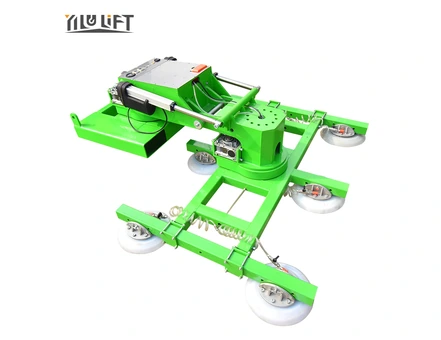

Tilting Vacuum Lifter: Match the Movement to the Job
Tilting Vacuum Lifter: Match the Movement to the Job
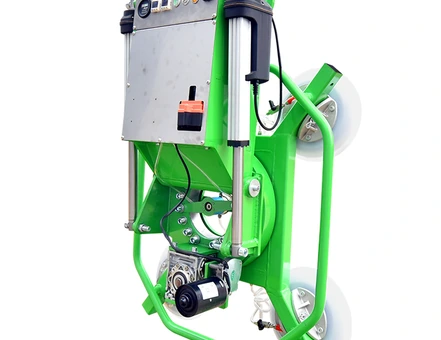
A tilting vacuum lifter needs to match the whole movement of a glass sheet or panel, from its starting position to its final support. The load weight is only part of that choice. The enquiry also needs to describe which way the sheet turns, what powers each movement and how much space the load has along the route.
A request for “tilt and rotation” can leave all of those details unclear. Two buyers can use the same words while picturing quite different jobs. A short description of the actual move usually gives the equipment discussion a firmer starting point.
Describe the Starting and Finishing Position
Begin with the load at rest. Is it lying flat on a table, standing on a rack or already held at an angle? Then describe how it needs to sit at the receiving station. Include which face should be accessible and which edge should be at the bottom.
For enquiry purposes, tilting can describe the change from a flat sheet to an upright sheet, or the reverse. This describes a required action; it does not establish the angle or working range of any particular product.
Suppose a glass sheet starts flat on a workbench and needs to finish upright at a rack. That description is more useful than “vertical handling.” If the sheet also needs its long edge turned to a different direction, that is another part of the movement to explain. This is an example of how to describe a job, rather than a YILU installation case.
A pair of sketches can be enough at this stage. Mark the starting face, the finishing face and the direction of travel. Station photographs add context, especially where the receiving position is close to other equipment.
YILU LIFT asks for the material, size and weight when discussing a proposal. Adding the start and finish positions turns those load details into a handling description. It also makes the unanswered questions easier to identify before a configuration is selected.
Separate Tilting from Rotation
“Rotation” needs an axis. A sheet may turn within its own plane, changing which edge is uppermost, or change direction around another axis. Naming the movement alone leaves room for misunderstanding. Showing the before-and-after positions makes the requirement clearer.
Power deserves the same attention. Vacuum generation, tilting and rotation are separate points to confirm. The word electric should not be expected to explain all three.
For example, the published table for YILU LIFT’s H-frame vacuum lifter configuration lists manual turning/rotation as standard, with electric turning/rotation as an option. That is a specific configuration distinction, rather than a rule for the full product range.
The practical question is what the proposed unit will do at each stage of this job. Which movement is manual? Which is powered? Does the sheet need both movements during the same transfer? The answer should refer to the particular configuration under discussion.
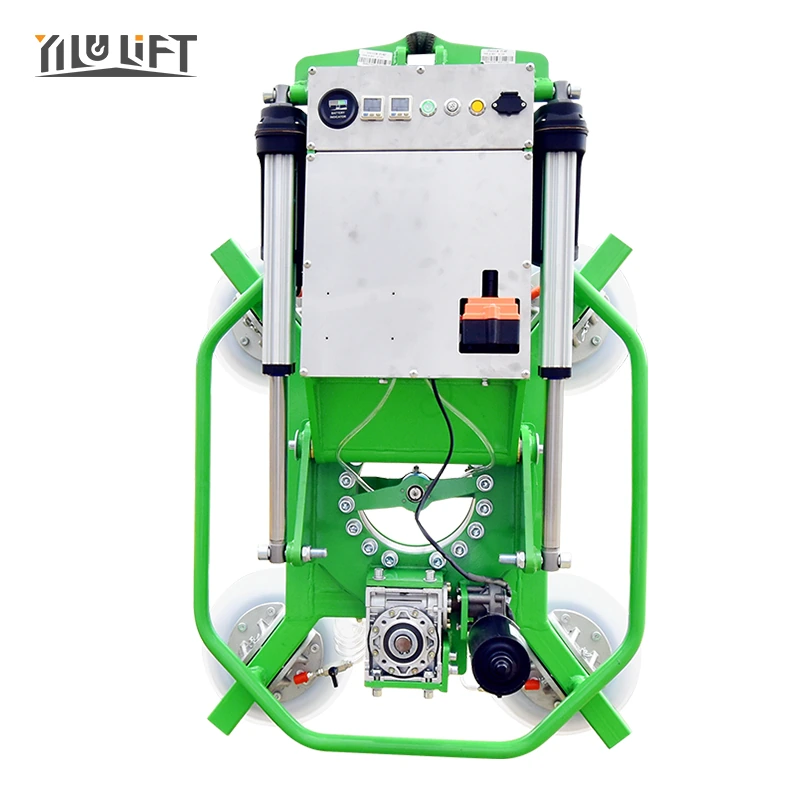
A sketch with arrows is often more helpful than a longer list of equipment terms. It gives buyer and equipment contact the same movement to discuss, without relying on an assumed meaning of “turn,” “tilt” or “rotate.”
Allow Room for the Load to Move
A sheet has to fit through the transfer, not just at its two resting positions. The space discussion therefore needs the load outline and the attachment together.
Useful information includes the available height, nearby machines, rack supports and the space at the receiving station. Where an edge will pass close to an obstruction, mark it on the drawing. The aim is to identify the actual clearance question, rather than apply an unsupported minimum distance.
BAŞ KALDIRMA fully electric X-frame vacuum lifter has detachable arms to reduce its size. That feature should be discussed in its proper context. A smaller transport arrangement does not establish which arm arrangement is approved for lifting a particular load.
For working clearance, the relevant outline is the unit in its intended lifting configuration, together with the sheet throughout the required move. A storage or transport photograph cannot settle that question.
There is also a difference between moving a small sheet and moving the largest sheet in a planned range. The enquiry should identify both if both are part of the job. Otherwise, a drawing that looks comfortable for one size may leave the more demanding transfer unexplained.
Confirm Capacity for the Working Position
A capacity figure is useful only when its application is clear. For a tilting job, the required confirmation needs to cover the material, cup arrangement and working positions, including the movement between them.
Inclined sheets can slide across pads. An attachment therefore needs to be designed for inclined loads; the ability to lift a sheet while flat does not establish that suitability. This is why tilting belongs in the equipment assessment from the start, rather than appearing as an extra request after capacity has been agreed.
YILU LIFT’s described fully electric X-frame has independent air inlets, allowing individual cups to be disabled. The feature does not mean every reduced cup arrangement retains the original capacity. Any intended arrangement needs its own confirmation for the load and movement being discussed.
For the same reason, counting cups and adding presumed individual capacities is not a sound basis for choosing the complete unit. The assessment concerns the assembly on the actual material surface under the expected movement conditions.
This is a specification discussion, not an instruction to try an unconfirmed movement. Before equipment is selected, the parties need a shared description of the application and the limits of the proposed configuration. Changes to the sheet, the active cup arrangement or the required movement should remain visible in that discussion.
Put the Required Movements in the Enquiry
A useful tilting vacuum lifter enquiry can be short. It should make the job easy to picture and keep the load details connected to the movement requirements.
- Identify the material, surface, dimensions and weight.
- Show the load at pick-up and at its final supported position.
- Mark the direction of tilt and the axis of any additional rotation.
- State which movements need to be powered and which may be manual.
- Include the lifting equipment, available height and nearby obstructions.
- Describe any planned changes in sheet size or cup arrangement.
An existing layout drawing or a few station photographs may already contain much of this information. Where a movement has not yet been decided, label it as a question instead of leaving the equipment contact to infer it.
To discuss the required lifting movements with YILU LIFT, bring the load description and the start-and-finish sketch together. The useful outcome is a configuration discussion built around the actual job: how the sheet is held, how it moves and where it needs to finish.