
Cómo seleccionar el elevador de vidrio por vacío adecuado para trabajos de instalación.
Cómo seleccionar el elevador de vidrio por vacío adecuado para trabajos de instalación.
Introducción
Las zonas de construcción modernas, especialmente aquellas con muros cortina y fachadas de vidrio, requieren precisión, seguridad y rapidez. El elevador de vidrio por vacío es una herramienta fundamental en estas operaciones, ya que permite controlar de forma segura paneles pesados y delicados en altura. Se han abandonado prácticas antiguas como el transporte manual y el izaje, recurriendo a diversas soluciones caseras. Ahora, se utilizan soluciones personalizadas y adaptadas con precisión. Los métodos de instalación de vidrio están experimentando transformaciones significativas. Esta evolución demuestra cómo los equipos de elevación modernos han sustituido las peligrosas técnicas manuales.
La instalación de grandes paneles de vidrio presenta varios problemas difíciles. Estos incluyen pesos sustanciales que requieren una elevación firme. También hay exteriores delicados que se marcan con facilidad. Además, los entornos en edificios altos exigen una gestión cuidadosa. Seleccionar el elevador de vidrio con ventosa adecuado de YILU LIFT Ayuda a ahorrar tiempo. Además, reduce la probabilidad de que los paneles sufran daños. Este aspecto es importante para controlar los costos y proteger al personal.
Evaluación de los requisitos de su proyecto
La elección de un elevador de vidrio por vacío comienza por comprender las necesidades principales de su proyecto. YILU LIFT ofrece modelos que abarcan un amplio rango de pesos, desde unidades de 200 kg para trabajos básicos de acristalamiento en interiores hasta sistemas robustos de más de 1600 kg para paneles de fachada o losas de mármol.
Tipo de material
Los diferentes materiales requieren configuraciones de succión particulares:
- Vidrio plano o curvado:Las ventosas estándar se adhieren a láminas lisas y planas. Por otro lado, los brazos ajustables se adaptan a superficies curvas.
- Paneles de gran formato:Estos sistemas requieren puntos de succión distribuidos uniformemente para prevenir fracturas por estrés.
- Materiales no porosos:Elementos como láminas de metal, bloques de granito o paneles compuestos funcionan bien con la misma técnica de vacío.
Condiciones del lugar de trabajo
Para trabajar al aire libre se requieren baterías resistentes a la intemperie y mecanismos de sellado robustos. Las tareas en alturas elevadas se benefician de los controles inalámbricos. En espacios interiores reducidos, pueden ser útiles los modelos compactos con ruedas. Cada condición influye en la elección de la opción más adecuada.
Tipos de elevadores de vidrio por vacío YILU LIFT
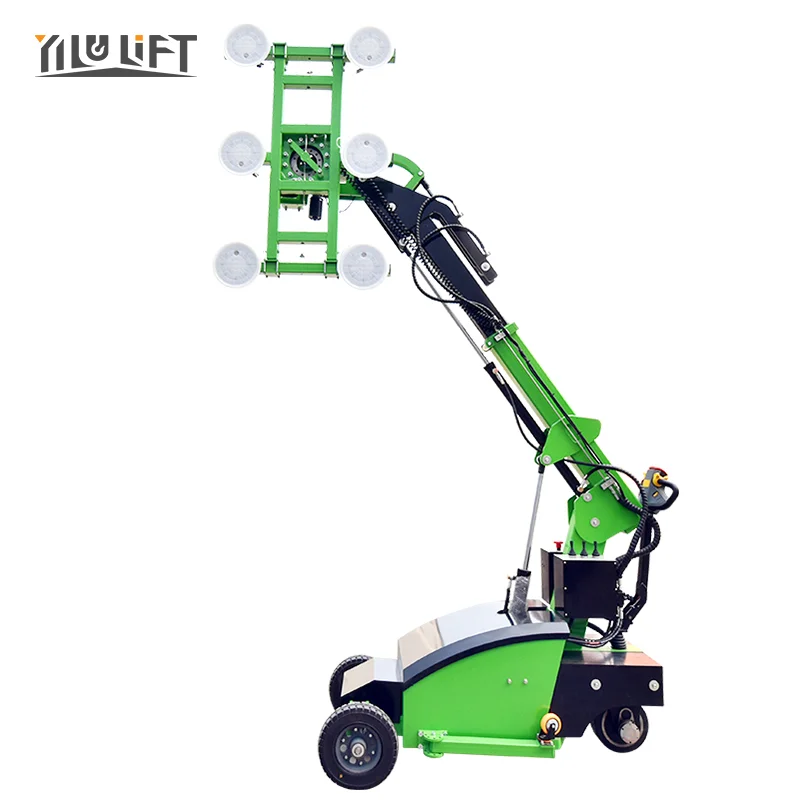
YILU LIFT fabrica varios tipos de elevadores de ventosa de vacío. Otros se refieren a ellos como robots elevadores por vacío o robots de acristalamiento. Se adaptan a diversos entornos y necesidades de capacidad. Gracias a nuestros derechos de propiedad intelectual exclusivos, hemos desarrollado modelos mejorados. Entre ellos se incluyen las series GL-LD y GL-HD, así como varias variantes montadas sobre carro.
Opciones de fuente de alimentación
- Modelos alimentados por batería:Ofrecen total libertad de movimiento y funcionan en lugares sin suministro eléctrico fiable. Sus baterías recargables permiten un uso prolongado.
- Modelos eléctricos:Proporcionan energía constante para instalaciones interiores o ciclos frecuentes.
- Semieléctricos / montados sobre carro:Combinan el posicionamiento manual con sistemas de vacío y elevación motorizados para obtener resultados rentables.
Configuraciones
Ofrecemos diversas configuraciones de ventosas, como en forma de X, de H o con diseños personalizados. Esto garantiza una distribución uniforme del peso y reduce la tensión en los paneles.
Resumen de la serie principal
Cada serie, incluyendo la especializada elevador de ventosas Este sistema emplea tecnología de vacío avanzada para un funcionamiento fiable en diversas circunstancias, como condiciones de viento o superficies irregulares.
|
Serie |
Tipo |
Rango de carga |
Modelos comunes |
Aplicaciones principales |
|
Serie GL-LD |
Estándar / Rotativo |
200–800 kg (distinción entre retracción y extensión; por ejemplo, 300-800 kg retracción, 150-400 kg extensión en algunas configuraciones) |
GL-LD-200 a GL-LD-800 |
Instalación general de vidrio, manipulación de materiales en interiores y exteriores, opciones disponibles para terrenos difíciles. |
|
Serie GL-HD |
De alta resistencia |
400–1000 kg+ (carga segura generalmente de 300 a 800 kg; máximo hasta 1000 kg personalizable) |
GL-HD-400 a GL-HD-1000+ |
Grandes muros cortina, fachadas, paneles arquitectónicos pesados, instalaciones en rascacielos. |
|
Elevadores montados sobre carro / semieléctricos |
Semieléctrico / Montado sobre carro |
200–400 kg |
Diversas configuraciones de carrito |
Transporte en interiores, posicionamiento preciso, talleres o lugares que requieren movilidad sin alimentación eléctrica completa. |
Cada serie emplea tecnología de vacío avanzada para un funcionamiento fiable en diferentes circunstancias, como condiciones de viento o superficies irregulares.
Características esenciales para una instalación segura y eficiente
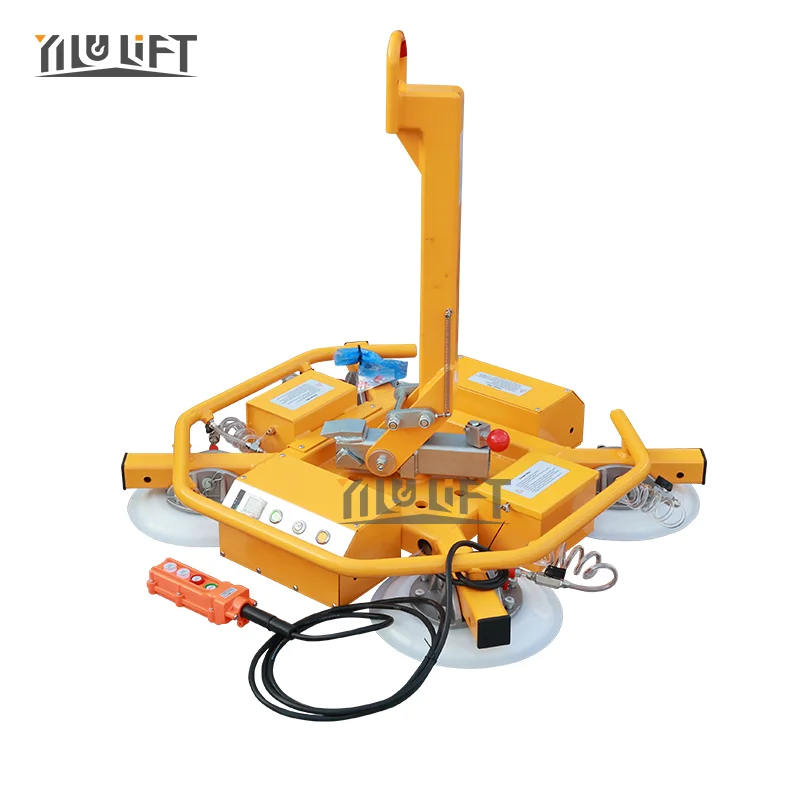
La seguridad es fundamental al manipular cargas suspendidas a gran altura. Un elevador de vidrio por vacío fiable debe incluir mecanismos de respaldo. Estos mantienen la sujeción incluso en caso de cortes de energía o impactos repentinos. La válvula de seguridad unidireccional de acoplamiento rápido y la ventosa de vacío de amplio alcance garantizan que el objeto elevado permanezca en su lugar si se interrumpe el suministro eléctrico.
Las características principales de los equipos YILU LIFT incluyen:
- Sistema de vacío de doble circuito:Dos circuitos independientes mantienen la succión si falla una de las vías.
- Rotación de 360° y ajuste de inclinación:Esto permite una alineación precisa durante la colocación sin necesidad de reposicionar las grúas.
- Almohadillas suaves que no rayan:Evitan daños en los recubrimientos de vidrio templado o de baja emisividad. La ventosa entra en contacto directo con el vidrio, previniendo así arañazos, golpes y otros daños causados por cuerdas, abrazaderas y similares.
- Alarmas e indicadores:Las alertas sonoras por baja presión de vacío o niveles bajos de batería mantienen a los operadores informados de inmediato.
- Certificación CE y funcionamiento remoto:El cumplimiento de los estándares globales fomenta la confianza en los proyectos a nivel mundial.
Guía de selección paso a paso
- Evaluar las especificaciones y el peso del material.– Determine el peso total del panel, incluyendo cualquier complemento. Elija siempre un modelo con una capacidad nominal al menos un 20 % superior a la carga prevista. Esto crea un margen de seguridad.
- Capacidad de coincidencias y diseño de las almohadillas– Para paneles de gran tamaño o fachadas curvas, seleccione brazos de soporte ajustables. Estos proporcionan una distribución uniforme de la presión sobre las superficies.
- Seleccione la fuente de alimentación y la movilidad.– Los talleres interiores pueden optar por modelos eléctricos enchufables. Las fachadas exteriores suelen utilizar unidades alimentadas por baterías que se pueden recargar.
- Considere el presupuesto y el retorno de la inversión.Los modelos premium conllevan mayores costos iniciales. Sin embargo, sus ciclos más rápidos reducen considerablemente el tiempo de mano de obra. En consecuencia, mejoran el retorno de la inversión.
- Opciones de personalización– El equipo de ingeniería de YILU adapta el tamaño de las almohadillas, la forma del marco o los sistemas de control para cumplir con las especificaciones del cliente.
Buenas prácticas para su uso in situ
Antes de cada uso, inspeccione las mangueras y válvulas para detectar fugas. Pruebe las alarmas y confirme que la batería esté completamente cargada.
Los operarios deben utilizar una lista de verificación previa a la operación clara:
- Asegúrese de que todas las almohadillas hagan contacto completo antes de elevar la pierna.
- Evita los tirones laterales. Mantén el equilibrio vertical.
- Nunca exceda la capacidad nominal.
En lugares ventosos o espacios reducidos, utilice movimientos lentos y constantes. Esto evita balanceos que podrían fracturar los paneles.
El mantenimiento regular prolonga la vida útil. Limpie las almohadillas con frecuencia para eliminar el polvo que disminuye la fuerza de succión. Reemplace los sellos según los intervalos recomendados por el fabricante.
Por lo general, un solo operario puede levantar, transportar y colocar el vidrio mediante una manivela. Esta sencillez mejora la seguridad durante el trabajo diario y permite mantener una alta productividad incluso con equipos reducidos.
¿Por qué destacan los elevadores por vacío YILU LIFT?
Qingdao Yilu Intelligent Equipment Co., Ltd. (YILU LIFT) cuenta con más de 20 años de experiencia en el diseño y la fabricación de dispositivos para la manipulación de materiales. Los elevadores de vacío y robots de acristalamiento con certificación CE de YILU LIFT se exportan a más de 130 países. La empresa establece sólidas alianzas con constructores y distribuidores en todo el mundo. Además, impulsa el desarrollo de nuevas ideas mediante su propia tecnología de propiedad intelectual, incluyendo robots elevadores de vacío avanzados. Estos robots aumentan considerablemente la velocidad en la instalación de muros cortina de vidrio en altura, lo que se traduce en ventajas económicas y de seguridad reales para los proyectos de construcción.
Este compromiso se traduce en productos duraderos que cumplen con los estándares internacionales. Siempre satisfacen los estrictos requisitos globales de seguridad y rendimiento. Para proyectos de muros cortina a medida o trabajos complejos con paneles, los ingenieros de YILU LIFT colaboran estrechamente con los clientes. Se encargan de todo, desde el diseño inicial hasta la instalación y el soporte en obra. Los constructores de todo el mundo deberían contactar con el equipo técnico de YILU LIFT. Podrán obtener asesoramiento personalizado, presupuestos detallados y demostraciones de equipos.
Conclusión
Seleccionar el elevador de vidrio por vacío adecuado determina la velocidad de elevación de los paneles. También influye en la seguridad con la que los equipos trabajan en altura. Al integrar una construcción robusta con sistemas de control inteligentes, YILU LIFT proporciona a los constructores de todo el mundo herramientas fiables. Si tiene requisitos específicos para su proyecto o necesita un presupuesto personalizado, por favor, contáctenos hoy.
FAQs
P1: ¿Qué capacidades de carga soportan los elevadores de vidrio por vacío YILU?
A: YILU ofrece modelos que van desde los 200 kg hasta los 1600 kg (series LD/HD), con la opción de personalización para paneles arquitectónicos más pesados según los requisitos del proyecto.
P2: ¿Pueden los elevadores de vacío YILU manipular materiales distintos del vidrio?
R: Sí, estas máquinas son adecuadas para materiales lisos no porosos como láminas de metal, losas de granito, baldosas de mármol y paneles sándwich compuestos que se utilizan con frecuencia en fachadas modernas.
P3: ¿Son mejores los modelos a batería para trabajos de instalación frecuentes?
A: Las unidades alimentadas por batería ofrecen una movilidad y flexibilidad superiores en lugares de trabajo sin acceso constante a la energía, a la vez que permiten una rotación completa de 360°, ideal para operaciones repetitivas de acristalamiento.
P4: ¿Cómo previene YILU los daños en superficies delicadas?
A: Cada unidad utiliza ventosas ultrasuaves que no dejan marcas, combinadas con redundancia de doble circuito, de modo que incluso el vidrio laminado o de baja emisividad con revestimiento permanece libre de arañazos durante su manipulación.
P5: ¿Qué certificaciones tienen los elevadores por vacío YILU?
A: Todos los modelos principales cuentan con certificación CE, además de alarmas de sobrecarga integradas.
indicadores de presión de vacío,
y documentación que cumpla con las normas internacionales de seguridad en la construcción.