

Directrices de seguridad para el uso de plataformas elevadoras de tijera sobre orugas en terrenos irregulares
Directrices de seguridad para el uso de plataformas elevadoras de tijera sobre orugas en terrenos irregulares
Introducción
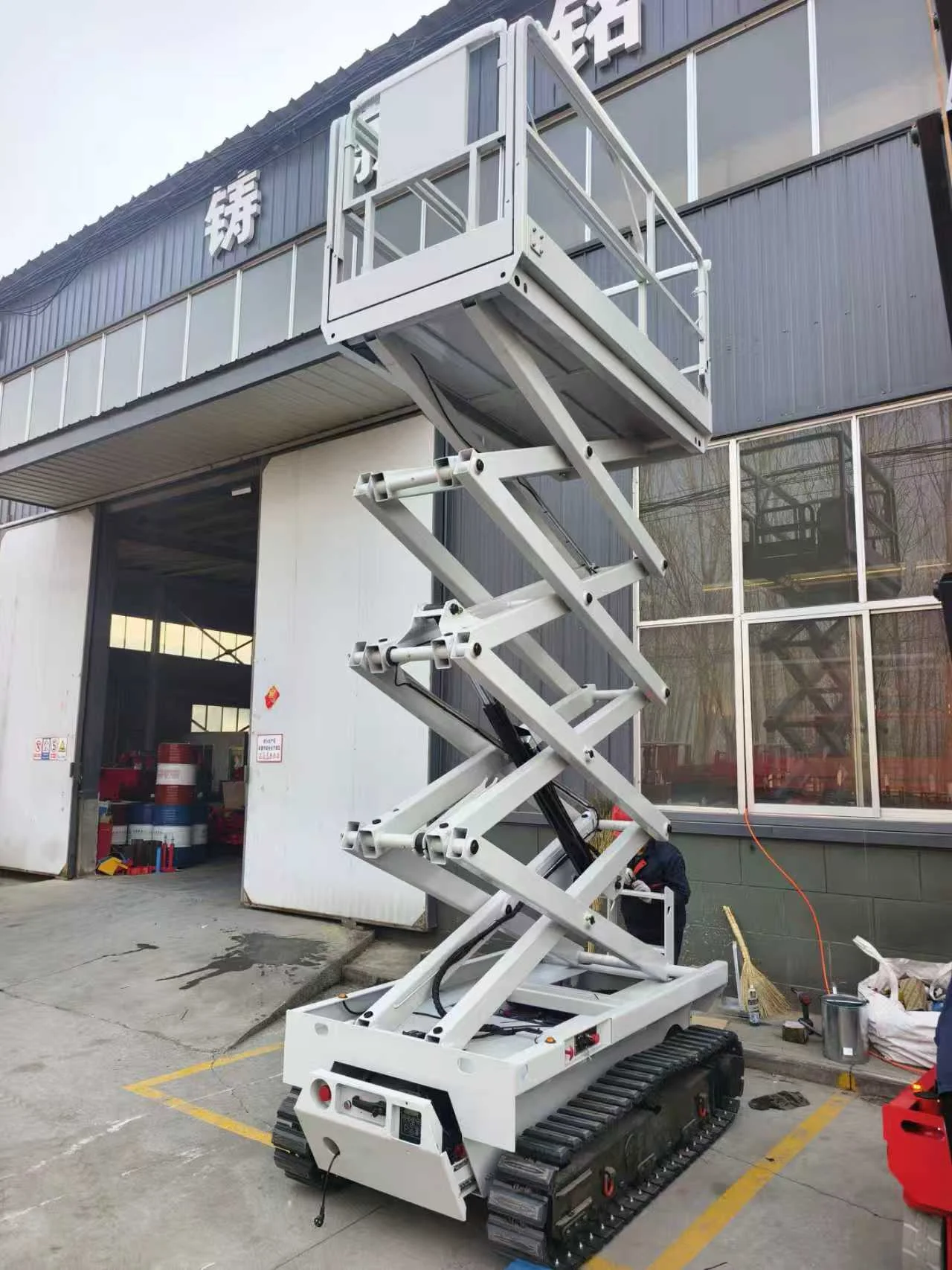
Las plataformas elevadoras de tijera sobre orugas, a menudo llamadas plataformas elevadoras de tijera para terrenos irregulares, desempeñan un papel fundamental en áreas de trabajo exteriores accidentadas. Ayudan en grandes zonas de construcción, proyectos de jardinería y mantenimiento de estructuras. Estos dispositivos proporcionan la altura y el movimiento necesarios para completar trabajos en altura sin peligro. Sus orugas permiten realizar tareas en barro, piedras o pendientes donde las plataformas elevadoras típicas sobre ruedas se atascarían. Sin embargo, el uso de equipos tan pesados en terrenos cambiantes plantea serios riesgos. Por esa razón, los protocolos básicos de seguridad son esenciales. Estos protocolos protegen a los empleados. Además, garantizan flujos de trabajo fluidos y prolongan la durabilidad de la máquina. Muchos fabricantes de equipos, incluidos YILU LIFTContinuar mejorando los diseños de las plataformas de trabajo aéreas para aumentar la estabilidad y la seguridad en entornos exteriores exigentes.
Comprensión de las plataformas elevadoras de tijera sobre orugas
¿Qué es una plataforma elevadora de tijera sobre orugas?
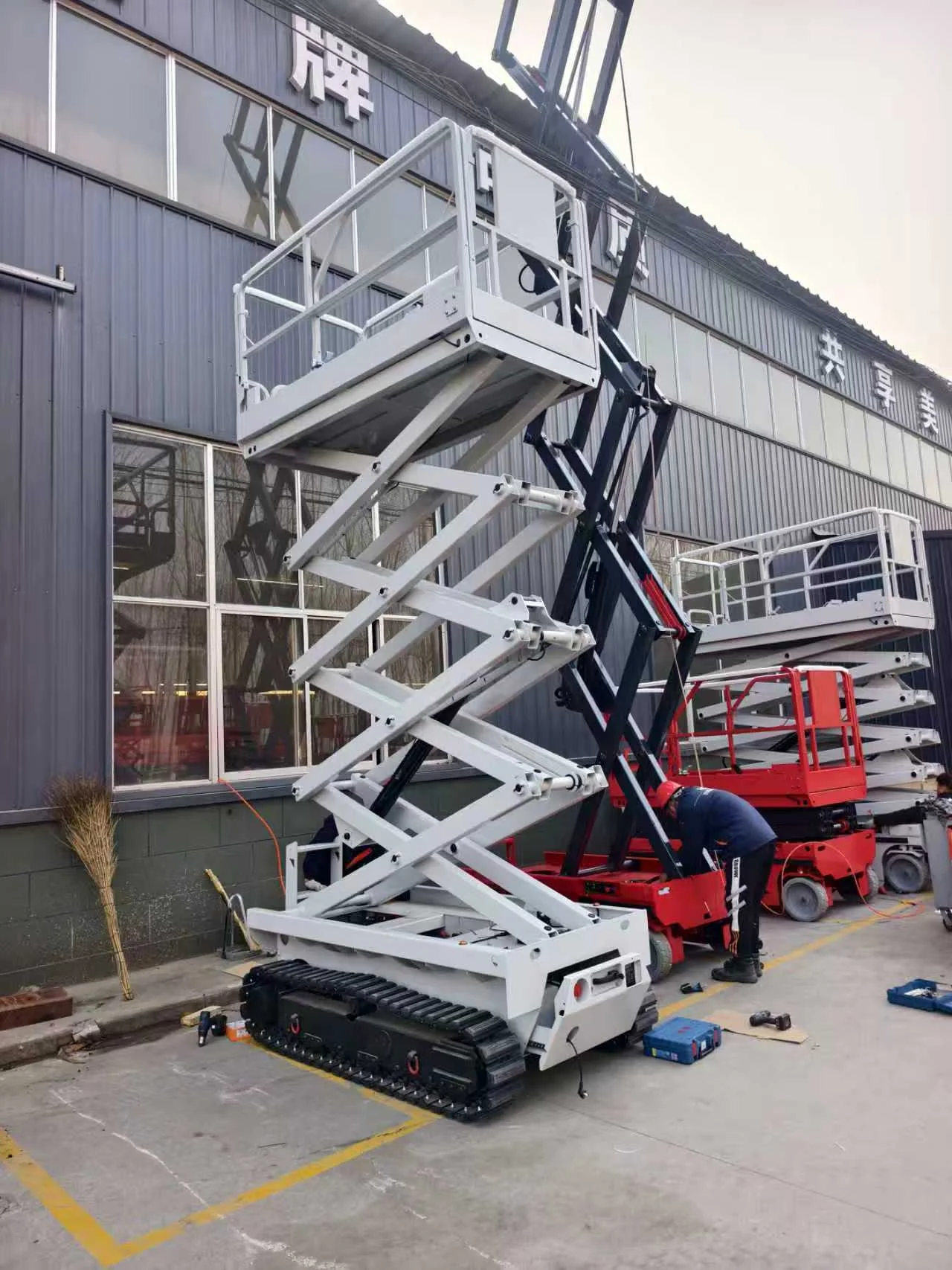
Una plataforma elevadora de tijera sobre orugas funciona como plataforma de trabajo aérea. Se basa en orugas de goma o acero en lugar de ruedas. Este diseño mejora notablemente el agarre y la estabilidad al desplazarse por terrenos irregulares o blandos. Las plataformas elevadoras de tijera básicas con ruedas se desenvuelven bastante bien incluso en interiores. Sin embargo, las de orugas destacan en exteriores con terrenos difíciles. La disposición de las orugas distribuye la masa de manera más uniforme, lo que reduce la compactación del suelo y minimiza el riesgo de atascarse en barro húmedo o zonas arenosas.
Moderno plataformas elevadoras de tijera móviles Combinan movilidad con una elevada capacidad de trabajo, lo que las convierte en equipos esenciales para tareas de construcción y mantenimiento industrial.
Aplicaciones comunes en proyectos al aire libre
Las plataformas elevadoras de tijera sobre orugas se utilizan ampliamente en campos que requieren facilidad de movimiento y acceso elevado en terrenos difíciles. Sus usos típicos incluyen:
- Obras de construcción– Para trabajos de instalación de fachadas, estructuras de acero o cubiertas.
- Mantenimiento de infraestructura– Inspección de puentes, sustitución de la iluminación de túneles o mantenimiento de líneas eléctricas.
- Entornos montañosos o fangosos– Trabajos de paisajismo o proyectos de restauración ambiental donde las condiciones del terreno fluctúan.
Dado que los elevadores sobre orugas pueden superar pendientes de hasta el 25%, los equipos los colocan en lugares donde otras herramientas de elevación no pueden funcionar sin riesgo.
Principales riesgos de seguridad en terrenos irregulares
Terreno irregular y problemas de estabilidad
Los terrenos irregulares presentan múltiples peligros relacionados con el equilibrio y la estabilidad del suelo. Las colinas, la tierra suelta o las piedras pueden provocar que la plataforma elevadora se incline o vuelque por completo si no está bien colocada. Los trabajadores deben asegurarse de que la base de la unidad permanezca nivelada antes de elevarla. Incluso pequeñas elevaciones pueden alterar considerablemente el punto de equilibrio durante el ascenso. Por lo tanto, estos factores convierten la seguridad de las plataformas elevadoras de tijera en terrenos irregulares en una cuestión primordial para los conductores y supervisores de zona.
Está estrictamente prohibido mover el elevador durante el funcionamiento. El movimiento sobre superficies inestables mientras está elevado aumenta significativamente el riesgo de accidentes.
Condiciones meteorológicas
Las condiciones meteorológicas influyen notablemente en la seguridad en terrenos irregulares. La lluvia vuelve las superficies resbaladizas. Las ráfagas de viento pueden sacudir las plataformas elevadas. La nieve oculta peligros en la parte inferior. Está estrictamente prohibido operar el telesilla cuando la fuerza del viento supera el nivel 5 o en condiciones de lluvia o nieve. Respetar estos límites meteorológicos evita la pérdida de control por influencias externas.
Visibilidad del operador y obstáculos
La visibilidad reducida debido a nubes de polvo, montículos de escombros o iluminación tenue puede provocar colisiones con edificios o vehículos contiguos. Los conductores deben realizar giros con precaución y contar con la ayuda de otros conductores al transitar por zonas de obras concurridas.
Lista de verificación de seguridad previa a la operación
Inspeccione la máquina
Antes de realizar cualquier tarea, lleve a cabo una revisión exhaustiva de la plataforma elevadora de tijera sobre orugas:
- Examine los sistemas hidráulicos en busca de fugas.
- Compruebe la tensión y el desgaste de la vía.
- Pruebe los controles de emergencia.
- Inspeccione las barandillas de seguridad para detectar posibles daños.
Se presta especial atención a los componentes hidráulicos. Esto implica inspeccionar si hay fugas de fluido, tuberías rotas o abrasión inusual. También deben realizarse pruebas de funcionamiento para verificar que el sistema funcione correctamente. Estas revisiones permiten detectar fallos ocultos antes de que se conviertan en averías graves.
Evaluar las condiciones del terreno
La evaluación del terreno es igualmente importante. Un suelo suelto podría ceder bajo cargas pesadas. Las zonas con piedras podrían dañar las vías. Los operarios deben comprobar la solidez del terreno inspeccionando primero las zonas de trabajo. Si es necesario, coloque tablones de soporte debajo de las vías para distribuir uniformemente la carga.
Confirmar la formación del operador
Solo personal cualificado puede manejar plataformas elevadoras de tijera sobre orugas. Las sesiones de capacitación incluyen la lectura de pendientes, el manejo de cargas y la respuesta ante emergencias. Estas habilidades son fundamentales para evitar accidentes.
Prácticas operativas seguras
Mantenga la carga adecuada de la plataforma.
La sobrecarga sigue siendo uno de los principales factores que provocan averías en los dispositivos. Está estrictamente prohibido sobrecargarlos, ya que es la causa principal de accidentes. Respete siempre los umbrales definidos por el fabricante. Estos umbrales tienen en cuenta la masa del personal y los implementos a bordo.
Mantener la plataforma estable
Proceda con precaución en curvas o cuesta arriba. Las pausas bruscas o los cambios de dirección repentinos podrían desestabilizar el sistema de equilibrio. En pendientes dentro de los límites permitidos, coloque objetos pesados hacia la parte más alta, siempre que sea posible. Esto mantiene la estabilidad.
Utilice equipo de seguridad
Los elementos de protección individual reducen la magnitud de los daños en caso de que surja algún problema:
- Los cascos protegen contra la caída de objetos.
- Los arneses de seguridad previenen las caídas desde altura.
- El calzado de protección mejora el agarre en plataformas mojadas.
Estas medidas refuerzan las defensas inherentes de las plataformas elevadoras de tijera modernas. Algunos ejemplos son las válvulas de sobrecarga y los sistemas de descenso rápido. Funcionan como la máxima protección contra defectos de la unidad.
Cómo elegir equipos fiables
Optar por dispositivos robustos mejora considerablemente la seguridad. Empresas como YILU LIFT fabrican plataformas elevadoras de tijera sobre orugas diseñadas para entornos exteriores complejos. Sus unidades cuentan con sistemas de equilibrio de última generación que corrigen automáticamente la alineación en terrenos irregulares. Además, poseen orugas reforzadas que resisten el desgaste. Asimismo, integran paneles de control inteligentes que muestran alertas de errores en tiempo real para facilitar las reparaciones.
En muchos entornos industriales, mesas elevadoras de tijera También se utilizan ampliamente para la manipulación de materiales y tareas de elevación vertical, proporcionando soluciones de elevación estables y eficientes para almacenes e instalaciones de fabricación.
Al comparar modelos para compra o alquiler, tenga en cuenta lo siguiente:
|
Característica |
Objetivo |
Beneficio |
|
Ancho de vía |
Una base más ancha aumenta el contacto con el suelo. |
Mayor estabilidad |
|
Capacidad de pendiente |
Define el rango de inclinación seguro |
Evita que se vuelque |
|
Capacidad de carga |
Peso máximo soportado |
Evita la tensión estructural |
|
Interfaz de control |
Simplifica el funcionamiento |
Reduce el error humano |
Los fabricantes de confianza hacen hincapié en estos aspectos de la construcción. Incluso pequeños ajustes pueden mejorar notablemente la seguridad y la durabilidad. Para constructores, empresas de alquiler y personal de planta que buscan herramientas de acceso a alturas fiables, YILU LIFT ofrece diversas plataformas elevadoras de tijera sobre orugas diseñadas específicamente para entornos exteriores exigentes.
Conclusión
Las plataformas elevadoras de tijera sobre orugas y las plataformas elevadoras de tijera para terrenos difíciles han transformado la forma en que los equipos externos realizan trabajos en altura. Su destreza para navegar por terrenos pantanosos o crestas empinadas las convierte en herramientas esenciales en ámbitos como la construcción de estructuras y la reparación de hábitats. Sin embargo, sus potentes características exigen un manejo prudente. Cada operador debe cumplir con los procedimientos de revisión correctos, respetar las restricciones de temperatura, cumplir con las normas de seguridad y usar el equipo de protección adecuado. Tecnología de YILU LIFTLos equipos pueden llevar a cabo tareas complejas con mayor seguridad. Al mismo tiempo, mantienen la productividad y el ritmo de trabajo en entornos laborales difíciles.
Preguntas frecuentes
P1: ¿Qué hace que las plataformas elevadoras de tijera sobre orugas sean adecuadas para terrenos difíciles?
A: Las plataformas elevadoras de tijera sobre orugas utilizan orugas en lugar de ruedas. Esto mejora la tracción y la estabilidad en terrenos irregulares. Además, distribuye el peso de manera más uniforme sobre superficies blandas.
P2: ¿Puede una plataforma elevadora de tijera sobre orugas funcionar en pendientes?
R: Sí, pero los operadores deben respetar cuidadosamente los límites de pendiente especificados para cada modelo. Además, deben mantener una velocidad reducida para que la plataforma se mantenga estable durante el ascenso o el descenso.
P3: ¿Con qué frecuencia se debe inspeccionar una plataforma elevadora de tijera?
A: Se debe realizar una inspección previa al uso diariamente antes de utilizar la máquina. Es posible que se requieran comprobaciones adicionales después de recorrer terrenos irregulares durante periodos prolongados.
P4: ¿Qué equipo de seguridad deben usar los operarios?
A: El equipo esencial incluye cascos, arneses sujetos a puntos de anclaje en las barandillas, guantes para un mejor agarre y calzado resistente con suelas antideslizantes.
P5: ¿Por qué elegir un fabricante profesional como YILU LIFT?
A: Fabricantes de confianza como YILU LIFT ofrecen plataformas elevadoras de tijera sobre orugas de gran durabilidad. Estas plataformas están equipadas con sistemas de estabilidad avanzados y controles inteligentes. Están diseñadas específicamente para un funcionamiento seguro en terrenos exteriores complejos.
