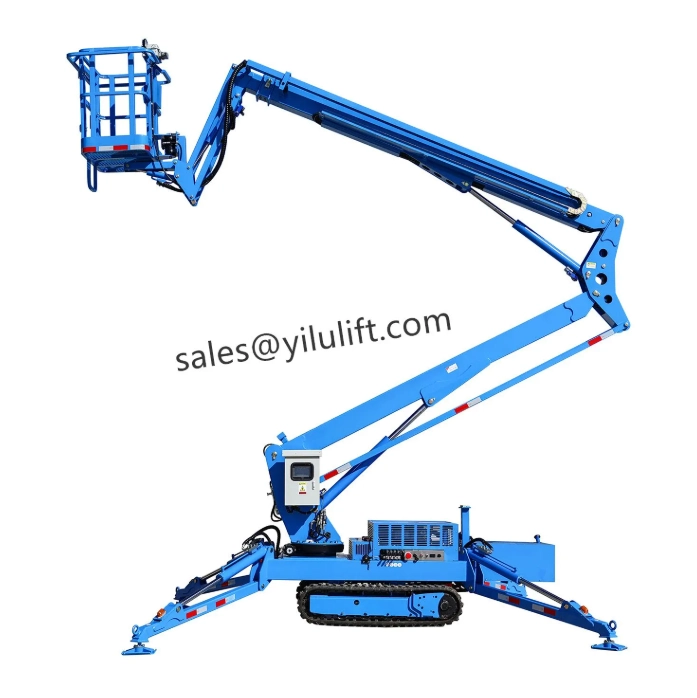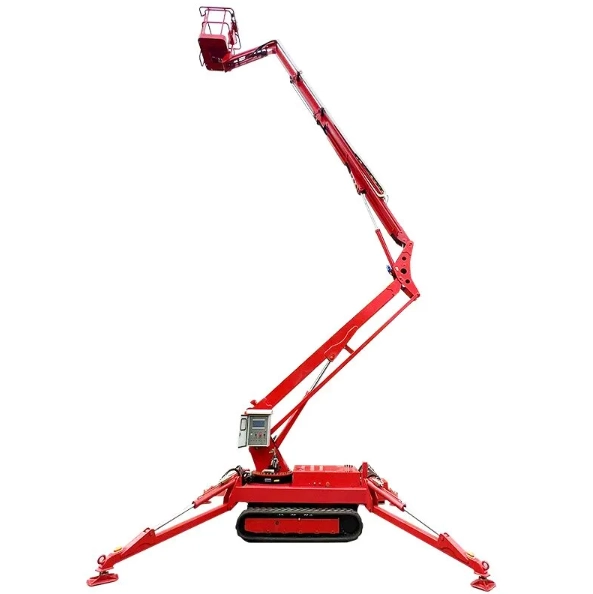

¿Qué es una grúa araña?
¿Qué es una grúa araña?
Introducción
Una grúa araña es una pequeña grúa sobre orugas equipada con varios estabilizadores extensibles que se asemejan a patas de araña. Está diseñada especialmente para realizar tareas de elevación en espacios reducidos y terrenos difíciles donde las grúas convencionales no pueden operar con eficacia. Las grúas araña ofrecen soluciones profesionales para elevar y izar objetos en lugares estrechos. Su diseño les permite desplazarse por pasillos interiores angostos, azoteas o terrenos exteriores accidentados, manteniendo el equilibrio y la precisión.
YILU LIFTLa grúa araña de [nombre de la empresa] representa una nueva generación de tecnología de elevación robusta para entornos B2B. Combina una construcción sólida con sistemas de control inteligentes, lo que brinda a las empresas una opción confiable para trabajos que requieren precisión, seguridad y flexibilidad.
Diseño y componentes principales
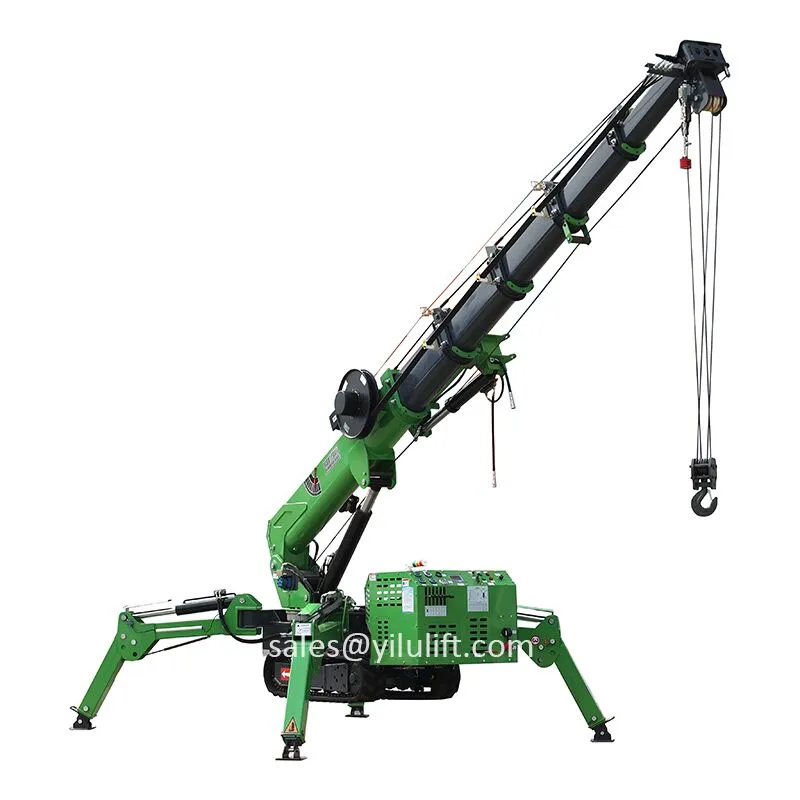
La parte principal de cada grúa araña proviene de su construcción especial y sus piezas mecánicas:
- Brazo telescópico– Fabricada en acero al manganeso de alta resistencia, la pluma se extiende y se retrae fácilmente para alcanzar diferentes alturas manteniendo la carga estable.
- Estabilizadores hidráulicos– Estas patas flexibles estabilizan la grúa en terrenos irregulares distribuyendo el peso entre numerosos puntos de contacto.
- Orugas o ruedas– La base con orugas ofrece un excelente agarre y movimiento en suelos blandos o superficies frágiles sin sufrir daños.
- Diseño compactoSu diseño compacto (a menudo con menos de 1 metro de ancho en los modelos más pequeños) permite el transporte a zonas restringidas, incluyendo el paso por ascensores convencionales para operaciones en varias plantas. Muchos modelos de YILU LIFT ofrecen opciones híbridas o eléctricas que mantienen esta alta movilidad para el levantamiento en interiores y espacios reducidos.
- Funcionamiento mediante control remoto– Los sistemas de control remoto inalámbricos permiten a los operarios controlar las funciones de movimiento y elevación desde una distancia segura y con precisión.
Estas piezas funcionan en conjunto y convierten a los mini robots oruga de YILU LIFT en herramientas útiles para proyectos con acceso limitado donde el aprovechamiento del espacio es fundamental.
Ventajas sobre las grúas convencionales
Grúas arañas Superan a las grúas tradicionales en muchos aspectos importantes:
- Maniobrabilidad excepcionalSu diseño compacto permite el acceso a través de puertas o pasillos estrechos donde las grúas de tamaño normal no pueden operar. Su tamaño reducido y su funcionamiento flexible permiten utilizarla en lugares angostos donde las grúas grandes no pueden entrar.
- Baja presión sobre el sueloEl sistema de orugas de goma distribuye el peso uniformemente para evitar daños en la superficie, lo que lo hace ideal para pisos interiores o áreas ajardinadas. Las orugas de goma especializadas proporcionan una movilidad suave a la vez que evitan daños en pisos interiores delicados.
- Montaje y desmontaje rápidos– Los estabilizadores hidráulicos se despliegan rápidamente, lo que permite una ejecución de proyectos más ágil en comparación con las grúas móviles de mayor tamaño, que requieren un tiempo de montaje prolongado.
- Versatilidad multiusos– La grúa se adapta fácilmente a diversas tareas mediante la integración de accesorios como elevadores de vacío Para la manipulación de vidrio, cestas colgantes para el acceso del personal o pinzas especializadas, ideales para la colocación de sistemas de climatización, la instalación de muros cortina y las reformas industriales en proyectos B2B.
Estas ventajas hacen que las grúas araña sean vitales para los contratistas que manejan complejos planos de construcción urbana o trabajos de reparación minuciosos dentro de estructuras existentes.
Tendencias e innovaciones en grúas araña para 2026
En 2026 y en adelante, el mercado global de grúas araña continúa su sólido crecimiento, impulsado por estrictas regulaciones ambientales y el auge de las tecnologías digitales. Las proyecciones indican una expansión constante (con segmentos relacionados de minigrúas sobre orugas que muestran tasas de crecimiento anual compuesto del 5 al 13 % en varios informes), impulsada por la demanda de soluciones de elevación sostenibles en proyectos urbanos e industriales.
- Sistemas de propulsión eléctricos e híbridos:Los fabricantes están optando por miniexcavadoras eléctricas que reducen las emisiones y el ruido, ideales para hospitales, centros comerciales o zonas domésticas donde es importante trabajar en silencio.
- Sistemas mejorados de monitorización de carga:Unos indicadores de momento de carga más precisos proporcionarán información instantánea sobre la distribución del peso y evitarán las sobrecargas por sí solos antes de que se produzcan problemas.
- Accesorios inteligentes e integración:Las grúas araña se integrarán cada vez más con elevadores de vacío o pinzas robóticas diseñadas para usos B2B especiales, como la instalación de paneles solares o fachadas modulares, sectores que están en auge gracias a las normativas mundiales sobre energías renovables.
- Funciones de asistencia autónoma:Las revisiones remotas, el seguimiento mediante telemática y los sensores de estabilidad basados en inteligencia artificial aumentarán la confianza del operador al tiempo que reducirán el tiempo de inactividad debido a errores en las revisiones manuales.
YILU LIFT sigue invirtiendo en estas nuevas ideas para ofrecer máquinas más seguras y ecológicas que se ajusten a los objetivos de construcción actuales y permitan un uso duradero sin perder potencia.
Aplicaciones B2B típicas
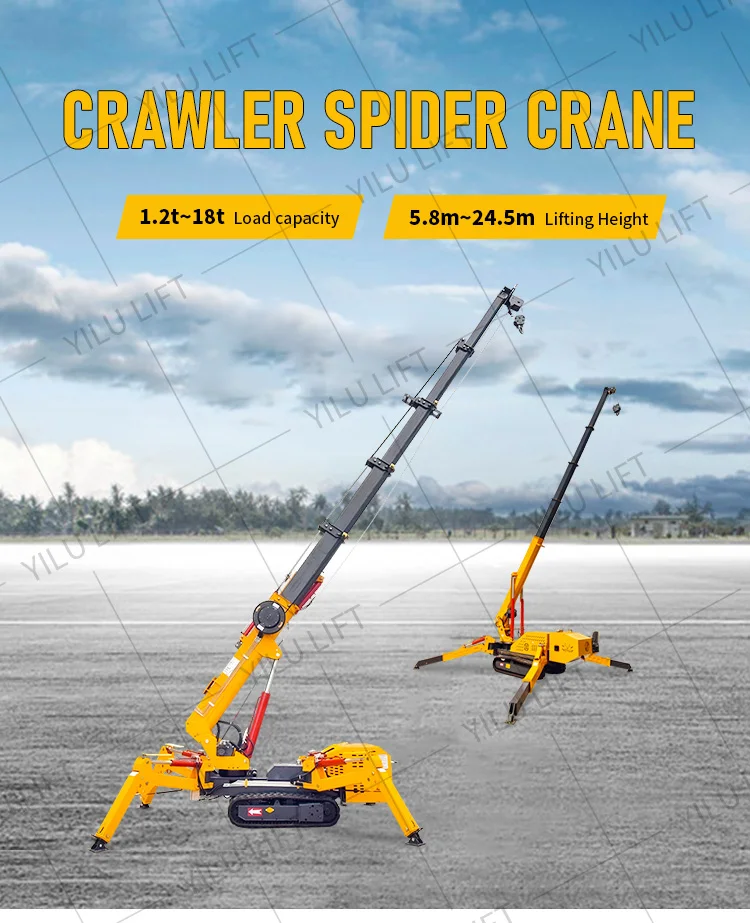
Las grúas araña se han vuelto esenciales en muchos campos debido a su capacidad de adaptación:
|
Área de aplicación |
Descripción |
Beneficios |
|
Instalación de muro cortina de vidrio |
Ideal para fachadas de edificios altos donde el espacio es limitado. |
Posicionamiento preciso mediante accesorios de succión. |
|
Ubicación de equipos de climatización |
Se utiliza en el interior de edificios comerciales para unidades de azotea. |
Reduce el riesgo de trabajo manual. |
|
Mantenimiento de subestaciones |
Adecuado para patios eléctricos con espacio reducido. |
Las vías no conductoras mejoran la seguridad. |
|
Remodelaciones de plantas industriales |
Maniobras entre líneas de maquinaria |
Mínimas interrupciones durante la producción. |
|
Operaciones logísticas y de almacén |
Levanta palés pesados en pasillos estrechos. |
Su tamaño compacto mejora el flujo de trabajo. |
La serie de grúas araña de YILU LIFT, con capacidades que van desde 1,2 hasta 14 toneladas, destaca como maquinaria de elevación compacta, especialmente adecuada para espacios reducidos o terrenos complejos. Esta adaptabilidad a diversos entornos las convierte en herramientas indispensables en sectores como la construcción, la reparación de infraestructuras energéticas, el mantenimiento del metro, el desarrollo aeroportuario y la logística de fabricación.
Los modelos de YILU LIFT ayudan a las empresas a acortar los plazos de los proyectos al reducir los retrasos en la instalación, al tiempo que mejoran la seguridad operativa mediante sistemas de control avanzados.
Consideraciones de seguridad y operativas
La seguridad sigue siendo la principal preocupación al utilizar cualquier equipo de elevación, especialmente en espacios reducidos:
- Despliegue correcto de los estabilizadores:Asegúrese siempre de que los estabilizadores estén completamente extendidos según las condiciones del terreno antes de comenzar la carga; un despliegue desigual aumenta el riesgo de vuelco.
- Cumplimiento de la tabla de carga:Los operarios deben seguir estrictamente las tablas de carga especificadas por el fabricante, basadas en la longitud y el ángulo de la pluma.
- Capacitación del operador:Los programas de capacitación certificados deben abarcar tanto los controles manuales como las técnicas de operación remota inalámbrica.
- Sistemas de seguridad integrados:YILU LIFT equipa sus modelos con protección automática contra sobrecargas, indicadores de momento de carga, funciones de parada de emergencia y sensores de estabilidad que intervienen automáticamente en condiciones inseguras, lo que garantiza el cumplimiento de las normas internacionales y aumenta la confianza del operador en entornos confinados.
- Funciones de parada de emergencia:Las funciones de apagado inmediato evitan accidentes durante periodos de inestabilidad inesperados.
Estas protecciones integradas hacen que la grúa araña de YILU LIFT no solo sea eficiente, sino que también cumpla con las normas de seguridad internacionales exigidas por los clientes industriales.
Conclusión
Las grúas araña han transformado la forma en que las empresas abordan los problemas de elevación en espacios reducidos, desde remodelaciones interiores hasta actualizaciones de sistemas eléctricos, ofreciendo una gran flexibilidad sin sacrificar resistencia ni precisión. A medida que el sector se orienta hacia maquinaria de larga duración para 2026, las minigrúas sobre orugas eléctricas liderarán las obras que requieren un funcionamiento más silencioso y con menores emisiones.
YILU LIFT lidera este cambio al proporcionar máquinas robustas construidas para las necesidades B2B actuales, combinando un diseño pequeño con configuraciones de seguridad inteligentes que cambian lo que es posible en lugares con poco acceso. Para hablar sobre las necesidades específicas de su proyecto, Contacta con YILU LIFT.
Preguntas frecuentes
Q1: ¿Para qué se utiliza una grúa araña?
A: Una grúa araña se utiliza principalmente para levantar materiales pesados en espacios confinados, como interiores de edificios, azoteas, estaciones de metro o plantas industriales, donde las grúas grandes no pueden operar con eficacia.
Segundo trimestre: ¿Qué ventajas ofrece un sistema de mini orugas para la operación?
A: El diseño de mini orugas proporciona una excelente tracción en terrenos irregulares, a la vez que distribuye el peso de manera uniforme sobre las superficies para evitar daños en el suelo durante su uso en interiores.
Tercer trimestre: Lo que hace YILU LIFT¿La grúa araña de esta grúa es diferente de los modelos convencionales?
A: Los modelos de YILU LIFT destacan por sus avanzados estabilizadores hidráulicos, su funcionamiento mediante control remoto, sus bastidores altamente compactos (de tan solo 0,6 a 1 metro de ancho en las unidades básicas) y una gama completa de capacidades de 1,2 a 14 toneladas, personalizables para diversos desafíos de elevación en el ámbito B2B.
Cuarto trimestre: ¿Son las grúas araña eléctricas adecuadas para proyectos en interiores?
R: Sí, las variantes eléctricas producen un ruido mínimo y cero emisiones de escape, lo que las hace ideales para hospitales, centros comerciales, museos o cualquier espacio de trabajo cerrado que requiera un funcionamiento limpio.
Q5: ¿Qué medidas de seguridad incorporan las grúas araña modernas?
A: La mayoría de las unidades incluyen sistemas automáticos de protección contra sobrecargas, controles de parada de emergencia, indicadores de carga precisos y bases de apoyo estables que garantizan una elevación segura incluso en terrenos irregulares.