
Avantages des nacelles élévatrices articulées pour les chantiers industriels exigus
Avantages des nacelles élévatrices articulées pour les chantiers industriels exigus
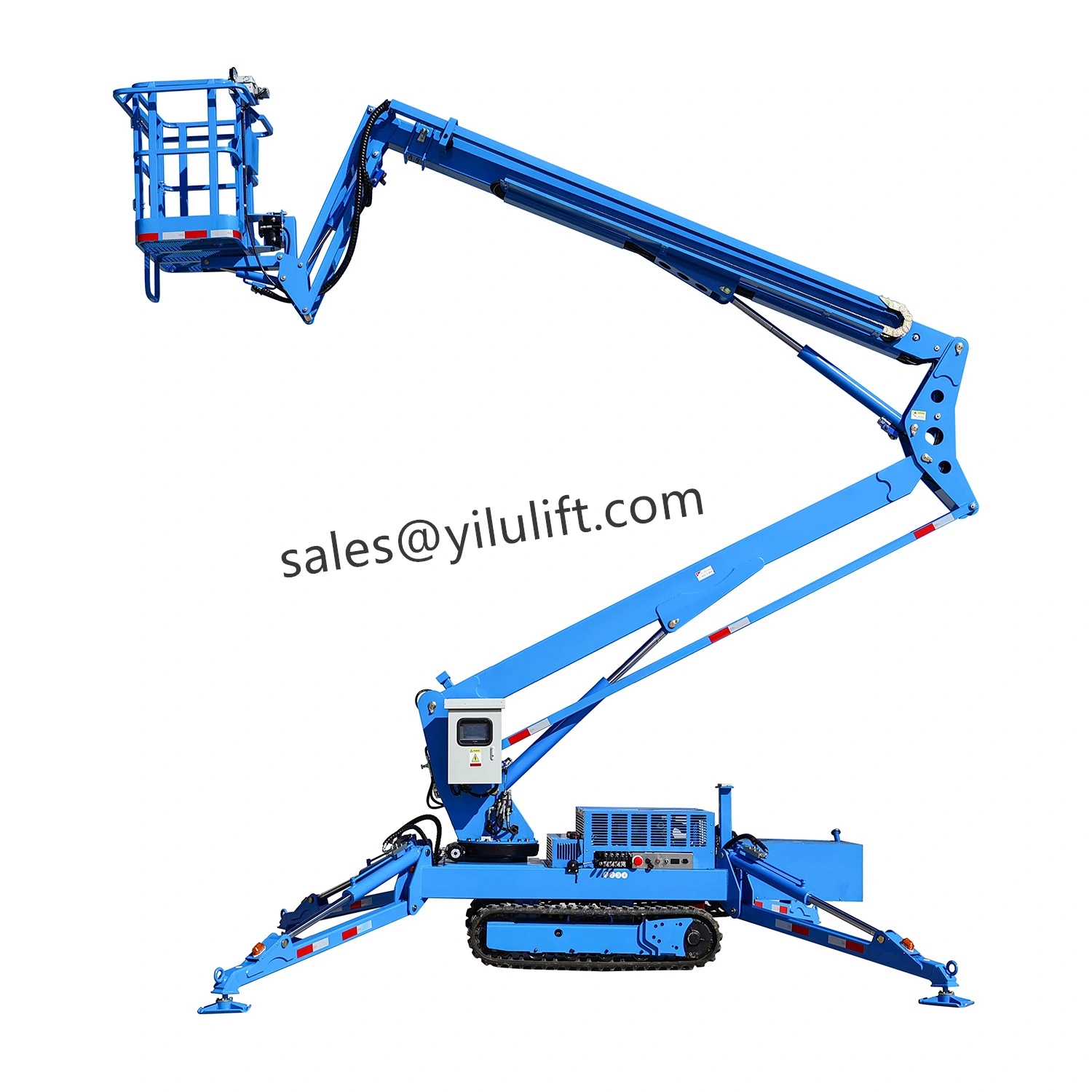
La maintenance industrielle se fait rarement en espace ouvert. Les supports de tuyauterie, les convoyeurs, les mezzanines, les structures métalliques, les systèmes de stockage et les réseaux fixes peuvent bloquer un accès vertical direct au point de travail. Un chariot articulé nacelle élévatrice Elle combine l'élévation, l'extension horizontale et le positionnement multi-articulaire pour se déplacer au-dessus, au-dessus et autour des obstacles.
Pour les équipes d'approvisionnement B2B, les avantages incluent une réduction des déménagements, des interruptions de service plus courtes, une couverture des tâches plus étendue et un coût total de possession optimisé. YILU LIFT est une entreprise basée à Qingdao, en Chine. fabricant/usine spécialisé dans le développement innovant et automatisé de plateformes de travail aériennes, de grues, de grues araignées, de systèmes de levage par ventouses, d'équipements de levage à ventouses et de tables élévatrices à ciseaux.
Pourquoi l'articulation résout les problèmes d'accès à la géométrie
Déplacement par le haut autour d'obstacles fixes
La flèche articulée permet de franchir les machines, les rayonnages, les conduits ou les cloisons lorsque le châssis ne peut pas se positionner directement sous la zone de travail. Les spécifications d'achat doivent prendre en compte les diagrammes d'enveloppe de travail, et non seulement la hauteur maximale de la plateforme, car la portée maximale n'est généralement disponible que dans une partie de cette enveloppe. La hauteur et le rayon horizontal requis doivent être évalués comme un seul et même système de coordonnées.
Positionnement précis avec moins de mouvements de base
Sur les sites industriels encombrés, chaque déplacement peut nécessiter des signaleurs, des vérifications au sol et des restrictions temporaires de production. Le mouvement articulé permet un positionnement précis à partir d'une seule installation, tandis que la rotation du plateau tournant et de la nacelle peut étendre la zone de couverture. Une gamme de machines remorquables publiée indique des hauteurs de travail de 12 à 26 m, des rayons d'action de 4,95 à 11 m et des capacités de 200 kg, ce qui illustre pourquoi le choix doit tenir compte de la géométrie réelle du site plutôt que d'une simple donnée chiffrée.
Avantages opérationnels dans les installations industrielles exiguës
Accès compact par des voies restreintes
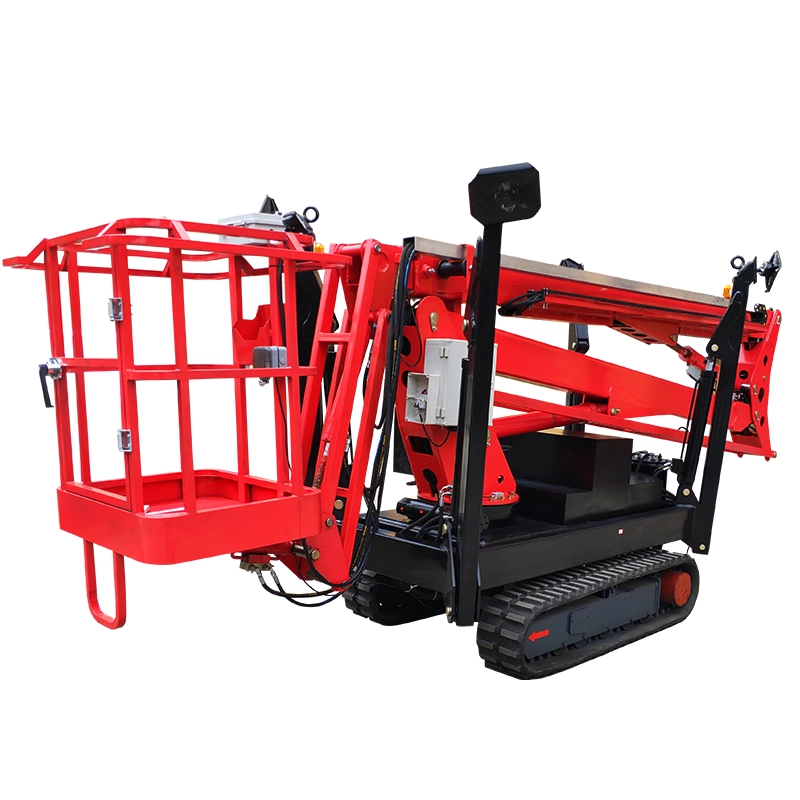
La recherche d'un élévateur pour espace confiné révèle souvent le besoin d'un équipement capable de franchir des portes étroites, des couloirs de service, des allées d'entrepôt ou des zones de production denses. Les dimensions critiques comprennent la largeur et la hauteur repliées, le rayon de braquage, le déport arrière et l'encombrement des stabilisateurs. Ces valeurs doivent être vérifiées en fonction des linteaux de porte, des rampes, des transitions de sol et des zones de préparation.
Cycles de maintenance et d'installation plus rapides
Les tâches typiques comprennent l'éclairage, le câblage, les sprinklers, le CVC, les capteurs, les travaux de structure et le nettoyage. Une plateforme mobile permet d'éviter le montage et le démontage répétés d'échafaudages pour les interventions de courte durée. La productivité s'améliore lorsqu'une seule installation permet de couvrir plusieurs points et de se positionner facilement à proximité des équipements sensibles.
Critères d'approvisionnement déterminant l'adéquation réelle au site
enveloppe de travail et dégagement d'obstacles
Une demande de devis complète doit inclure l'altitude cible, le retrait horizontal, les dimensions des obstacles, le dégagement de la nacelle et tout accès en sous-sol. La plateforme sélectionnée doit rester dans son gabarit autorisé, quelle que soit la charge et la position de flèche requises. Les diagrammes de portée, les plans cotés et les restrictions de charge doivent être examinés avant toute comparaison commerciale.
Capacité de la plateforme et charge d'outillage
La capacité nominale doit inclure le personnel, les outils, les matériaux, les accessoires et les équipements homologués. Les limites de charge de la flèche et de la nacelle spécifiées par le fabricant ne doivent pas être dépassées. Certaines machines présentent des capacités différentes selon les zones de leur zone de travail ; les équipes d’approvisionnement doivent donc demander confirmation de la charge admissible à la coordonnée cible plutôt que de se fier uniquement à la capacité maximale publiée pour la nacelle.
Stabilisation et charge du plancher
Les sols industriels peuvent présenter des tranchées, des regards de visite, des joints de dilatation, des pentes ou des zones fragiles. L'analyse technique doit prendre en compte la masse de la machine, la charge sur les roues, les réactions des stabilisateurs, les exigences relatives aux semelles, les limites de pente et la zone d'installation. Les consignes de sécurité insistent sur l'importance d'un support ferme et horizontal ainsi que sur le positionnement correct des stabilisateurs, car une fragilité localisée peut entraîner un renversement.
Compatibilité du système d'alimentation et des installations
Fonctionnement électrique pour les espaces clos
Les configurations alimentées par batterie ou secteur sont souvent privilégiées en intérieur car elles évitent les gaz d'échappement directs au point de travail et réduisent généralement le bruit du moteur. Le choix de l'alimentation doit néanmoins tenir compte de l'autonomie, de la charge, du mode de passage des vitesses, de la descente d'urgence, de la température et de l'alimentation de secours. Les configurations disponibles proposent des options d'alimentation secteur, batterie CC, diesel ou essence, permettant ainsi d'adapter la motorisation à l'environnement d'utilisation.
Exigences relatives aux sols et à la contamination
Les sols revêtus et les zones de production propres peuvent nécessiter des contrôles relatifs à la composition des pneumatiques, aux fuites hydrauliques, à la rétention des gouttes, au comportement en virage et à la propreté des machines. L'adéquation doit être vérifiée pour le modèle précis et ne pas se fier à la mention « usage intérieur ».
Ingénierie de sécurité pour les travaux en hauteur confinée
Contrôles des risques de piégeage et d'écrasement
Les espaces confinés en hauteur présentent un risque important de coincement de l'opérateur entre la plateforme et les poutres, les tuyaux, les plafonds ou la structure métallique. Les recommandations officielles identifient le coincement, le renversement, les chutes et les collisions comme des dangers majeurs. Les mesures de prévention comprennent une planification adaptée au site, des commandes protégées, un positionnement à basse vitesse, des opérateurs formés, une supervision et l'évitement des points de pincement en hauteur. Des dimensions compactes ne garantissent pas à elles seules la sécurité.
Inspection, contrôle au sol et sauvetage
Les plateformes à flèche télescopique doivent être équipées de commandes hautes et basses avec commande d'urgence. Avant utilisation, les vérifications doivent porter sur la structure, le système hydraulique, les pneumatiques, les alarmes, la descente d'urgence, les commandes et les stabilisateurs. Un plan de sauvetage documenté est indispensable et le personnel au sol doit maîtriser les procédures d'urgence. La formation doit aborder les limites de charge, les inspections, les risques professionnels et les instructions du fabricant.
Coût total de possession et évaluation des fournisseurs
Réduction des temps d'arrêt par rapport au prix d'achat
Le coût d'acquisition à lui seul ne définit pas la valeur. Un modèle de cycle de vie doit inclure le transport, la main-d'œuvre pour l'installation, l'énergie, la maintenance, les pièces de rechange, les inspections, la formation et les temps d'arrêt de production. Une communication ciblée peut améliorer la rentabilité en réduisant l'utilisation d'échafaudages, les repositionnements répétés et le recours à la sous-traitance des travaux d'accès. Une analyse documentée de la fréquence des tâches constitue un argumentaire commercial plus solide qu'une simple estimation du retour sur investissement.
Documentation et capacité après-vente
Les acheteurs industriels doivent demander les manuels, les schémas, les diagrammes d'enveloppe de travail, la documentation technique, les exigences d'inspection, les listes de pièces détachées, les conditions de garantie et les documents d'exportation. La comparaison commerciale doit distinguer les équipements standard des options et consigner les hypothèses relatives à l'alimentation électrique, à la configuration de la plateforme et au transport.
FAQ
Que signifie « ascenseur pour espaces confinés » ?
Dans le cadre des recherches d'équipements, l'expression désigne généralement un élévateur compact conçu pour les espaces confinés. Elle ne signifie pas automatiquement qu'il s'agit d'un équipement homologué pour les espaces confinés définis par la réglementation. Un espace confiné réglementé est suffisamment grand pour permettre l'entrée corporelle, ses entrées et sorties sont limitées ou restreintes, et il n'est pas conçu pour une occupation continue. Des exigences relatives à l'atmosphère, au sauvetage, à l'isolement et aux permis peuvent s'appliquer séparément.
Pourquoi choisir une nacelle articulée plutôt qu'une nacelle à ciseaux ?
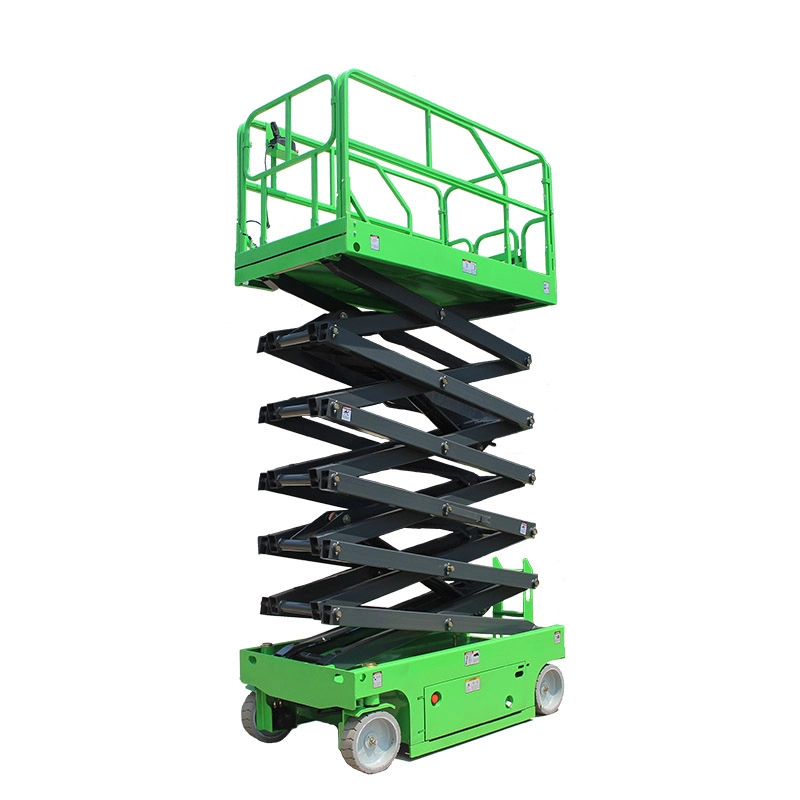
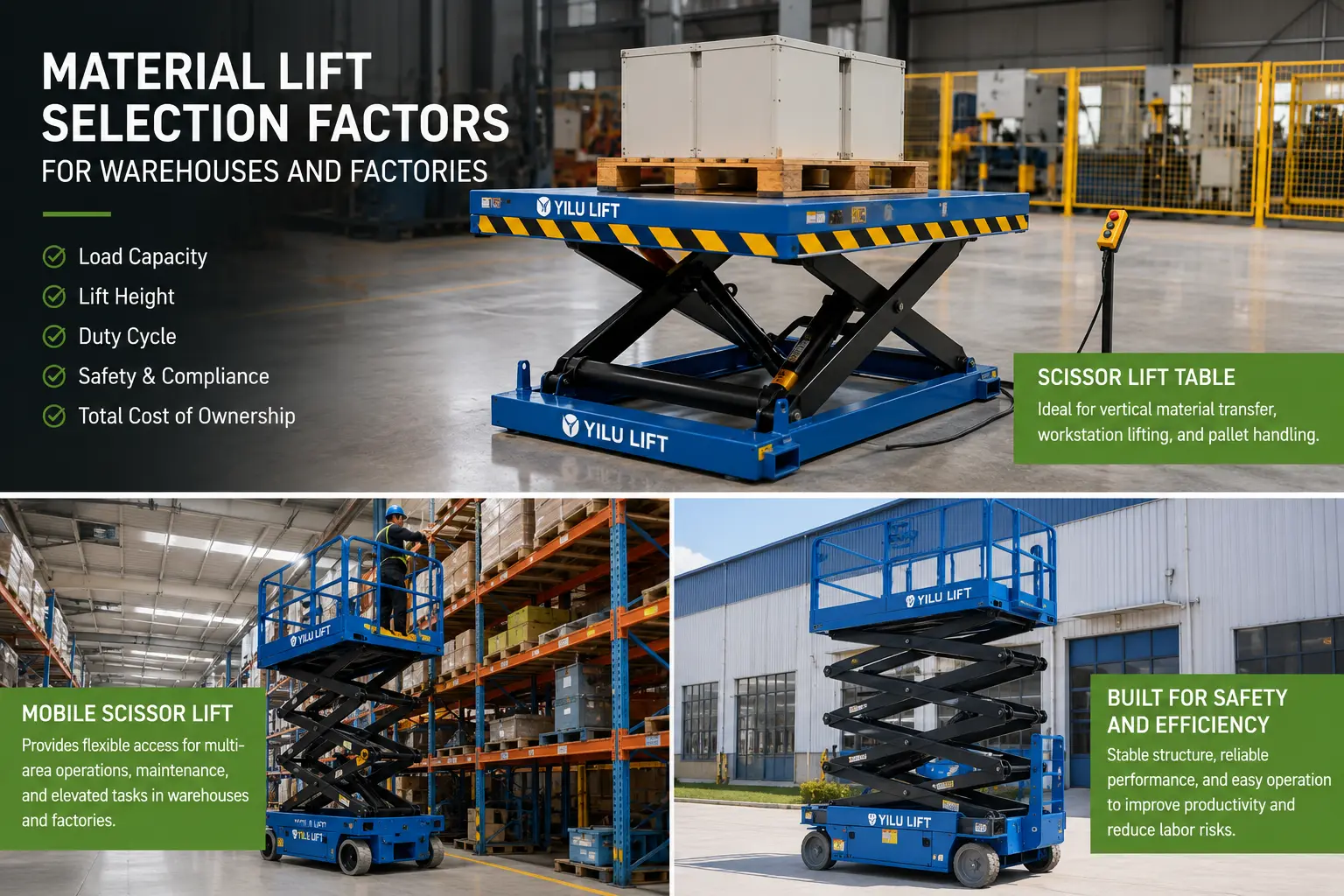
Une nacelle élévatrice à ciseaux assure principalement une élévation verticale. Une flèche articulée ajoute une portée horizontale et un dégagement d'obstacles, ce qui devient crucial lorsque des convoyeurs, des réservoirs, des rayonnages ou des équipements de production empêchent le positionnement directement sous le point de travail.
Quelles mesures doivent figurer dans une demande de devis industrielle ?
La demande de devis doit préciser la hauteur cible, le rayon horizontal, la géométrie des obstacles, les dimensions de la voie d'accès, la charge admissible de la plateforme, la capacité au sol, la zone d'installation, le type d'alimentation souhaité, l'utilisation en intérieur ou en extérieur et la fréquence de fonctionnement. Des plans ou des photos annotées du site peuvent limiter les erreurs de sélection.
Les modèles électriques sont-ils toujours la meilleure option pour une utilisation en intérieur ?
L'alimentation électrique est souvent préférable en intérieur car elle évite les émissions directes au point d'utilisation. Le choix final dépend toutefois de l'autonomie, de l'accès à la recharge, de la nature du sol, du cycle de service, de la température et des exigences de fonctionnement en cas d'urgence.
Comment évaluer la capacité d'une plateforme ?
Le calcul doit prendre en compte chaque personne, outil, matériau, accessoire et dispositif homologué présent dans la nacelle. La capacité doit également être vérifiée à la position prévue de la flèche lorsque la zone de travail impose des limites de charge variables.
Lancer une évaluation d'équipement B2B en direct d'usine
Soumettre les données du site pour la mise en correspondance du modèle et le devis
Pour les distributeurs, les flottes de location, les entrepreneurs, les exploitants d'installations et les équipes d'approvisionnement industriel, ASCENSEUR YILU Nous proposons un service de vente directe depuis l'usine de Qingdao pour les plateformes de travail aériennes et les équipements de levage associés. Les demandes de devis peuvent inclure la hauteur de travail, la portée horizontale, la charge admissible de la plateforme, les dimensions d'accès, les plans d'obstacles, les caractéristiques du terrain, le type d'alimentation souhaité, le marché de destination et la quantité commandée. Le fabricant peut examiner les exigences de configuration, les options de produits, la coordination des exportations et les détails du devis via notre plateforme. canal de contact officiel ou à sales@yilulift.com.