
YILU LIFT Heavy-Duty Scissor Lift Table for Safer Material Handling

YILU LIFT Heavy-Duty Scissor Lift Table for Safer Material Handling

2026-07-09
13

目次

    yilu lift scissor lift table

    Most シザーリフトテーブル inquiries begin with three numbers: load capacity, platform size, and lifting height. Then comes the price request.

    In real warehouse projects, the details that cause trouble are often smaller: lowered height, load center, pit depth, loading direction, or whether a pallet truck must roll onto the platform without a ramp. These details decide whether the equipment fits the floor after arrival.

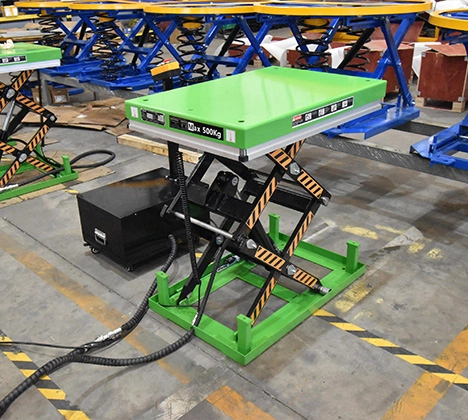
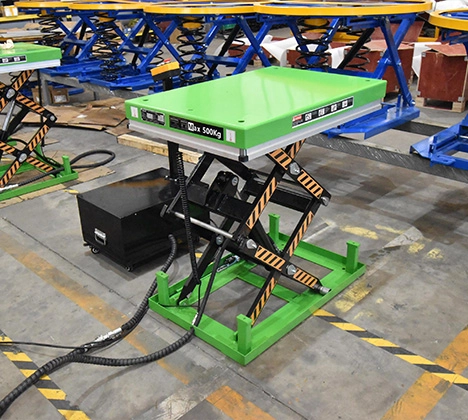
    イールーリフト supplies electronic hydraulic scissor lift table solutions for warehouses, factories, logistics centers, and fixed material handling stations. Standard product information covers load capacities from 400KG to 4,000KG and lifting heights up to 4210mm. For heavier stationary warehouse applications, related configurations can be designed for loads up to 8000KG, based on project layout and working conditions.

    A heavy-duty scissor lift table is not just a lifting platform. On the shop floor, it fixes a daily problem: the material is at the wrong height, and every shift pays for that mistake.

    Why Load Positioning Matters in Warehouse Injury Prevention

    Low-level handling rarely looks serious at first. A worker picks from the bottom layer of a pallet. A carton is dragged across a bench. A metal part sits too low, so the operator adjusts posture again and again. One move is minor. Hundreds of moves become a problem.

    A scissor lift table raises the material closer to waist-level handling height. That helps reduce repeated bending, long reaches, and rough manual repositioning. In packaging stations, pallet loading points, assembly cells, and conveyor transfer areas, the height change can remove a lot of wasted movement.

    Common Site Issues Before a Lift Table Purchase

    Site Issue

    What Often Happens

    Detail to Confirm

    Pallet sits too low

    Bottom-layer picking slows the line

    Lowered height and max height

    Load is uneven

    Platform balance becomes a concern

    Load distribution

    Pallet truck needs access

    Loading becomes awkward

    Pit-mounted or low-profile design

    Conveyor height is fixed

    Workers fill the height gap by hand

    Lift range and roller option

    Forklift blocks the area

    Traffic builds near the workstation

    Loading side and table location

    Not every warehouse needs the largest model. A 4000KG request may use a straightforward setup if the load is evenly spread and cycles are light. A smaller load may need more engineering if it is compact, dense, and placed off center.

    What Makes a Heavy-Duty Scissor Lift Table Suitable for Warehouse Use

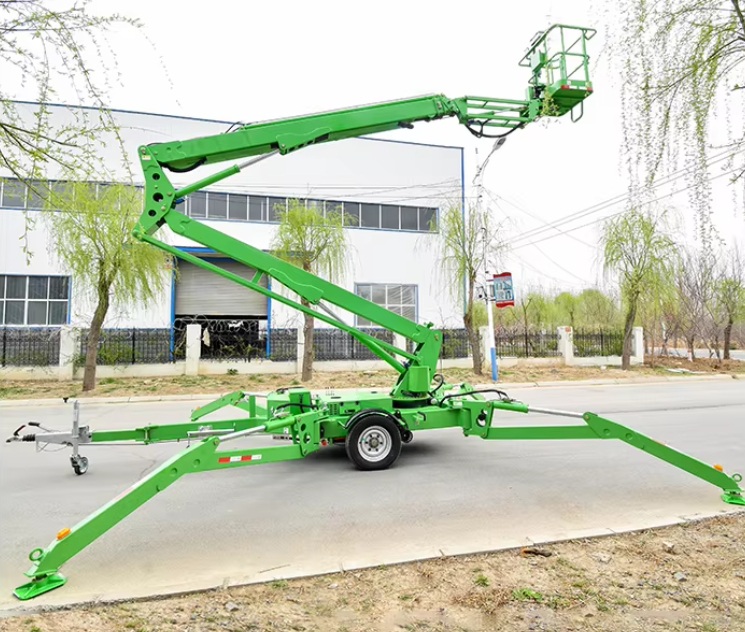
    Unlike an aerial work platform, a scissor lift table is selected for material positioning, not lifting people. For procurement, that distinction matters.

    A heavy-duty hydraulic lift table is judged by its frame, platform rigidity, cylinders, lifting stroke, control method, and safety devices. The scissor structure handles vertical movement. The platform and base decide whether the load stays steady during repeated lifting.

    Uniform Load or Centered Load

    Two loads can both weigh 1000KG and still behave differently. A wide pallet with evenly packed cartons is not the same as a compact steel mold placed in the center of the table. Uniform loading and centralized loading create different stress on the structure.

    For custom stationary scissor lift table projects, YILU LIFT can discuss platform size, lifting height, and load distribution before quotation. This is important for molds, machinery parts, large pallets, and irregular cargo.

    Lowered Height Is Easy to Miss

    Maximum lifting height usually gets attention first. Lowered height often causes more trouble after delivery.

    If the table is too high in the lowered position, a pallet truck may not load smoothly. If a pit is required, floor cutting, drainage, pit depth, and service access should be planned before production. Late changes are rarely convenient.

    yilu lift warehouse scissor lift table

    Scissor Lift Table Specifications Buyers Should Confirm Before Quotation

    A serious scissor lift table supplier or hydraulic lift table manufacturer usually asks a few detailed questions before quoting. Capacity and quantity are not enough for custom industrial equipment.

    For buyers still comparing platform size and lifting height, the quotation checklist below can help narrow the specification before contacting a supplier.

    Quotation Checklist for B2B Buyers

    • Rated load capacity, including pallet, fixture, or container weight
    • Load size and center of gravity
    • Platform length and width
    • Lowered height and maximum lifting height
    • Ground-mounted or pit-mounted installation
    • Loading method: forklift, pallet truck, cart, crane, or conveyor
    • Power supply and control voltage
    • Indoor or outdoor working environment
    • Lifting cycles per shift
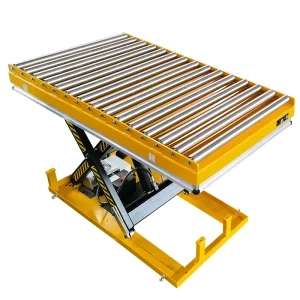
    • Roller conveyor, guardrail, turntable, limit switch, or automation requirement
    • Export packing, spare parts list, operation manual, and technical drawings

    This is not paperwork for the sake of paperwork. It prevents a common export problem: the equipment matches the catalog, but not the floor.

    Ground-Mounted or Pit-Mounted Installation

    Ground-mounted installation is usually the easier route. It avoids floor cutting and works well when forklifts load the platform directly. Many rented warehouses prefer this option because civil work is limited.

    Pit-mounted installation is better when the platform needs to sit flush with the floor at its lowest position. This helps pallet trucks, carts, and conveyor transfer. The tradeoff is site preparation. Pit size, floor strength, drainage, and service space around the table should be checked early.

    Pit installation makes sense when goods need to move across the table without a ramp. It also fits fixed loading bays and automated material flow lines. For a simple forklift-fed workstation, ground installation may be enough.

    What Affects Hydraulic Scissor Lift Table Price

    Many buyers search for hydraulic scissor lift table price, but industrial lift tables rarely have one fixed price. A change in platform size, lifting height, lowered height, or loading method can change the steel structure, hydraulic cylinders, pump unit, control layout, and packing volume.

    Main Price Factors Buyers Should Clarify

    Price Factor

    Why It Matters

    耐荷重

    Heavier loads need stronger structure and hydraulic design

    プラットフォームサイズ

    Larger platforms add steel and may affect stability

    持ち上げ高さ

    Higher travel may require different scissor stages

    Lowered height

    Low-profile or pit designs may change the structure

    Safety devices

    Emergency descent, overload protection, and valves affect configuration

    Automation needs

    Rollers, sensors, and conveyor matching add engineering work

    Export support

    Packing, drawings, manuals, and spare parts affect project readiness

    The lowest quote is not always the cheapest option. Missing drawings, unclear spare parts, or a platform that cannot match the loading method can create extra cost after the equipment arrives.

    Safety Features Procurement Teams Should Confirm

    “Safe and stable” is not enough as a specification. Safety should be discussed by component.

    Relevant YILU LIFT stationary scissor lift table configurations may include pressure relief valves, flow control valves, emergency descent systems, overload protection, anti-pinch design, and anti-dropping devices. Some safety features may be standard on certain models and optional on others, so buyers should confirm the final configuration model by model, especially when the table is customized for heavier loads or conveyor transfer.

    A practical safety review should cover overload protection, emergency lowering, hydraulic valve configuration, anti-pinch protection, and access to the power unit, cylinders, and lubrication points. In a two-shift warehouse, emergency descent is not brochure decoration. It is the part maintenance staff ask about when a loaded platform stops in the raised position.

    How to Choose a Scissor Lift Table Manufacturer for Custom Projects

    A good lift table manufacturer should not rush straight to price. Better project communication usually starts with load data, site photos, working height, and loading method.

    YILU LIFT supports customized platform size and lifting height for scissor lift table applications. Related fixed scissor lift configurations can also support warehouse and logistics use, including uniform or centralized load distribution, control voltage options, and automated storage system integration on suitable projects.

    For distributors and importers, working with a custom scissor lift table manufacturer can make voltage confirmation, spare parts, technical drawings, and export packing easier to manage before production. Before shipment, buyers should confirm operation manuals, wiring diagrams, spare parts lists, packing method, packing photos, and pre-shipment inspection photos.

    These answers show whether the supplier is quoting a machine or solving a handling problem.

    結論

    A heavy-duty scissor lift table helps warehouse and factory teams place materials at a practical working height, reduce low-level picking, and handle vertical movement without calling a forklift for every small height change.

    For B2B procurement, the right model depends on load capacity, platform size, lowered height, lifting height, load distribution, installation method, control voltage, safety configuration, spare parts, and export support.

    YILU LIFT provides customizable hydraulic lift table solutions for warehouses, production lines, logistics centers, and fixed material handling stations.

    For an accurate scissor lift table quote, send load data, platform dimensions, required lifting height, lowered height, installation plan, power supply, and working environment details to YILU LIFT for model selection based on real site conditions.

    よくある質問

    Q1: What details are needed for an accurate scissor lift table quote?

    A: Load capacity, platform size, lifting height, lowered height, load distribution, power supply, installation method, working environment, and any conveyor or automation connection should be confirmed before quotation.

    Q2: What affects the hydraulic scissor lift table price?

    A: The price is mainly affected by rated load, platform size, lifting height, lowered height, hydraulic system, steel structure, control method, safety devices, customization level, packing, and shipping terms.

    Q3: Is a pit-mounted scissor lift table better than a ground-mounted model?

    A: A pit-mounted table is better when the platform needs to be flush with the floor for pallet trucks or conveyor transfer. A ground-mounted table is easier to install when floor cutting is not practical.

    Q4: Can YILU LIFT provide a custom scissor lift table for conveyor transfer or warehouse automation?

    A: Yes. YILU LIFT can provide customized platform size, lifting height, load distribution, control voltage, and related configurations for warehouse material handling and automated storage system projects.

    Q5: What documents and spare parts should buyers confirm before shipment?

    A: Buyers should confirm wiring diagrams, technical drawings, operation manuals, hydraulic cylinders, seals, emergency lowering details, lubrication points, spare parts availability, packing photos, and pre-shipment inspection records.