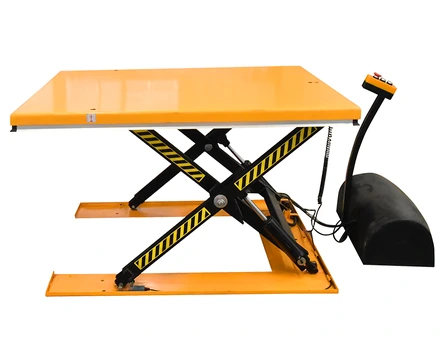

Roller Conveyor Lift Table: Match the Transfer, Support and Stops
Roller Conveyor Lift Table: Match the Transfer, Support and Stops
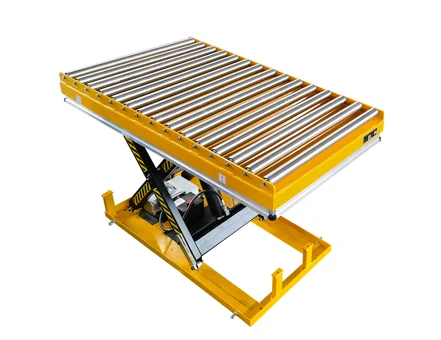
A roller conveyor lift table needs to be specified as part of a transfer station. The useful starting point is the load’s journey: what arrives, what supports it during the handover, where it stops, and how it leaves at the next height. A capacity figure alone does not describe that job.
For a buyer comparing configurations, the practical questions sit at the interfaces. Record the underside of the load, the two transfer levels and the intended movement sequence before settling the deck arrangement. Treat these as inputs for the equipment specification, rather than instructions for modifying an existing conveyor.
Follow One Load Across the Station
Start with a single, ordinary cycle. Describe the load arriving from the upstream station, entering the table, waiting during the lift and moving onto the receiving station. Include the return to the loading position. Then repeat the description for the least convenient load in the proposed range.
Keep the load description specific. A bare component, a tray and a pallet are different things to put in the enquiry, even when the goods inside weigh the same. Record the overall dimensions and loaded weight, but also identify the part that actually rests on the rollers. A photograph of the underside can be more useful here than another photograph of the finished product.
The person involved matters too. Will someone guide the goods, operate a control or work beside the transfer? Note the task frequency and the space available. These belong in the same review as the equipment, rather than being left until a floor layout has already been agreed.
The broader stationary lift table selection guide covers the starting decisions about the load, deck and installation. For a conveyor application, take that description one step further and draw the handover on each side.
Check What Touches the Rollers
Look underneath the load, not only at its footprint from above. Show any runners, feet, ribs, recesses or projecting fasteners in the information supplied for selection. Mark the direction in which the load will travel across the deck. If containers can arrive in different orientations, include each permitted orientation.
Ask the supplier to assess the intended underside against the proposed roller arrangement. The review should cover support while the load is fully on the table and while it is crossing either interface. Do not assume that a nominal deck length or a matching weight rating answers both questions.
A useful enquiry distinguishes the smallest contact area from the largest overall load. Describe whether the base remains the same across the product range. Where a tray or carrier is proposed, include it in the drawings and the total loaded weight. Its suitability needs to be assessed as part of that arrangement.
Avoid prescribing a roller spacing from a photograph. Instead, request confirmation of the arrangement for the stated load and movement direction. The same approach applies to any gap between the table and the adjacent conveyor: show the proposed interface and ask how support will be maintained through the handover.
Agree Both Transfer Heights
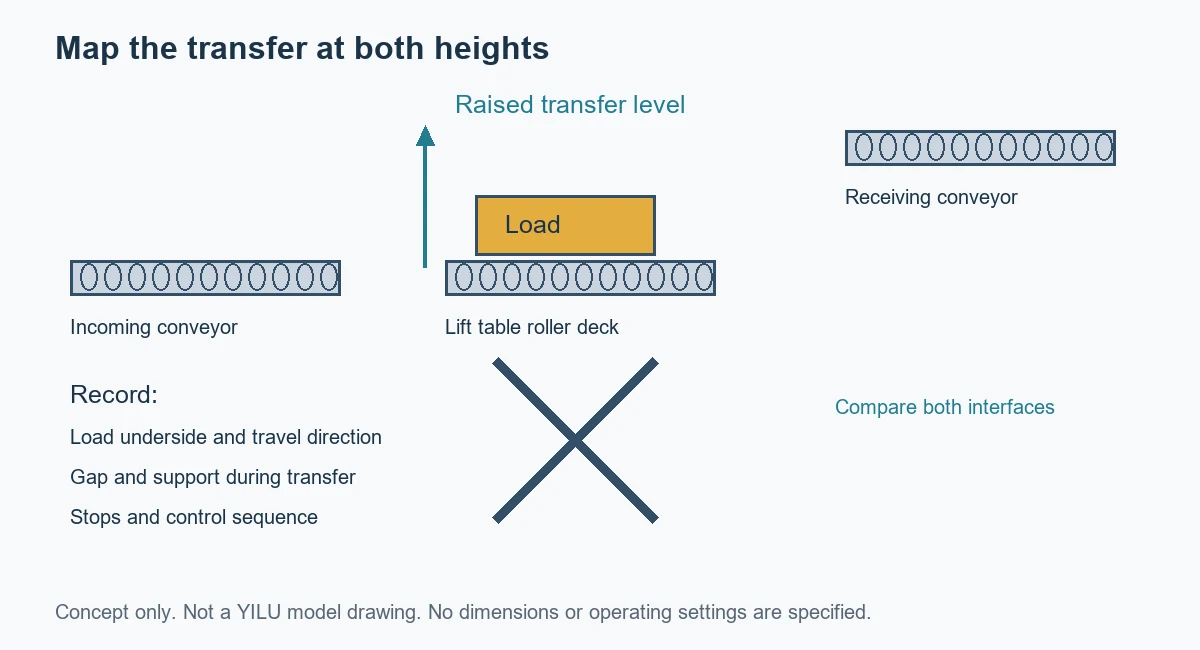
Identify the height reference on the layout. For this application, describe the elevation of the roller contact surface at each transfer, measured from the agreed floor reference. A note saying only “table height” leaves the reader to decide which surface was measured.
Record both interfaces separately. One sketch should show the receiving position at the lower level; another should show the discharge position at the upper level. Include the neighbouring equipment and the direction of travel. Where the proposed cycle runs in reverse, describe that handover as well.
Installation details belong alongside those elevations. YILU LIFT’s customizable scissor lift table information includes custom platform dimensions and lifting height, with ground or pit installation discussed. The actual arrangement still needs to be matched to the application. Do not select a pit, a bridge or a floor alteration from a generic sketch.
Ask which interface dimensions and installation details must be agreed before an order. Include any restriction imposed by the existing conveyor or building. The concept diagram illustrates the questions to resolve; it does not prescribe a transfer gap, stopping position or installation dimension.
Keep the Load Under Control
Specify how the load is intended to enter and leave. Manual transfer and powered transfer should be described separately in an enquiry. Neither the word “roller” nor a product photograph confirms a drive arrangement, a stopping device or a connection to another machine’s controls.
Write the proposed sequence in ordinary language before discussing individual devices. What receives the load? What confirms that the handover is complete? What keeps the load in its intended position during vertical travel? What allows the next transfer to begin? Have the supplier and the party responsible for the conveyor assess these points together.
The safety review should address access to dangerous moving parts, falling goods and the controls for starting and stopping. Identify where people stand during normal work and where routine access will be required. A guard on one part of a lift table is not a complete description of protection at the station’s transfer points.
Any proposed stops, restraints, guarding and control functions need a defined place in the agreed configuration. Request their scope in the specification rather than treating them as standard features. Do not use a person’s hand as the planned means of holding a load during lift movement. Final operating instructions and protective measures belong to the assessed equipment and installation.
Describe the Interface to YILU LIFT
The first enquiry does not need a polished engineering presentation. A clear sketch, the load details and a short cycle description provide a practical starting point. Separate known dimensions from those still to be agreed, and identify the equipment already fixed in place.
YILU LIFT’s enquiry guidance asks for product material, dimensions and weight. For this application, add an underside view, travel direction, transfer elevations and the intended handling method. Describe the task frequency and any awkward or restricted working position. Those details keep the discussion attached to the actual station.
Before comparing quotations, ask each supplier to state the load and interfaces covered by the offer. Check who is responsible for adjacent conveyor changes, installation and the control interface. These are specification questions; the answer should come from the particular proposal, rather than from a general article or product category name.
To discuss a roller transfer application with YILU LIFT, describe one full cycle and the least favourable load in the range. The next useful step is a configuration review against that information, with the support arrangement, transfer levels and control responsibilities made explicit.