
Rough Terrain Scissor Lifts
Rough Terrain Scissor Lifts
Introduction
Rough terrain scissor lifts are tough aerial work platforms built for outdoor, rough, and sloped spots. Unlike indoor slab types that use electric power and tiny solid tires, these devices feature large all-terrain tires, four-wheel drive (4WD), and diesel or gas engines. They cope with demanding work areas effectively.
Their design allows them to move steadily across mud, gravel, or bumpy surfaces. They hold steady even when raised. If you match them against regular scissor lifts or boom lifts, rough terrain versions deliver larger decks and higher load capacities. This turns them into essential gear for building teams on difficult ground.
In today’s building work, these tools improve safety and pace alike. Workers get to tall areas faster and safer. They steer clear of ladders or risky hand methods. The key idea stands out: rough terrain scissor lifts shine in particular outdoor building jobs. There, solid base and travel over irregular land count the most. YILU LIFT supplies various high-quality models built to handle these extreme environments.
What Makes Rough Terrain Scissor Lifts Unique?
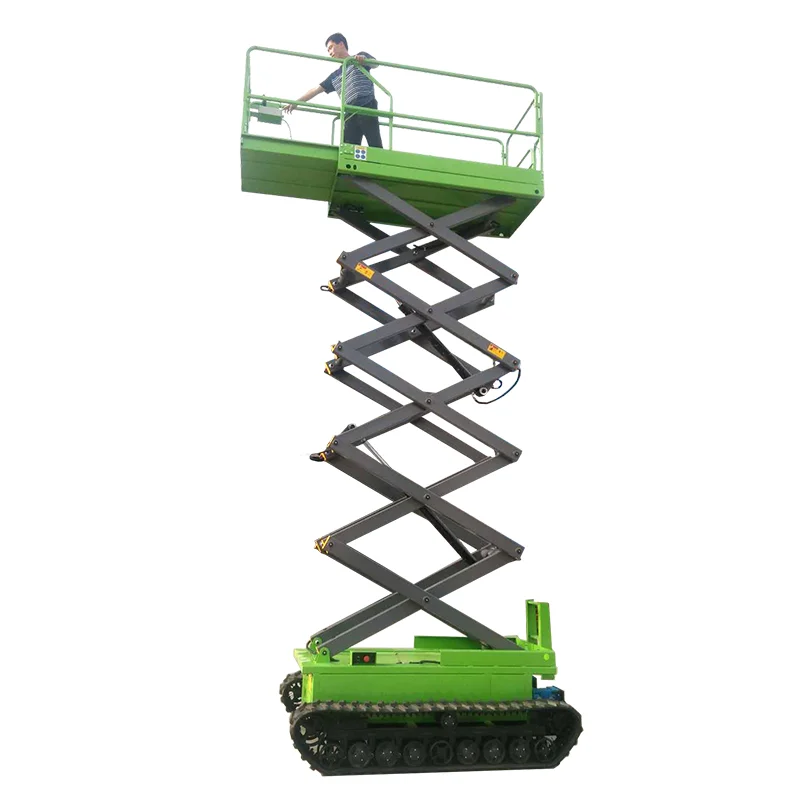
Rough terrain scissor lifts stand out because of solid construction and smart hydraulic setups. They contain:
- All-terrain tires for hold on soil, gravel, or grass
- High ground clearanceto pass over hurdles
- Oscillating axlesthat hold all wheels against the ground in rough spots
- Powerful diesel or dual-fuel enginesfor long runs outside
- Enhanced stability systemsincluding automatic leveling and pothole protection
If you check electric or slab scissor lifts, those fit even indoor surfaces. Rough terrain kinds succeed where others fall short. Boom lifts can climb taller, but they offer smaller decks and less lift strength. Thus, scissor lifts show greater value when multiple staff or bulky gear require elevation.
Key Benefits of Rough Terrain Scissor Lifts
|
Feature |
Advantage |
|
Large platform size |
Accommodates multiple workers and heavy tools |
|
High weight capacity |
Safely handles heavy construction materials |
|
All-terrain tires |
Excellent traction on mud, gravel, and dirt |
|
4WD powertrain |
Climbs moderate slopes with confidence |
|
Enhanced stability system |
Ensures safe operation on uneven and sloped surfaces |
These traits render rough terrain scissor lifts the prime choice for builders in harsh outdoor conditions.
Primary Uses in Construction Projects
Rough terrain scissor lifts are vital across different building phases:
- Steel erection & framing:Perfect for setting beams or panels on unpaved sites before concrete is poured.
- Exterior building work:Ideal for facade installation, cladding attachment, or window/glazing maintenance where ground conditions vary.
- Roofing & gutter repairs:Provides stable elevation even when positioned on compacted soil or gravel lots.
- HVAC & electrical installations:Supports technicians working on multi-level outdoor structures like warehouses or distribution centers.
- Bridge & road projects:Offers safe access under bridges or along embankments where scaffolding would be impractical.
- Agricultural & industrial builds:Used in barns, factories, refineries—anywhere elevation meets unpredictable ground conditions.
Every building project brings distinct demands for load capacity, working height, and platform size. Choosing the proper rough terrain scissor lift configuration secures strong output, safety, and productivity. It matches the exact ground and task needs.
Real-World Construction Project Examples
Consider a hillside housing project with varied heights. In this case, YILU LIFT rough terrain scissor lifts assist groups in fitting external coverings and panels smoothly. They avoid the repeated shifts that usual scaffolding calls for. Likewise, in road bridge fix-ups, these tools roll over stone borders to hit joint expansions and bridge undersides without hazard.
During remote wind energy builds or solar arrays across miles of lumpy earth, these pieces excel. They shorten prep time greatly. Operators hoist sections or check items straight from the deck. This surpasses setting up short-term stands.
Next to scaffolding, which demands hours to assemble, rough terrain scissor lifts lift efficiency. They enable quick shifts among duties. Meanwhile, they hold firm safety marks.
Choosing the Right Rough Terrain Scissor Lift for Your Project
Finding the right model means weighing key elements:
- Lift height– Typical models range from 26 ft to 60 ft working heights.
- Platform capacity– Consider how many workers plus tools will be onboard.
- Terrain type– Soft soil may require wider tires; rocky sites need more clearance.
- Power source– Diesel offers endurance; hybrid units reduce emissions.
Safety holds a top spot when selecting a rough terrain scissor lift. YILU LIFT models feature modern anti-overload safeguards. This halts work past the limit. They further include hydraulic hose protection valves. These retain command if a quick break occurs. These integrated safety tools highlight YILU LIFT’s strong pledge to user defense and machine dependability on hard work zones.
YILU LIFT’s selection of rough terrain models blends hydraulic exactness with sturdy frame builds fitted for intense sites—from base improvements to factory building sectors.
Safety and Operational Best Practices on Rough Terrain
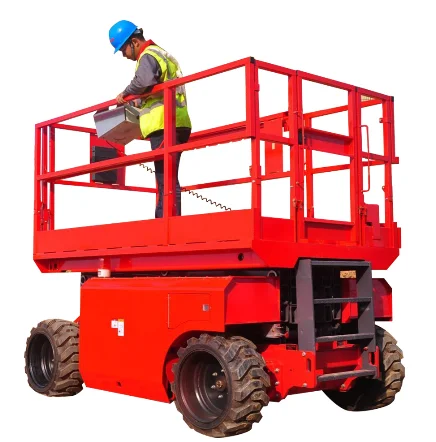
Safe handling begins far ahead of hitting any switch:
- Conduct a thorough ground assessment, checking for soft spots or hidden voids.
- Review weather forecasts; high winds can impact platform stability.
- Perform pre-use inspections—hydraulic lines, tire pressure, emergency descent controls.
- Avoid exceeding slope ratings; even advanced oscillating axles have limits.
- Train operators per manufacturer guidelines.
The emergency descent system works as a major safety element. When an unexpected power loss or hydraulic trouble hits, operators may employ the emergency descent tool. This drops the deck to earth level securely. This function brings crucial calm on erratic outdoor building areas.
Sound training likewise includes grasping load spread. You set items balanced over the floor. It covers spotting when added base pads are called for on yielding dirt.
Conclusion
Rough terrain scissor lifts have become core instruments in modern building efforts. They deliver flexibility and steadiness in severe settings. These devices swap heavy frames for nimble output. They sustain solid safety rules even on bare earth.
For building outfits looking to raise output while holding prime safety levels on rough spots, YILU LIFT supplies lasting, strong-output rough terrain scissor lifts. These are made for tough outdoor zones. Get in touch with YILU LIFT now to view our complete lineup of rough terrain scissor lifts, seek a tailored quote, or arrange a product demo for your coming job.
FAQs
Q1: What is the difference between rough terrain scissor lifts and standard scissor lifts?
A: Rough terrain models feature large off-road tires, four-wheel drive systems, and diesel/gas engines designed for outdoor sites, whereas standard electric units are meant for smooth indoor floors.
Q2: On what types of construction sites are rough terrain scissor lifts most commonly used?
A: They’re widely used on unpaved lots, bridge projects, roadworks, industrial facilities, and any outdoor area with uneven surfaces where traditional slab lifts cannot operate effectively.
Q3: Can rough terrain scissor lifts operate on steep slopes?
A: Yes—but only within manufacturer-specified slope ratings. Advanced suspension systems help maintain balance; however, extreme inclines should still be avoided.
Q4: Are rough terrain scissor lifts suitable for indoor construction projects?
A: Generally no—they produce exhaust fumes and require more space than electric slab models designed specifically for indoor use.
Q5: How do rough terrain scissor lifts compare to boom lifts for outdoor construction work?
A: Boom lifts reach higher but carry fewer people; rough terrain scissor lifts provide larger platforms and greater lifting capacity—ideal when multiple workers need stable elevation simultaneously during outdoor builds.