
How to Choose a Glass Vacuum Lifter for Your Project
How to Choose a Glass Vacuum Lifter for Your Project
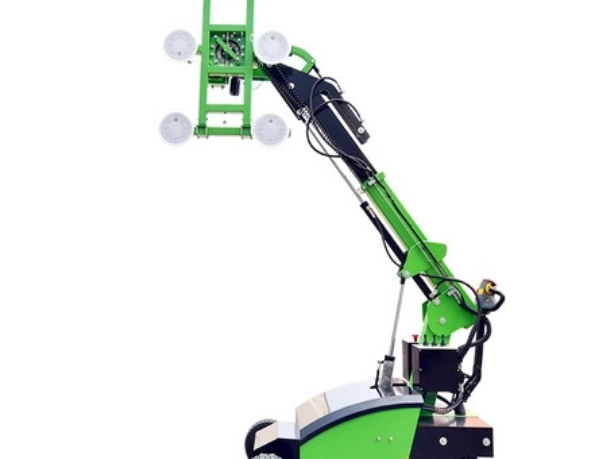
A glass vacuum lifter should be chosen around the panel and the handling route, not around the largest capacity number in a brochure. Glass size, verified weight, surface condition, reach, tilt, rotation, access, and the machine’s capacity in its working position all matter. A model that looks comfortably oversized on paper can become the wrong choice once its arm is extended or the cups cannot sit within the supported area.
Start with the Glass, Not the Machine
Confirm the heaviest real panel
Begin with the heaviest panel the project will actually handle. Ask the glass fabricator for a verified weight whenever possible, especially for insulated units, laminated glass, framed panels, or assemblies with attached hardware. A calculation based only on nominal thickness can miss interlayers, spacers, framing, and other components. Record the minimum, typical, and maximum panel sizes as well. The largest panel is not always the heaviest, and the cup frame must work across the full range rather than one showcase dimension.
The lifting plan also needs to state whether the panel will remain upright, start flat, or move through both positions. Loading a rack, moving glass through a workshop, and installing a curtain-wall panel create different reach and manipulation requirements. The equipment shortlist should be built around the most demanding real lift, then checked against the routine lifts that will make up most of the duty cycle.
Map the complete handling path
Look beyond the pickup point. Measure aisle width, door openings, turning space, floor transitions, overhead clearance, installation height, and the horizontal distance between the machine and the final setting point. Note ramps, thresholds, facade edges, scaffolding, and restricted areas. A compact glass lifter may enter the building but still lack the reach needed at the opening. A longer machine may reach the target yet be difficult to position in the available aisle.
If the machine moves between floors or job sites, folded dimensions, self-weight, charging access, and loading method deserve the same attention as lifting height.
Read Capacity in the Position That Will Be Used
Extended-arm capacity can be much lower
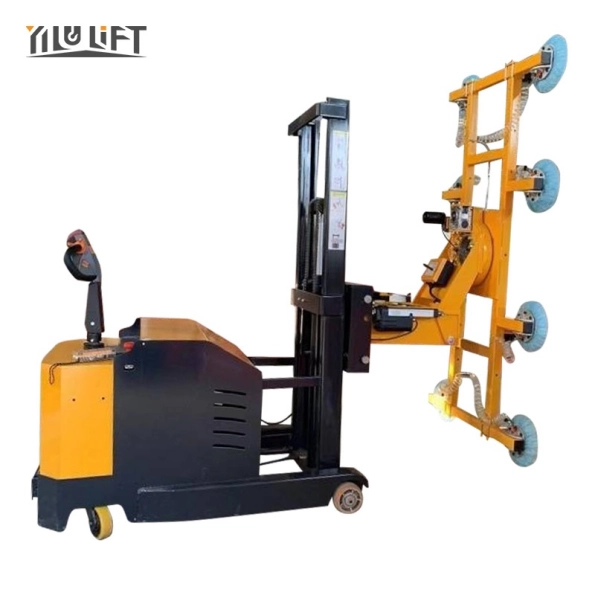
The headline rating usually describes a favorable configuration. Capacity can change when the load moves farther from the chassis. YILU LIFT’s LD Series glass vacuum lifter makes this distinction clear: the listed models carry 300 to 800 kg with the arm retracted, while the published capacity with the arm extended is 150 to 400 kg. The working position can therefore halve the usable figure shown in the model name.
That detail should shape the purchase decision. If a 380 kg panel must be set with the arm extended, selecting a 400 kg retract-capacity machine would be a serious mismatch. Include the required horizontal reach and installation height with the panel weight when contacting YILU LIFT. The proposed model can then be checked in the working position instead of being judged by a general capacity label.
Separate maximum load from safe working guidance
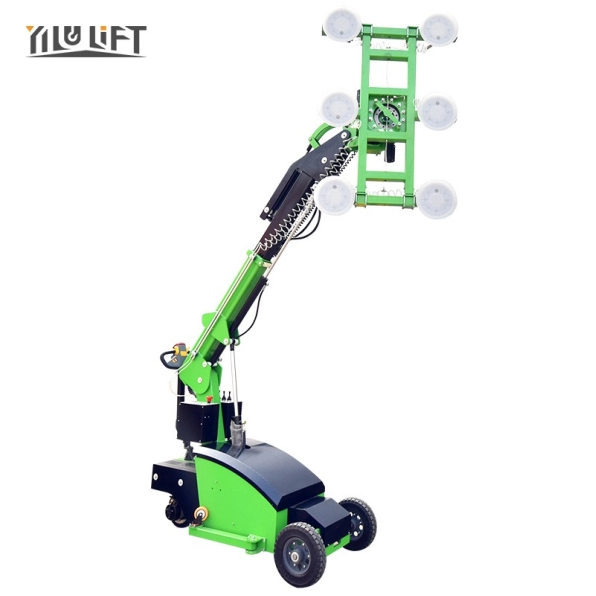
Product tables may use more than one capacity term. The HD Series vacuum lift lists maximum load capacities from 400 to 1,000 kg and separate safe load capacities from 200 to 500 kg. Buyers should not treat those columns as interchangeable. The applicable figure should be checked for the panel, orientation, cup layout, environment, and local rules when a specific model is discussed with YILU LIFT.
Request the operating manual, warning-system details, inspection requirements, and the basis used for published ratings. A quotation is more useful when it identifies the selected model, approved load condition, cup arrangement, and restrictions rather than repeating one top-line number.
Match the Suction System to the Glass Surface
Check the actual contact surface
Vacuum cups need a suitable contact surface. Smooth, clean, non-porous glass is different from textured, coated, wet, dusty, cracked, or film-covered material. Coatings may affect grip or be marked by the pad. Protective film can separate from the glass even when the cup appears attached. Disclose these conditions before purchase, and test unusual surfaces with the proposed pad material and layout.
Adding more cups does not automatically solve a surface problem. Cup diameter, pad condition, vacuum level, circuit design, leakage monitoring, and load sharing all contribute. Ask how the machine indicates vacuum loss, what daily checks are required, and whether secondary retention is needed for the planned lift.
Keep cups inside a stable support area
The frame must fit the smallest panel without placing pads over edges, holes, joints, labels, hardware, or damaged areas. On large panels, the spread also needs to control overhang and deflection. Excessive unsupported glass can flex, change the load at individual pads, or complicate accurate positioning.
YILU LIFT’s LD range uses four, six, or eight 300 mm cups depending on model. The HD range lists four or six 300 mm cups and notes that cup quantity and plate size can be customized. Those figures are a starting point, not an automatic selection rule. Panel drawings and proposed pickup locations should be reviewed before the order is finalized.
Choose the Motion Functions the Crew Actually Needs
Define tilt and rotation at each step
Some projects only require upright transport. Others pick glass from a horizontal crate, tilt it to vertical, rotate it, then make fine adjustments at the opening. Specify whether tilt and rotation may be manual or must be powered, the required rotation range, and how frequently the operation will repeat.
Powered movement can reduce manual effort during repeated installation, but it also adds controls, power components, and maintenance points. A simpler trolley may be more practical for indoor transport with modest panels. The handling sequence matters more than the length of the feature list.
Check load center, reach, and visibility together
Reach affects capacity and control. A panel held farther from the machine changes the load moment, while a wide pane can restrict the operator’s view. Compare the published load center with the real panel geometry, then include any offset or unusual pickup point in the project information sent to YILU LIFT.
The HD models publish load-center figures of 650 or 950 mm depending on capacity. That is useful client-specific information, but it still needs to be matched to the job. Submit the panel drawing and target position rather than infer suitability from lifting height alone.
Check Access, Floor Conditions, Power, and Duty Cycle
Measure the machine as well as the opening
Compare overall width, length, turning space, and machine weight with every access point. The LD models are listed at 810 mm chassis width, while model length and weight vary. Floor loading, elevator capacity, ramp gradient, threshold height, and the ability to turn with a panel attached can still rule out a machine that fits through the doorway.
For facade work, include wind limits, ground condition, exclusion zones, and the interface with scaffolding or other lifting equipment. Local requirements and the manufacturer’s instructions must govern operation. Product selection cannot replace a site-specific lift plan.
Size the battery around the shift
State the expected lifts per hour, travel distance, shift length, charging window, and ambient temperature. Ask what the battery indicator shows, whether opportunity charging is allowed, and how the vacuum system behaves if drive power becomes low.
The LD range uses deep-cycle batteries with model-specific capacities. The HD range also varies battery and charger size. These details are meaningful only against a stated duty cycle. Request expected operating time for a representative task and treat it as application-dependent, not a fixed promise.
Compare the Main Glass Lifter Formats
Self-propelled robots suit reach and installation work
A self-propelled glass vacuum lifter combines travel, lifting, and panel manipulation. It often fits work where panels move from storage to an elevated or offset installation point. YILU LIFT’s vacuum lifter robot range includes LD and HD configurations with different capacities, heights, cup frames, and load centers. Compare the job envelope and supported panel range, not whether the machine is called an electric glass lifter or glass vacuum lifter robot.
Trolleys and suspended lifters serve different routes
UN glass lifter trolley can suit workshop movement, unloading, and lower-height installation where long reach is unnecessary. Suspended vacuum lifters rely on a crane or hoist and can suit larger sheets or established lifting routes. Each format changes the requirements for supporting equipment, rigging, travel, and control.
Avoid mixing unlike products in one price comparison. Choose the handling concept first, then compare models against the same weight, orientation, reach, movement, environment, and duty cycle.
Send an RFQ That Can Be Engineered
A useful request should include glass type, minimum and maximum dimensions, verified weight range, surface or coating, pickup orientation, tilt and rotation, installation height, horizontal reach, access dimensions, floor condition, lifts per hour, shift length, destination country, power supply, and required documents. Attach panel and site drawings when available.
When requesting a quotation, ask YILU LIFT to identify the proposed model, capacity in the planned working position, cup layout, dimensions, self-weight, battery and charger specification, safety devices, operating restrictions, packing details, training material, spare parts, warranty terms, and lead-time basis. This turns a broad price request into a technical comparison.
FAQ
Is a 400 kg glass lifter suitable for every 400 kg panel?
No. The figure may apply only in a particular configuration, and capacity can fall when the arm is extended. Surface condition, panel geometry, cup placement, orientation, load center, and local rules also matter. The proposed YILU LIFT model and configuration should be confirmed for the exact lift.
How many suction cups should a glass vacuum lifter have?
There is no universal number. The correct arrangement depends on weight, dimensions, stiffness, surface, safe pad locations, cup diameter, vacuum circuit, and allowable overhang. Drawings of the smallest and largest panels are more useful than a cup-count preference.
Can a glass vacuum lifter handle coated or filmed glass?
Only after the contact surface has been assessed and, where necessary, tested. Coatings can change grip or be marked, while film can separate from the panel. Confirm the pad material and approved lifting face before use.
What information is most important in an inquiry?
Send panel drawings, verified weights, surface details, pickup and placement positions, required reach and height, access limits, duty cycle, and destination-country requirements. Those details give YILU LIFT a practical basis for discussing a suitable configuration instead of guessing from a model name.
Turn the Project Data into a Model Recommendation
The best shortlist starts with the difficult lift and works backward to the machine. Buyers can review YILU LIFT’s glass handling options, then contact YILU LIFT with the panel and site data for a configuration and quotation. Final suitability should be confirmed against the selected model’s documents, the actual jobsite, and applicable rules.