
Vacuum Lifter for Sheet Metal: Match the Frame, Cups, and Power to the Job
Vacuum Lifter for Sheet Metal: Match the Frame, Cups, and Power to the Job
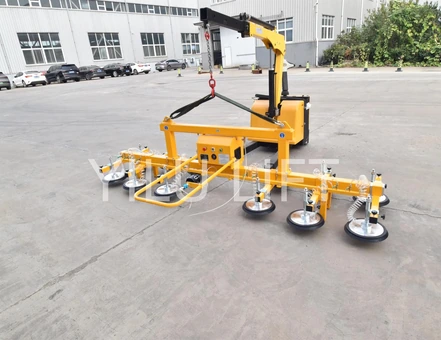
A vacuum lifter for sheet metal is not selected by plate weight alone. The same 800 kg lifter may be a sensible match for one short, rigid plate and a poor match for a long, thin sheet that bends between the cups. Surface condition, minimum and maximum sheet size, handling direction, production pace, available power, and the crane interface all change the answer.
That is why a useful quotation starts with the material flow. Where is the sheet picked up? How far does it travel? Does it stay horizontal, or must it turn? Once those details are clear, capacity and features become much easier to compare.
Start with the Sheet Range, Not One Maximum Load
Record the everyday sizes as well as the heaviest plate
List the minimum, typical, and maximum length, width, thickness, and weight handled in the plant. The largest sheet may not be the heaviest. A thick, compact plate can weigh more, while a thin, wide sheet may create the harder support problem because its edges can sag.
Material grade also matters. Steel, stainless steel, and aluminum sheets can have different stiffness and surface conditions at the same dimensions. Include blanks with cutouts, holes, bent edges, or attached parts. A cup cannot seal over a hole, and a finished edge may leave less usable contact area than the drawing first suggests.
Do not send only a maximum figure. A frame sized for a six-metre plate still has to grip the smallest production blank without putting cups beyond the edges. A good sheet list shows the full range and identifies which formats account for most lifts per shift.
Add the lifter and rigging to the crane check
Rated sheet capacity is only one part of the suspended load. The supporting overhead crane, jib crane, or floor crane also carries the vacuum lifter, hook, slings, and other rigging. YILU LIFT’s published sheet-metal models have different self-weights as their frame length and cup count change, so the complete suspended weight should be checked against the supporting equipment.
The final selection also needs the intended orientation. A horizontal pickup from a cutting table and a turn into vertical storage do not place the same demands on the lifter. Ask for the permitted load in each planned position instead of applying one label to every movement.
Size the Frame for Both the Largest and Smallest Sheets
Use sheet dimensions to define cup spread
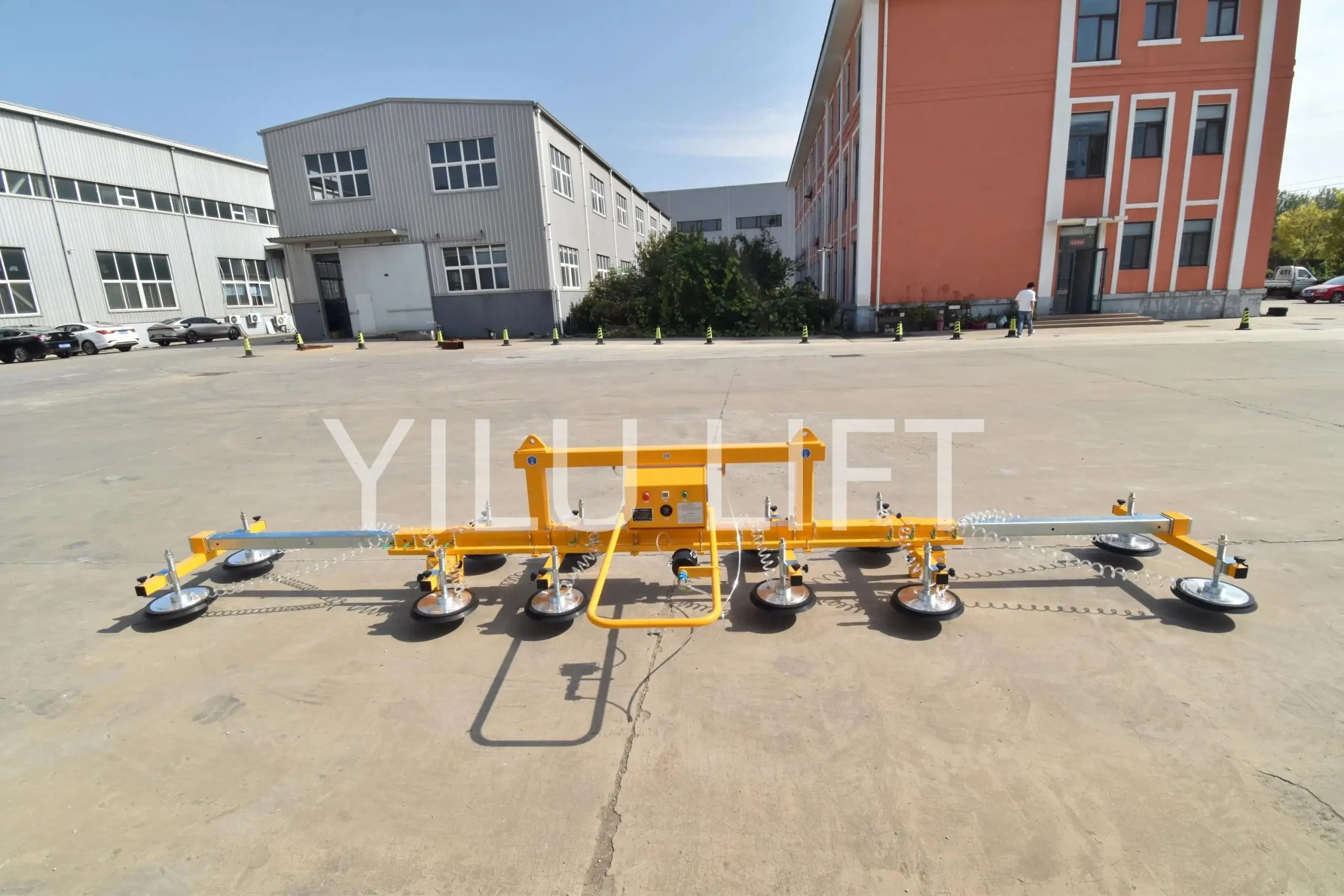
The frame has two jobs. It must keep every active cup on a usable sealing area, and it must support the sheet well enough to limit overhang and bending. Cups grouped too close to the centre can leave a long unsupported edge. A frame that extends too far can become awkward around smaller blanks or nearby machinery.
Start with a plan view of the largest and smallest sheets. Mark holes, edge returns, welds, labels, protective areas, and any zone where a cup cannot sit. Then show the preferred pickup centre. This gives YILU LIFT enough information to propose main-beam length, crossarm positions, cup quantity, and which cups need to be adjustable or isolated for smaller formats.
Treat thin-sheet deflection as a selection input
Thin sheet can curve under its own weight. That movement is not just a handling nuisance. It can change how evenly the cups share the load and may disturb a seal if the support points are poorly placed. Thickness, stiffness, cup spacing, and permissible overhang therefore belong in the same conversation.
There is no sound universal spacing rule for every material and thickness. Send the actual sheet schedule and ask for the proposed cup drawing. If the job includes an unusually thin, wide, or flexible sheet, request a trial with a representative sample before the production setup is released.
Check the Surface Before Selecting the Pad Arrangement
Describe the contact face as it arrives at pickup
A nominally flat metal sheet may reach the lifter with mill oil, dust, scale, rust, moisture, protective film, paint, or a textured finish. Perforated, chequered, ribbed, and laser-cut sheets add further sealing challenges. These conditions should be stated at the enquiry stage, even if only a small share of production uses them.
Do not assume that a pad used on clean steel will behave the same way on every finish. The pad material, sealing lip, cup shape, vacuum source, leakage monitoring, and contact area need to suit the real surface. Film also deserves separate attention: the cup may hold the film while the film’s bond to the metal becomes the weaker interface.
Plan a representative pickup test for difficult surfaces
Photos help, but a sample tells more. For coated, oily, textured, or inconsistent sheets, ask YILU LIFT which pad arrangement is proposed and what sample size is needed for a pickup test. The test should reflect the actual surface, thickness, orientation, and handling sequence.
This step is especially useful for mixed-production plants. It separates sheets that fit one standard configuration from sheets that need another pad type, a revised frame, or a different handling method.
Match the Power Supply to the Handling Cycle
Compare battery freedom with a fixed power route
Battery power keeps the lifter independent of a trailing cable and can suit cranes that move across a wide bay. A fixed electrical supply may fit a repeatable station where the lift path is short and power is already available. The better option depends on shift length, lifts per hour, charging windows, travel distance, and the plant’s voltage.
The current YILU LIFT sheet-metal specification lists battery and AC power choices across the range. Before ordering, confirm the exact voltage, charger, expected cycle pattern, low-power indication, and what the system does if supply power is interrupted. Runtime should be discussed against a real duty cycle rather than treated as one fixed number.
Put controls where the operator can see the pickup
The operator needs a clear view of the cups, sheet edges, nearby workers, and landing point. State whether pick and release controls should be on the lifter, a pendant, or a remote device. Also describe whether rotation or tilting is occasional or part of every cycle. A feature that looks minor on a brochure can save repeated manual repositioning during a busy shift.
Confirm How the Lifter Will Move and Turn the Sheet
Map the complete route from stock to destination. Include pickup height, travel distance, crane hook height, aisle width, machine guards, racks, and the clearance above the landing point. If the sheet feeds a laser cutter or press, show how accurately it must be placed and whether the operator can approach the controls from the preferred side.
Turning a sheet needs more space than lifting it flat. The centre of gravity also has to remain predictable through the movement. Describe the pickup orientation, final orientation, rotation angle, tilt angle, and any point where the sheet passes close to equipment. YILU LIFT can then match the frame and movement functions to the route rather than add features that the plant will not use.
Use the YILU LIFT Range to Build a Shortlist
Le YILU LIFT sheet metal vacuum lifter page lists rated capacities from 500 to 2,000 kg. Published options use 210 or 300 mm cups, with six to twelve cups depending on the configuration. Main-beam choices cover 2,000 to 5,000 mm, while the listed sheet-length applications extend from 3,000 to 6,000 mm.
Those figures make a useful first filter. They do not mean that any sheet within the top weight and length will suit every frame. Minimum sheet dimensions, thickness, surface, cup locations, orientation, crane capacity, and cycle still need to be checked together.
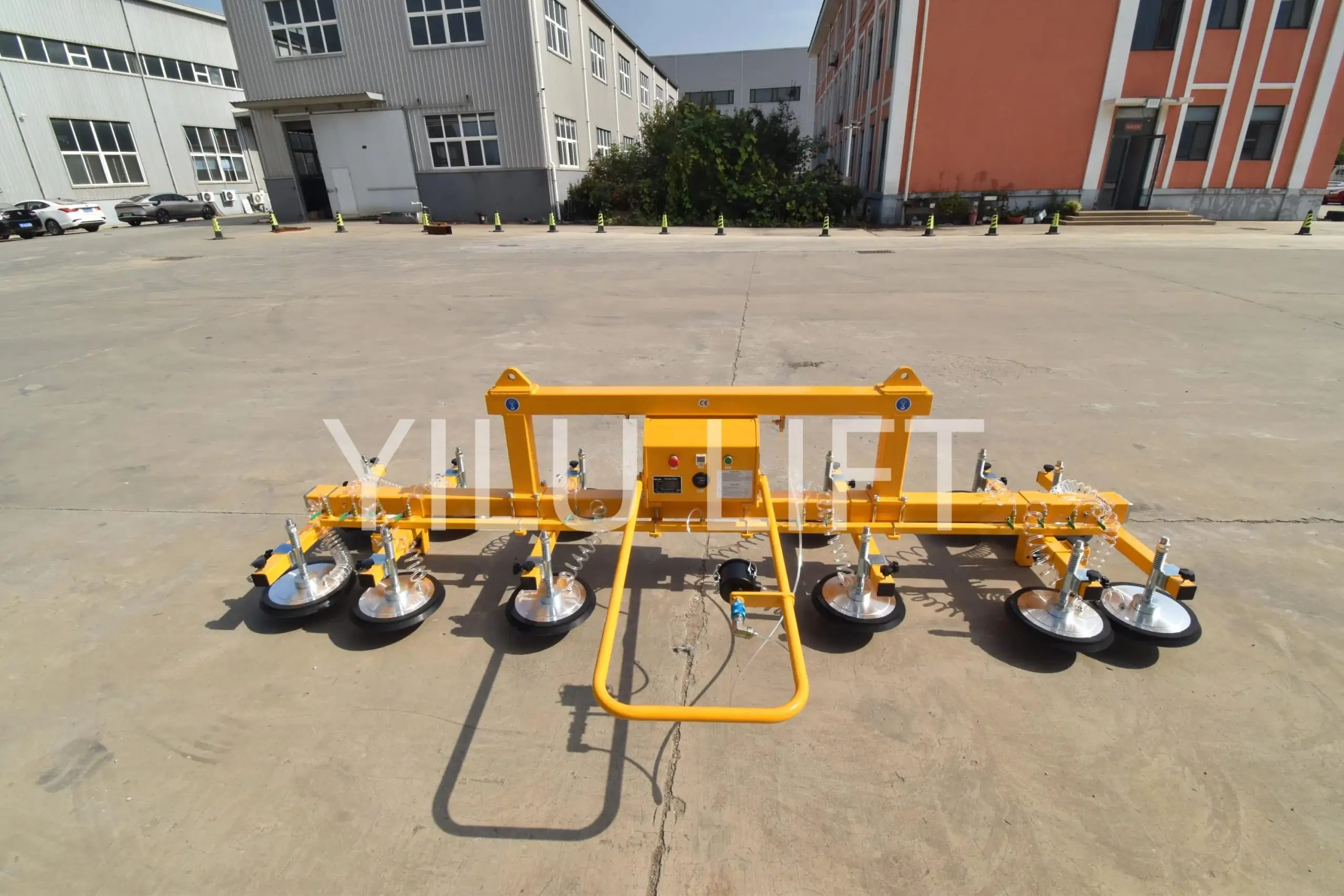
For a clean comparison, ask each quotation to identify the exact model, rated sheet condition, frame dimensions, cup arrangement, lifter self-weight, power package, control method, movement functions, packing size, and operating limits. That makes it much easier to compare like with like.
Send a Sheet-Metal RFQ That Answers the Real Questions
A practical RFQ should include:
- sheet material and surface condition;
- minimum, typical, and maximum length, width, thickness, and weight;
- drawings or photos showing holes, cutouts, ribs, film, or restricted cup areas;
- pickup and landing orientation, including required tilt or rotation;
- lifts per hour, shift length, and available charging time;
- overhead crane, jib crane, or other supporting equipment details;
- pickup height, hook clearance, travel route, and landing accuracy;
- site voltage, destination country, quantity, and required documents.
Attach one layout of the smallest sheet and one of the largest. A marked drawing often answers more than a long email because it shows where the frame may sit and where the cups cannot.
FAQ
Can one sheet metal vacuum lifter handle several plate sizes?
Often, yes, when the frame and cup positions can be adjusted across the required range. The smallest sheet is the key check because every active cup must stay on a suitable contact area. Send both size extremes before a common configuration is selected.
Does a higher rated capacity solve thin-sheet bending?
No. Capacity and support geometry are different questions. A stronger lifter can still use the wrong cup spread for a thin, flexible sheet. Thickness, overhang, cup spacing, and the planned orientation must be reviewed together.
Can a vacuum sheet lifter pick up oily or textured metal?
That depends on the surface, pad design, vacuum system, and approved test conditions. Share a representative sample or clear surface details with YILU LIFT before treating the sheet as compatible.
Turn the Application Data into a Working Configuration
A well-matched lifter starts with the sheet schedule and ends with a frame drawing that fits the real handling route. Send YILU LIFT the material list, smallest and largest sheet drawings, surface details, cycle, crane interface, and required movement. The technical team can use that information to narrow the model, cup layout, power package, and controls before preparing the quotation.
Contact YILU LIFT with the sheet-metal application data to discuss a project-based vacuum lifter configuration.