
Spider Crane Buying Guide 2026: Quality, Customization & Service
Spider Crane Buying Guide 2026: Quality, Customization & Service
Spider Crane Buying Guide 2026: Quality, Customization & Service
A spider crane is usually bought when the site has already ruled out bigger lifting equipment. The access may be too narrow for a truck crane. The floor may already be finished. The lift point may sit inside a building, near glass panels, production equipment, or steel structures that leave little room for error.
For procurement teams, the wrong crane is not just a technical mismatch. It can delay installation, increase labor cost, create commissioning problems, or leave the machine underused after delivery. That is why a spider crane buying decision in 2026 should start with site data, not only rated capacity.
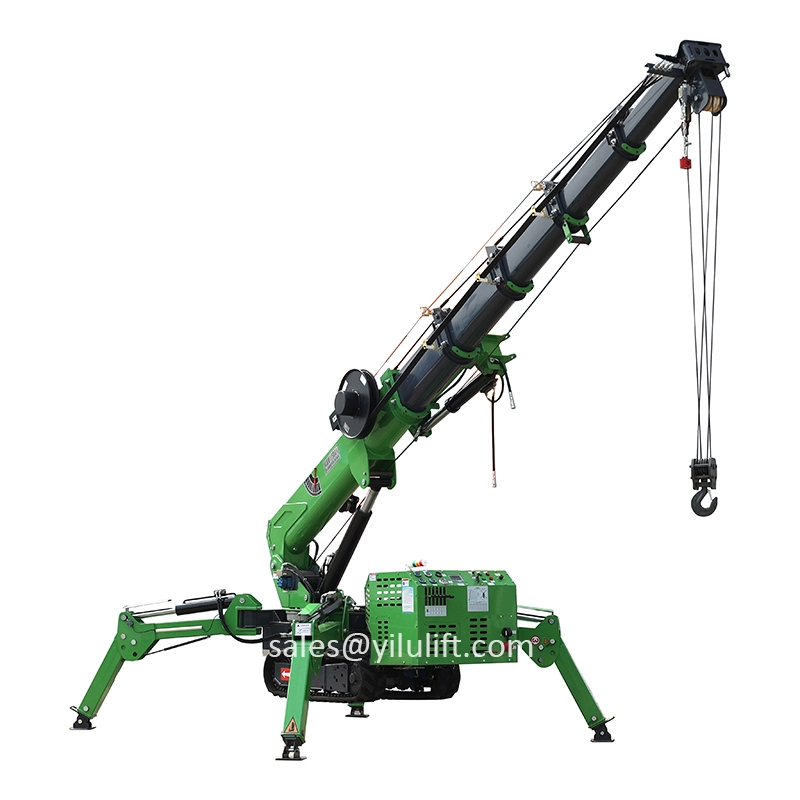
YILU LIFT provides spider crane solutions for construction, glazing, steel installation, indoor equipment handling, and maintenance work. Its product information refers to compact crawler movement, full-slewing operation, electric-assisted configurations, remote control options, customizable voltage, warranty support, and technical service. These details are useful for supplier comparison, but the final model decision still depends on the buyer’s lifting conditions.
Define Project Requirements Before Requesting a Spider Crane Quotation
A common mistake in spider crane procurement is asking for a price based only on tonnage. Rated capacity matters, but it does not tell the full lifting story. Actual capacity changes when the boom extends and the working radius increases. A crane that looks suitable in a catalog may not handle the required load at the required distance.
Before requesting a spider crane price, buyers should prepare the basic job information:
- Load weight and material type
- Required lifting height
- Working radius
- Site entrance size
- Indoor or outdoor working condition
- Ground condition and outrigger space
- Local voltage requirement
- Preferred control method
- Destination and delivery schedule
This information helps the supplier recommend a configuration that fits the job, instead of quoting a model that only matches the rated load.
Verify Load Chart, Site Access, and Control Configuration
Load Chart Before Model Selection
The load chart should be reviewed before price comparison. It shows whether the crane can lift the required load at the required radius. For glass installation, steel placement, or machinery handling, this check is critical because the working area is often fixed by the building layout.
A glazing contractor may need compact movement and fine control inside a lobby. A steel installer may need more reach and stable support outdoors. A rental company may need a balanced model that can serve different jobs without becoming too large for indoor work. These are different buying cases, even if the rated capacity looks similar.
Access and Outrigger Space
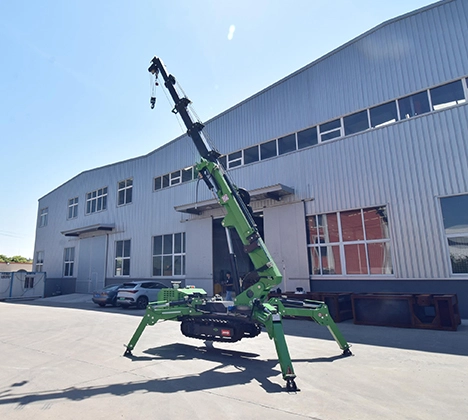
Spider cranes are often selected because they can work in restricted areas, but the machine still needs enough room to stabilize. Body width, travel dimensions, turning space, and outrigger footprint should be checked before order confirmation.
For indoor projects, access review should include door clearance, ramps, floor condition, surface protection, and available setup area. A crane that can lift the load but cannot pass through the entrance or open its outriggers safely is not a workable purchase.
Power and Operator Visibility
Power configuration affects where the crane can work. Electric-assisted operation is more suitable for indoor or semi-enclosed projects where exhaust, noise, and air quality are practical concerns. Diesel or gasoline-supported configurations are often better for outdoor construction, longer shifts, and jobs where site ventilation is not a constraint.
Control method also affects lifting quality. Remote control can allow the operator to stand where the hook, load, and landing point are easier to see. This matters when handling glass, placing machinery near walls, or working around columns and finished surfaces.
Evaluate EHS Requirements for Indoor and Restricted-Space Lifting
For indoor lifting projects, power and control choices are also EHS issues. A crane used in a mall, airport, hospital, hotel, or active factory may need to reduce exhaust exposure, limit noise, and support safer operator positioning. These points are not only about comfort. They affect site approval, worker safety, and the risk of rework.
Stable load handling also has a sustainability angle. Fewer damaged panels, fewer repeated lifts, and fewer site delays mean less material waste and better equipment use. For rental fleets and contractors, long service life, spare parts availability, and technical support also help reduce premature replacement. In equipment procurement, ESG often starts with buying a machine that fits the job and can be maintained properly.
Assess Structural Quality, Safety Systems, and Serviceability
A spider crane often works close to high-value materials or active work areas. Quality should be judged through practical evidence: stability, hydraulic response, safety feedback, serviceability, and documentation.
During quotation review, buyers should check the following points:
|
Procurement Item |
What It Helps Confirm |
|
Load chart |
Capacity at the required working radius |
|
Outrigger layout |
Setup space and site stability |
|
Power configuration |
Fit for indoor or outdoor work |
|
Remote control option |
Operator visibility and handling precision |
|
Voltage setup |
Compatibility with the buyer’s market |
|
Spare parts scope |
Downtime control after delivery |
|
Warranty terms |
Responsibility after shipment |
|
Technical support |
Help with operation and troubleshooting |
Product information from YILU LIFT mentions hydraulic crawler movement, continuous rotation, load moment indication, self-diagnostic support, remote control options, and telescoping limit protection. These points should be confirmed as part of the quotation scope rather than assumed from general product descriptions.
Compare Spider Crane Price by Quotation Scope
Spider crane price is affected by capacity, working radius, power configuration, control system, voltage customization, accessories, order quantity, packaging, delivery time, and trade terms. Price comparison is useful only when the technical scope is clear.
A complete quotation should state whether the following items are included or quoted separately:
- Remote control
- Voltage customization
- Spare parts package
- Attachments or lifting accessories
- Packing method
- Warranty coverage
- Technical documents
- Shipping terms such as FOB, CIF, CFR, or EXW
A lower quotation may lose its advantage if voltage conversion, missing spare parts, unclear warranty terms, or delayed documentation adds cost after delivery. For contractors, downtime can be more expensive than a small price difference. For rental companies, unclear spare parts supply affects fleet availability. For distributors, weak after-sales response can quickly become a local customer problem.
YILU LIFT Support for Specification Review and RFQ Response
YILU LIFT supports spider crane procurement through configuration discussion, quotation review, voltage confirmation, delivery communication, and technical support. This is more useful to B2B buyers than a simple product claim.
For buyers sourcing spider cranes for construction, glazing, steel installation, maintenance, or rental use, the key is to match the machine to the work condition. Load data, radius, access width, lifting height, power requirement, and delivery location should be reviewed before model confirmation. This process reduces specification mismatch and helps make the quotation more accurate.
YILU LIFT’s wider lifting equipment background, including access equipment and material handling solutions, can also be relevant when buyers manage several types of installation or maintenance projects. Still, the spider crane decision should remain focused on job fit, safety, service, and total purchase scope.
Conclusion
A spider crane purchase should be based on working conditions, not only rated capacity. Load weight, working radius, access width, lifting height, power configuration, control method, EHS requirements, customization, spare parts, warranty, and supplier response all affect the real value of the equipment.
For buyers comparing spider crane supplier options in 2026, YILU LIFT can review project data and provide a suitable model recommendation and spider crane price based on actual lifting needs, site access, power requirements, and delivery conditions.
Contact YILU LIFT with your load weight, working radius, site access details, voltage requirement, and destination information to receive a tailored spider crane quotation for your project.
FAQ
Q1: What should be included in a spider crane quotation?
A: A spider crane quotation should clearly include the model configuration, load chart, power setup, voltage requirement, control method, spare parts scope, warranty terms, delivery time, packing method, and trade terms. This makes price comparison more accurate.
Q2: Why should a load chart be reviewed before comparing spider crane price?
A: The load chart shows actual lifting capacity at different working radii. A lower price is not meaningful if the crane cannot lift the required load at the required distance on site.
Q3: How can buyers confirm whether a spider crane fits indoor access limits?
A: Buyers should check machine dimensions, entrance width and height, floor condition, ramp access, turning space, and outrigger footprint. Site access should be confirmed before order placement.
Q4: What is the difference between indoor and outdoor spider crane configuration?
A: Indoor projects usually require more attention to exhaust, noise, floor protection, voltage, and precise control. Outdoor projects may place more emphasis on power, working radius, ground condition, and longer operating shifts.
Q5: How does after-sales support affect spider crane ownership cost?
A: After-sales support affects downtime, spare parts access, maintenance planning, and troubleshooting speed. For contractors, rental companies, and distributors, reliable service can be as important as the initial spider crane price.