
Spider Crane Delivery: What Buyers Should Confirm Before Arrival
Spider Crane Delivery: What Buyers Should Confirm Before Arrival
The spider crane has been ordered. The next question is where the delivery vehicle will stop and how the shipment will be received. “Deliver to site” leaves quite a lot unanswered, particularly when purchasing, a freight forwarder and a site team are handling different parts of the order.
This is a receiving discussion rather than another crane-selection checklist. The useful starting documents are the order confirmation and the shipment details for that order. A product brochure can help identify the machine, but it can’t describe every consignment.
Put a Gate and a Contact Beside the Address
A factory’s postal address might lead to reception while deliveries enter from a road behind the building. On a construction project, the delivery entrance may change as work moves across the site. The carrier needs the entrance being used for this delivery, not simply a location pin for the whole property.
The stopping point deserves a name as well. “At the gate” and “in the loading area” can mean different handovers. Put the agreed location beside the name and number of the receiving contact. Where access needs booking, the record should identify whoever is dealing with that booking.
There is a timing distinction here too. An estimated arrival date isn’t a booked site appointment. The receiving team needs to know which one it has before arranging people around it. If the appointment is still being arranged, leave that visible rather than turning an estimate into a commitment.
Which Weight Is on the Shipping Record?
The YILU LIFT small spider crane series lists product dimensions and net weight. A carrier asking for the packed shipment’s weight is asking a different question.
Suppose purchasing has copied a machine’s net weight from a series table into an email. The carrier then forwards the email to the receiving team. Without the original label, that number could be read as the weight of the whole shipment. Keeping the words “net machine weight” attached to it prevents that ambiguity, but the applicable total shipment weight still has to be obtained.
Dimensions need the same care. Is a figure for the machine itself or for the package as shipped? Label each set and tie it to the ordered model and configuration. Where accessories or parts are shipped separately, the expected package count and the information for those packages belong in the receiving record too.
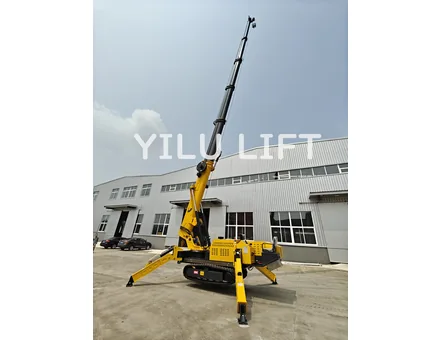
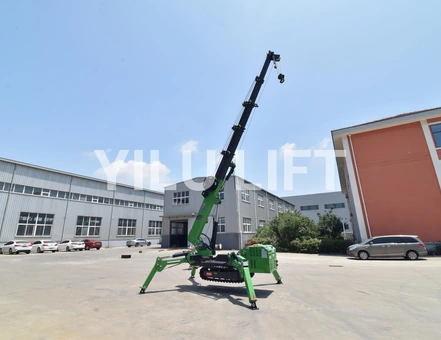
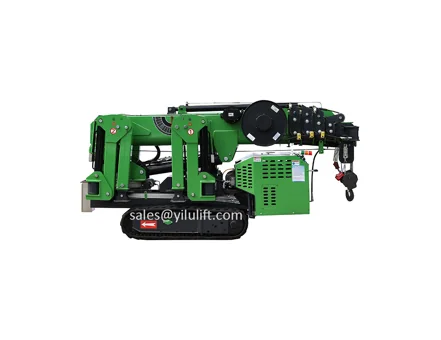
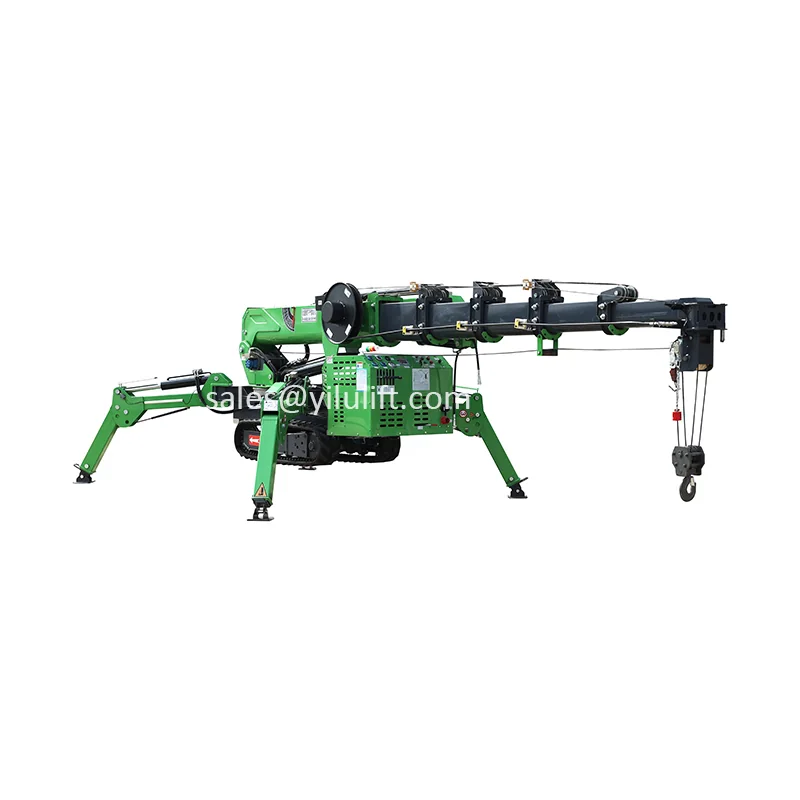
None of this establishes a particular packing arrangement for every YILU LIFT order. That arrangement has to come from the order-specific shipment information. The photographs here show the crane in different configurations; they aren’t photographs of its packing or unloading.
The Vehicle’s Destination May Differ from the Crane’s
The delivery vehicle could stop in a receiving area while the crane is eventually needed elsewhere on the property. Marking both places on a site sketch helps avoid a familiar ambiguity: which of them does “delivery point” mean?
For the carrier, the immediate questions concern the agreed entrance, stopping point and site-access requirements. Whoever coordinates movement after unloading has another route to review. A crane width that fits through one doorway doesn’t describe the turns or the rest of that route.
The guide to mini spider crane selection for confined job sites addresses equipment access and setup in more detail. For this delivery record, give the onward-movement contact a name if a separate move is involved. Suitability for the later lifting job remains a separate assessment.
Resolve “Site to Arrange” Before Dispatch
“Site to arrange unloading” is a loose end until somebody has accepted the job. It might refer to the buyer, the site operator or another appointed party. Which contact is actually coordinating it, and does that person have the current shipment details?
The method, equipment and people for the operation must be determined by the responsible parties for the actual shipment and conditions. An article cannot choose them from a product photograph. Nor does delivery to an address, on its own, establish that unloading is included in the agreement.
Check dependencies while there is still time to resolve them. A receiving crew waiting for a booking, for instance, hasn’t confirmed its attendance. Equipment expected from another party needs an agreed arrangement with that party. Keep these open questions beside the responsible contact rather than burying them in a message chain.
If the package configuration or receiving point changes, send the change to the people planning the operation. A fresh arrival date alone won’t tell them that the information they used has changed.
Give the Receiving Team One Working Record
A short record can sit alongside the purchase correspondence. It needn’t repeat every email. Its purpose is to show the latest agreed details and the answers still outstanding.
|
Detail |
What the receiving team needs |
|
Equipment |
Ordered model and confirmed configuration |
|
Shipment |
Package count; labelled dimensions and weights with their scope |
|
Location |
Agreed handover point, entrance and receiving contact |
|
Timing |
Arrival estimate or agreed appointment, identified accurately |
|
Unloading |
Responsible party, contact and agreed arrangement |
|
Outstanding answers |
Question, person following it up and date needed |
“Requested” and “confirmed” are useful status labels, provided the answer itself is also there. Keep the current record in the order correspondence and share revisions with the affected parties.
Equipment or shipment questions can be raised when discussing a crane delivery with YILU LIFT. Include the model and order reference so the answer concerns the right shipment. The receiving team should then be able to work from that record without searching several inboxes for the final gate number or unloading contact.