
Towable Boom Lifts: Affordable Access Equipment for Contractors
Towable Boom Lifts: Affordable Access Equipment for Contractors
Introduction
In the current building and upkeep industries, ease of movement and quick performance matter a great deal. Contractors are constantly searching for ways to access elevated work areas without the heavy logistics or high costs associated with traditional aerial platforms. This is where towable boom lifts fit right in. These machines combine reach, portability, and cost-effectiveness—three features that define success on multi-site projects.
A towable boom lift basically serves as a raised work platform. It can get pulled simply after a regular truck. That setup lets contractors shift from one work area to the next. They avoid paying for shipping help or holding out for haulage vehicles. The ease of just attaching the lift and heading out turns it into a favored pick for modest to fair-sized building companies dealing with several tasks each day.
YILU LIFT has earned a solid reputation here. It supplies towable boom lifts with 360 degree rotation for contractors that deliver top-level function at much lower buy-in expenses. Models go from small 10 m versions to sturdy 24 m ones. YILU LIFT’s selection shows that affordability doesn’t have to mean compromise.
What Are Towable Boom Lifts and Why Contractors Prefer Them
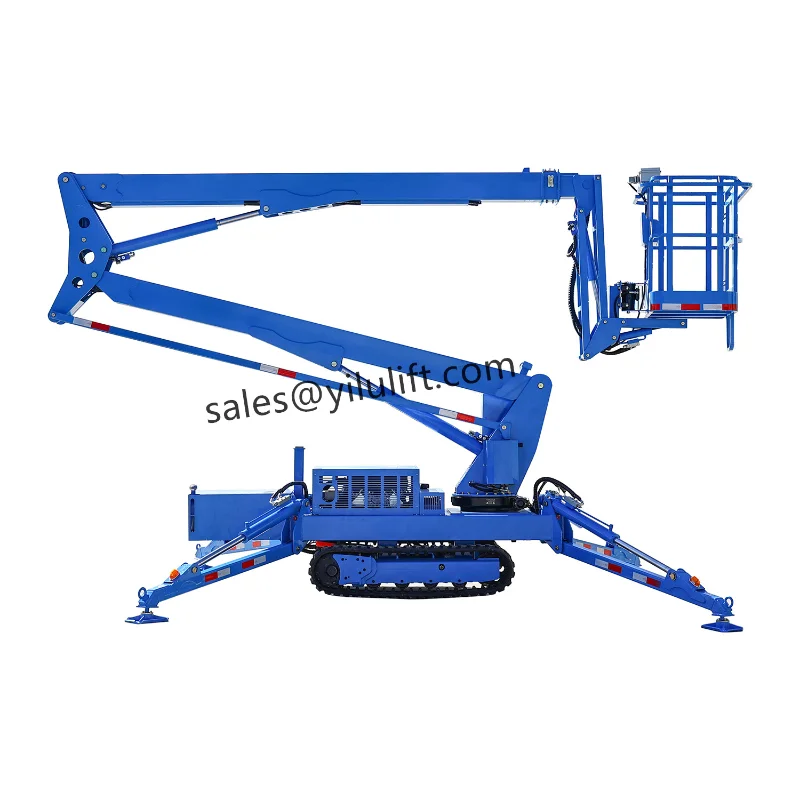
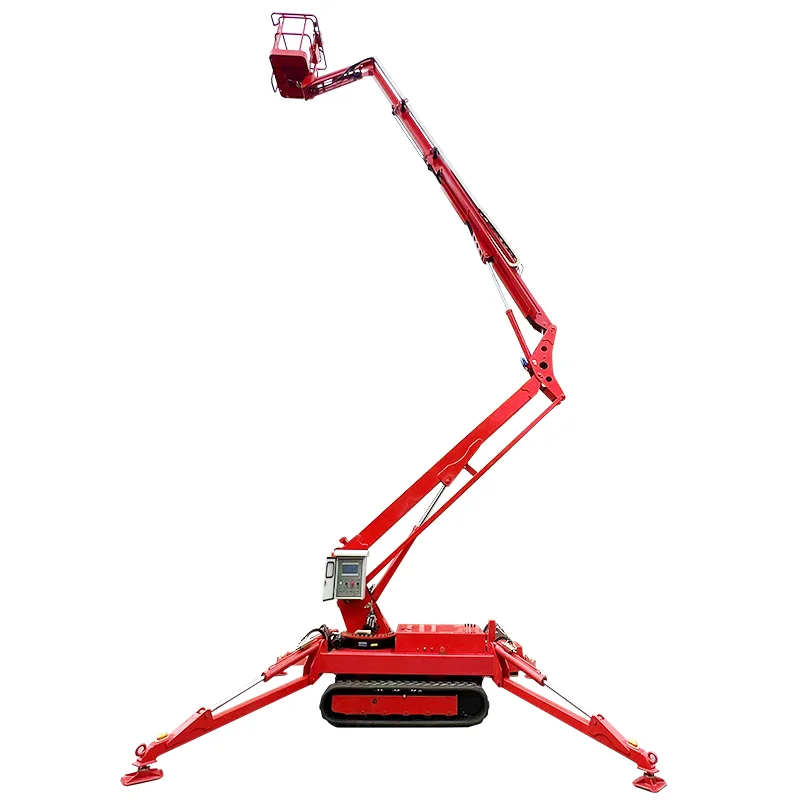
Towable boom lifts, also known as trailer-mounted or tow-behind lifts, act as flexible raised work platforms. They are built for simple moving and fast assembly. Unlike self-propelled or scissor lifts that rely on built-in drives, these units are designed to be hitched to vehicles and legally towed on highways at speeds up to 65 mph.
Their appeal lies in simplicity. Hydraulic outriggers offer fast steadying right at the spot. Meanwhile, their small size fits into tight areas like company lots or sheds. When set against bulkier self-moving booms, they cut down on shipping charges and gas use. Those cuts prove valuable during handling of numerous jobs at once. For instance, in a busy urban project with uneven ground, these lifts save time by skipping extra truck rentals that often add up to thousands in fees per month.
Sectors gaining from these tools cover building, upkeep of buildings, tree work, sign placing, and city upkeep. Take an electrician fixing lights along various neighborhoods. That worker can handle more area each day with a tow-behind lift. This beats planning repeated shipments of self-moving gear, which might delay schedules by hours in real field scenarios.
Core Benefits of Towable Boom Lifts for Contractors
The main advantage is cost efficiency. YILU LIFT’s towable boom lifts for contractors usually run two to three times cheaper than similar Western makes. They hold to strict CE-approved safety rules at the same time.
In terms of running, a single worker can prepare it in just minutes. Automatic leveling outriggers help with that. Torsion-axle suspension keeps tire grip even on bumpy ground. This feature minimizes downtime between jobs—a crucial factor for productivity-driven contractors.
Output gets a boost from complete 360° rotation on the swivel base and basket. Operators can hit tricky spots without shifting the main rig over and over. Plus, plenty of versions handle heights from 12 m to 24 m. They carry up to 300 kg in the basket. That suits hauling gear and supplies up high without risk. In practice, like during a signage job on a windy site, this rotation lets teams finish setups 20% quicker based on common industry reports.
Return on investment comes not only from faster project turnaround but also from reduced rental dependency and strong resale value after years of use. Fleet operators appreciate that these lifts retain market demand due to their mobility and low maintenance requirements compared with heavier diesel booms or articulated trucks. Data from fleet users shows these hold 70% of value after five years, far better than bulkier options.
Key Features of YILU LIFT Towable Boom Lifts (10–24 m Range)
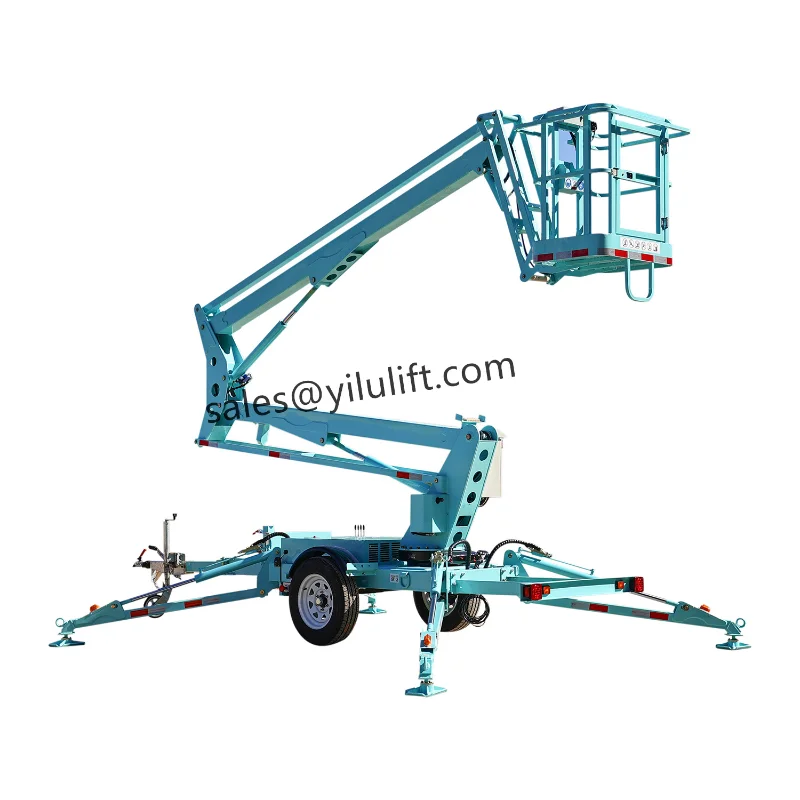
The YILU LIFT TBL series includes models from TBL-12A to TBL-24A. It covers raise levels from 10 m to 22 m. Working heights reach up to 24 m. Every version uses a stretchable arm setup. It pairs with steady 359°–360° turning for best bend around hurdles such as wall fronts or branches.
Hydraulic outriggers hold steady while in use. They fold back smoothly during transport. A fresh screen-based control board mixes slope guards and weight monitors for safe running. This matches the idea behind Anti-overload safety protection device protects the equipment from exceeding the rated load. Other setups feature valves that block fluid leaks, drop controls for outages, and auto stops during pulls. All this points straight to worker protection in every situation.
Energy choices go from DC battery setups good for inside spots to AC grid power or diesel/gas motors for outside areas. Hybrid setups give adaptable power handling in city or far-off places. Chassis weights vary between roughly 1,950 kg and 5,000 kg depending on model size yet remain light enough for standard vehicle towing classes worldwide.Basket sizes average 1.2 × 0.8 m. That gives room for two staff and items without hurting steadiness or handling. Field tests in varied climates confirm these weights allow towing with mid-range trucks, avoiding the need for special licenses in most regions.
|
Model |
Working Height |
Platform Capacity |
Rotation |
Weight (kg) |
|
TBL-12A |
12 m |
200 kg |
359° |
~1,950 |
|
TBL-16A |
16 m |
230 kg |
360° |
~2,800 |
|
TBL-20A |
20 m |
270 kg |
360° |
~3,600 |
|
TBL-24A |
24 m |
300 kg |
Continuous |
~5,000 |
These specifications show how YILU LIFT matches extension with easy-to-pull mass. Such factors matter a lot when picking tool groups for area-based work.
Choosing the Right Towable Boom Lift for Your Contracting Business
Picking the best version begins with linking height needs to usual work types. Wall painters commonly see an 18 m span as perfect. Electric fitters might choose longer reach up to 24 m for post lights. In one case from a mid-sized firm, switching to a 20 m model cut ladder use by 50% on high-rise jobs.
Power source decisions depend on environment. Battery-electric kinds do well inside where fumes count. Diesel types perform best outside where lasting power leads.
Budget-wise, buyers should evaluate total cost of ownership beyond purchase price. Think about check-up timings, piece supply, skill training, and sell-off patterns. Experience from long-term users indicates that factoring in these can save up to 30% over a three-year cycle.
YILU LIFT distinguishes itself through globally recognized CE certification standards combined with accessible spare parts networks and proven reliability under demanding contractor schedules.
Real-World Applications for Construction Contractors
Towable boom lifts blend smoothly into lots of everyday building routines:
- Outside coating and wall fixing that needs straight-up access on tall structures.
- Light post setup and fixes in town setup plans.
- Glass wipe services for business wall fronts.
- Branch cutting near lot areas or planned grounds.
- Urgent fix responses where fast rollout saves time lost on heavy gear moving.
Each scenario benefits from quick towing capability—contractors can finish one job by noon and start another miles away before evening.
Safety, Maintenance, and Long-Term Ownership Tips
Worker skill building stays vital. Sticking to ANSI/OSHA rules makes sure of safe handling over different lands and skies.
Routine inspections should focus on hydraulic integrity—checking hoses, valves, oil levels—and verifying outrigger alignment before every shift. In rainy seasons, extra hose scans prevent 80% of common leaks, per service logs.
Emergency descending device: in case of sudden power failure, opening the emergency descending device can lower the equipment to a safe height. Steady checks of that part build trust in actual crises.
Group leaders ought to follow check timings as per maker advice. At the same time, they can use guarantee protection from YILU LIFT’s B2B aid group. Owners often extend machine life by 25% through these routine steps.
Conclusion
Towable boom lifts offer contractors a practical and cost-effective solution for elevated access needs. YILU LIFT’s affordable towable boom lifts for contractors combine reliable performance, easy towing, and strong safety features to support efficient daily operations. With models featuring 360-degree rotation and stable hydraulic systems, these towable boom lifts help construction teams complete projects faster while keeping costs under control.
Businesses looking for dependable access equipment can contact the YILU LIFT team for detailed product information, tailored recommendations, and competitive quotes.
FAQ
Q1: What is the typical working height range for towable boom lifts used by contractors?
A: Most models designed for construction professionals offer working heights between 12 m and 24 m depending on configuration—suitable for both residential renovations and mid-rise commercial tasks.
Q2: How do hydraulic outriggers and torsion axles improve stability on uneven construction sites?
A: Hydraulic outriggers automatically level the unit before elevation begins while torsion axles maintain consistent wheel contact across rough terrain—reducing sway during operation.
Q3: What power options are available for towable boom lifts and how do they affect operating costs?
A: Units may run on DC batteries, AC power supply, diesel engines, gas engines or hybrids; electric versions cut fuel expenses while combustion types extend runtime outdoors.
Q4: What factors should contractors evaluate when comparing purchase versus rental of towable boom lifts?
A: Consider project frequency, transportation logistics savings from towing capability, expected lifespan relative to workload intensity, plus resale potential after depreciation cycles.
Q5: How does platform rotation and 360-degree turntable capability impact productivity in multi-site contracting work?
A: Continuous rotation eliminates repositioning delays around obstacles like building corners or trees—allowing smoother workflow transitions between tasks throughout long project days.
-

Rough Terrain Scissor Lifts
2026-04-23 -
Complete Maintenance Checklist
2026-04-23 -
-