
Vacuum Lift for Plywood: Will It Grip Your Boards?
Vacuum Lift for Plywood: Will It Grip Your Boards?
A vacuum lift for plywood needs to suit the board face, the sheet dimensions and the move between workstations. Weight matters, but it does not answer the first question: can the proposed cups and vacuum system hold this particular board under the planned working conditions?
That question is worth settling before comparing lifting capacities. A product photograph shows the frame and cup layout. It cannot establish how a raw, coated or film-faced board will behave. For a useful enquiry, the starting point is the plywood actually being handled, followed by the route it needs to take.
Start with the Board Face
“Plywood” identifies the material, but leaves the contact surface open to interpretation. Is the cup going onto an unfinished face, a coating or a film? Does the same finish appear on both sides? Which side faces upwards when the sheet reaches the lifting station?
These are practical distinctions. Porosity can reduce a vacuum attachment’s lifting capacity, while loose material at the contact surface can cause leaks. A photograph of the board face helps explain the application, though a photograph alone is not proof of a suitable seal.
The useful description is specific: the board type, its surface treatment and the face available for pick-up. Where a coating or film is present, include that information rather than describing the sheet simply as smooth. A smooth-looking face should still be assessed with the proposed equipment.
Consider a workshop handling unfinished sheets and film-faced sheets on different orders. Both jobs may appear to need the same lifting weight. Even so, suitability needs checking for each actual surface. A result for one board should not quietly become approval for every plywood grade that comes through the workshop.
For the buyer, this changes the first conversation. Instead of asking only for a plywood vacuum lift of a certain capacity, describe what the cups will touch. That gives YILU LIFT a clearer basis for discussing the application.
Give the Lifter the Full Sheet Dimensions
The next details are length, width, thickness and weight. Include the smallest and largest sheets if the equipment will handle a range. Two sheets with similar weights can present very different layouts for the frame and its contact points.
Thin, flexible sheets deserve particular attention. Excessive overhang can allow a sheet to peel away from a suction pad. The question is therefore more useful when phrased around the complete sheet: where will the pads sit, and how much material extends beyond those positions?
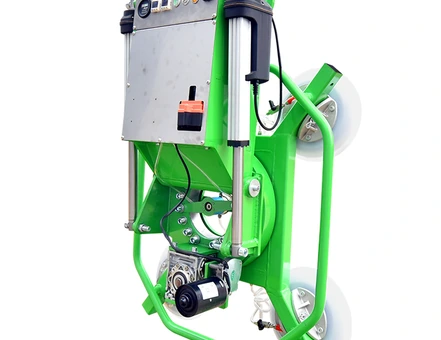
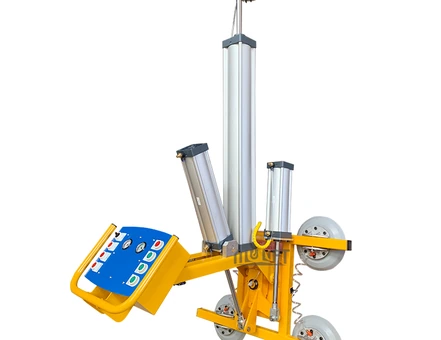
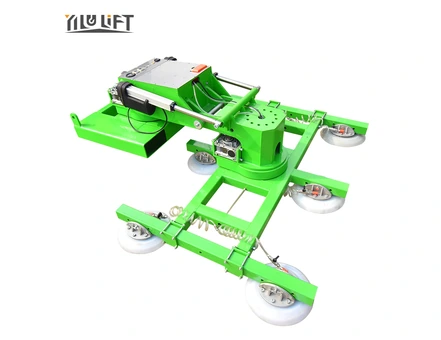
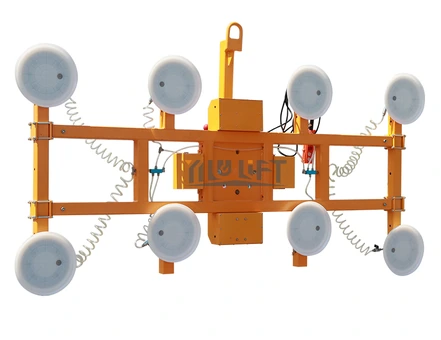
YILU LIFT’s H-frame suction-cup arrangement allows cup positions to be adjusted for glass of different shapes and sizes. For a plywood enquiry, that provides a useful starting point for discussing frame layout. The board surface and proposed configuration still need their own suitability assessment.
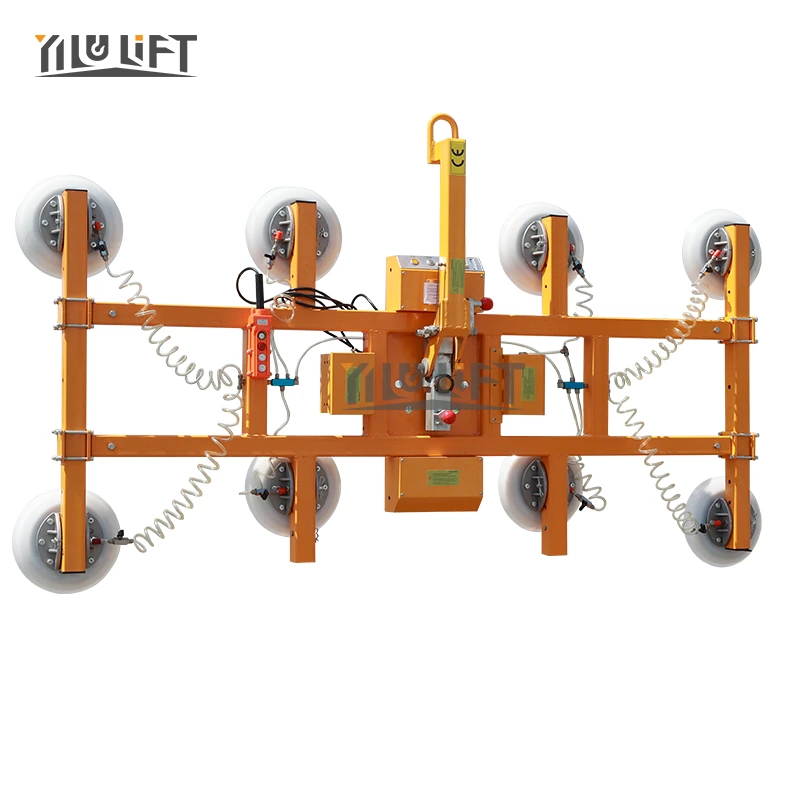
A simple sheet drawing can make this discussion much easier. It can show the full outline, the intended contact face and any areas where a cup cannot sit. Add photographs if the sheet bends noticeably during handling. There is no need to estimate a universal allowable overhang; the relevant limit belongs to the particular board and lifting arrangement.
The same care applies when changing sheet sizes. A layout discussed for one format is not automatically the right arrangement for a longer or narrower board. Keeping the size range visible in the enquiry helps prevent that assumption.
Match the Pick-Up and Set-Down Positions
A board lying flat on a stack and a board arriving upright at a station are different handling tasks. Before choosing a configuration, describe both ends of the move and anything that happens between them.
For example, a proposed transfer from a stack to a saw table might keep the sheet flat throughout. Another job might require a change of orientation before set-down. These are illustrative situations, rather than evidence that a particular lifter suits either job.
The published YILU H-frame table lists manual turning/rotation as standard and electric turning/rotation as an option. That distinction belongs in the configuration discussion. An electrically powered vacuum system does not, by itself, describe how every movement will be made.
Useful station details include the pick-up height, receiving height, space around the board and the lifting equipment intended to carry the attachment. Where the job also involves glass, YILU LIFT’s guide to glass vacuum lifter selection provides related reading for that material. Its glass guidance should remain separate from the plywood assessment.
The enquiry does not need to read like a finished engineering specification. A photograph of each station and a short explanation of the movement can expose questions that a capacity figure leaves unanswered.
Check the Actual Board with the Proposed Configuration
Compatibility should be tied to a named board and an identified equipment arrangement. “Suitable for panels” is too broad to settle a purchase decision when the actual job involves a particular plywood surface and sheet size.
Assessment needs to cover the complete assembly, the material surface and the expected movement conditions. A pad considered on its own cannot represent the whole lifting system. Likewise, a successful flat pick-up does not answer every question about a move that includes changing the sheet’s orientation.
Before ordering, the buyer and YILU LIFT should establish what suitability checks are needed for the proposed application and how they will be confirmed. Any agreed assessment should identify the board type, contact face, dimensions, weight, cup arrangement and intended movement. This keeps the discussion connected to the equipment being considered.
Glass-rated capacity should not be transferred to plywood simply because the same frame appears in the enquiry. Nor should a favourable result on a coated sample be treated as a result for an unfinished board. The scope of the confirmation matters as much as the result.
An early enquiry can leave some details open. An order needs a clearer shared description of the load and the job. That is where the surface photographs, sheet drawing and station information earn their place.
What to Send YILU LIFT
YILU LIFT asks for material, size and weight when discussing a proposal. For plywood, a useful enquiry expands those basics just enough to show the actual handling problem:
- Board type, surface finish and the face available for cup contact.
- Sheet length, width, thickness and weight, including the intended size range.
- Clear photographs of the contact face and the complete sheet.
- Pick-up and set-down positions, with any required change of orientation.
- Available lifting equipment and photographs or a sketch of the workstations.
If the board specification is still being settled, identify that point in the enquiry. A preliminary discussion can then focus on the available information, with the remaining conditions kept visible.
To discuss the board and handling arrangement with YILU LIFT, start with the material details and the move itself. A useful proposal needs to account for both: the face that the cups will hold and the job the board must complete.