
Electric Towable Boom Lift for Versatile B2B Maintenance & Installations
Electric Towable Boom Lift for Versatile B2B Maintenance & Installations
Introduction
The field of industrial access equipment has witnessed significant development over the last ten years, largely driven by advancements in electric equipment. One good example of such equipment is the electric towable boom lift that combines ease of transportation, silent operation, and maneuverability of use in any B2B maintenance or installation projects. These units contrast with the diesel-powered or self-propelled lifts, because they can be moved around easily without making much noise.
With many industries turning to environmentally-friendly and efficient access platforms, companies such as YILU LIFT have positioned themselves as reliable partners in advanced access solutions. Their electric boom lifts have been designed to provide excellent stability and efficiency regardless of the type of environment in which they operate.
What Is an Electric Towable Boom Lift?
Definition and Core Components
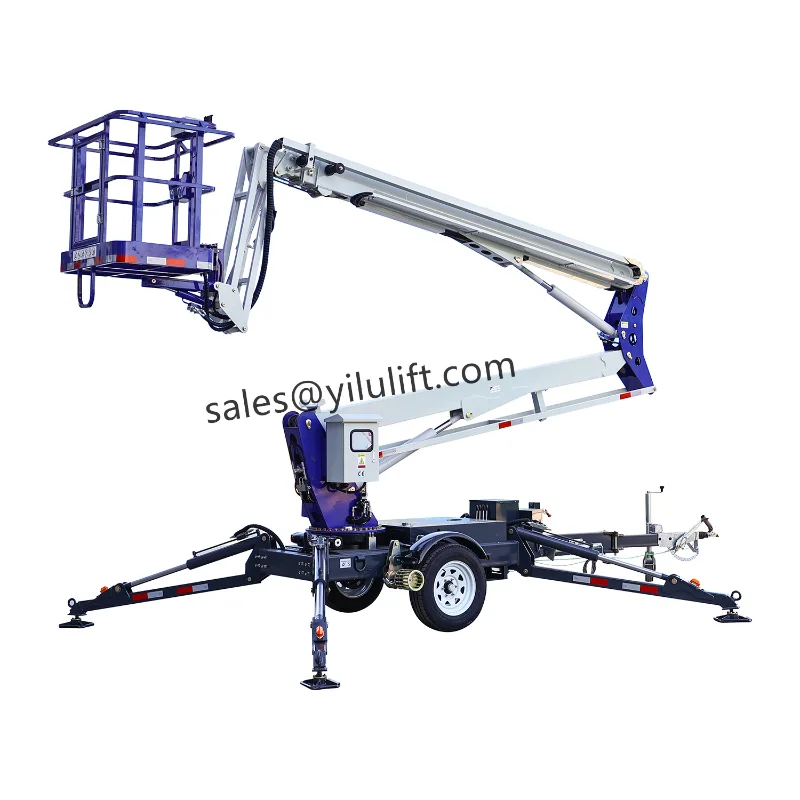
A towable boom lift that is electric in nature is actually a boom lift that utilizes hydraulic power but mounted on a trailer-type chassis. Its “electric” identity is derived from the fact that it uses battery-operated drives and not diesel-powered ones. They are especially suited for locations indoors or enclosed environments due to their low emissions.
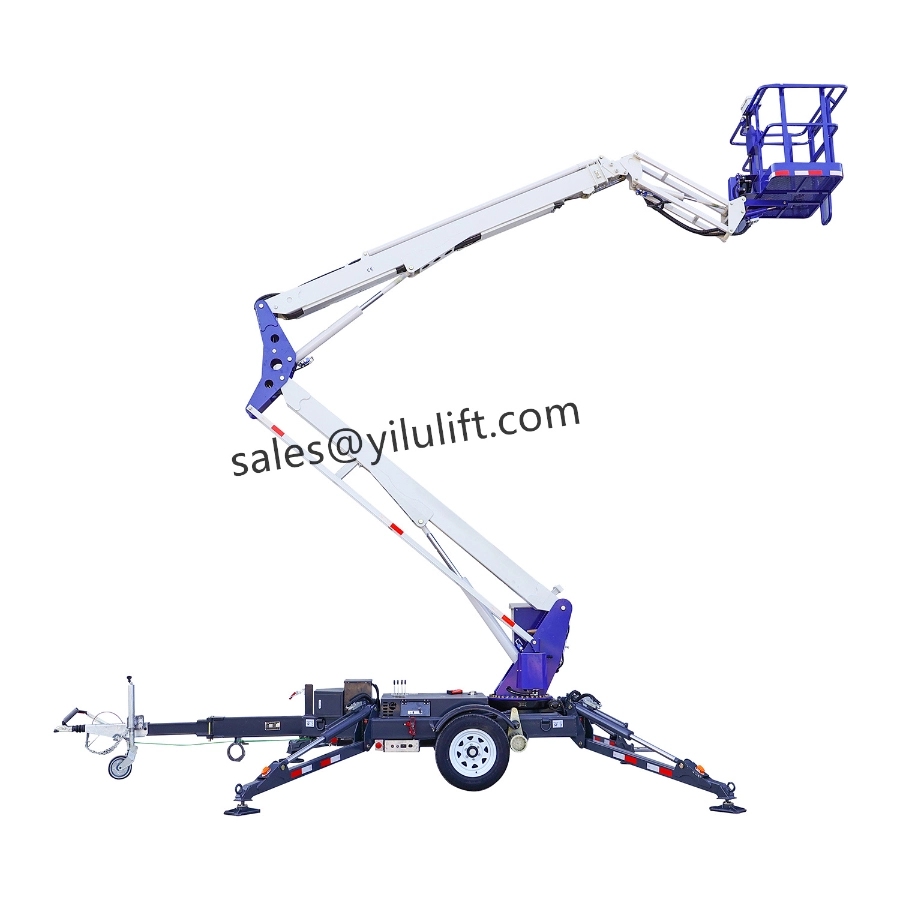
Key components include:
- Towable chassis: Lightweight, easy to hitch to standard trucks or vans.
- Electric power pack: Batteries that drive hydraulic systems for vertical and horizontal movement.
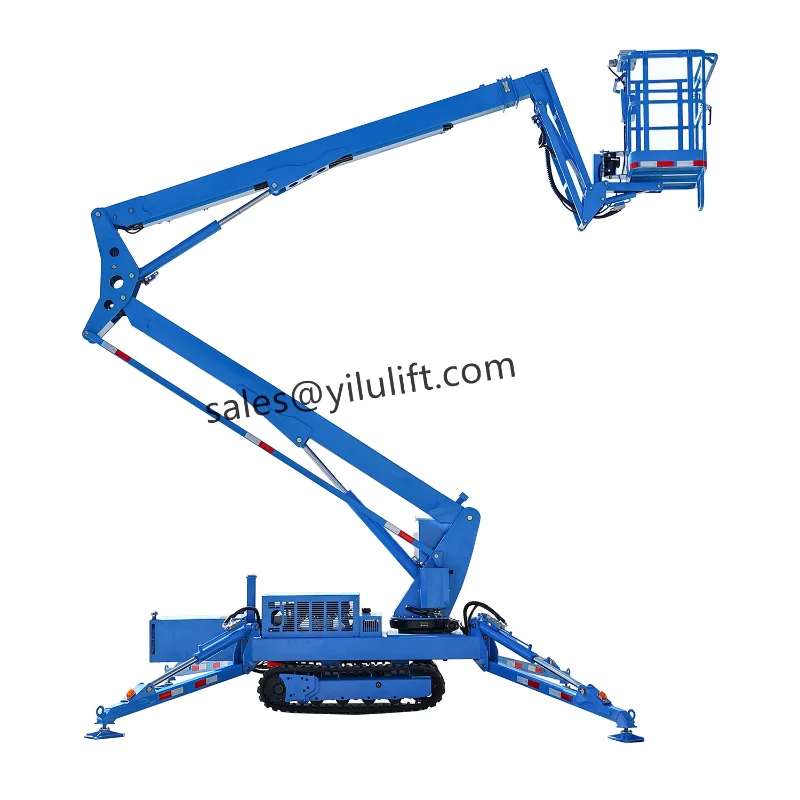
- Articulating boom: Flexible movement to reach difficult angles.
- Platform basket: Safe workspace with guardrails for technicians.
- Outriggers/Stabilizers: Ensure balance on uneven surfaces.
These lifts are designed to balance portability with professional-grade capability, giving companies a versatile solution without the overhead of heavy transport logistics.
How It Works in a Professional Context
Electric towable booms utilize either hydraulic or full electric boom articulation systems. This makes it easy for the operator to correctly position the lift at varying heights to access the overhead lighting, roof, or equipment. Battery power provides enough operational time to cover long projects without need for recharge, and silent operation ensures uninterrupted operation even at night or indoors.
Key Benefits of Electric Towable Boom Lifts for B2B
Zero Emissions & Quiet Operation
Electric models release no exhaust, so they meet current environmental rules. Their low noise level helps in places like hospitals, schools, or office buildings where diesel units would create issues.
Portability and Easy Deployment
A clear advantage of the towable boom lift is its mobility. It travels behind standard vehicles and does not need heavy trailers or special permits. Setup stays quick thanks to automated outriggers and straightforward controls. This cuts labor time and keeps projects moving.
Versatile Access for Maintenance Tasks
These lifts are widely employed in various tasks like replacing light bulbs, fixing air conditioning, installing signs, and cleaning the exterior surface of buildings. This is a very safe method as it offers a work platform that has guard rails.
Lower Operational Costs
Compared with engine-powered models, electric units cut fuel costs and reduce maintenance stops. Their simpler drive systems also make operator training easier, which keeps long-term expenses down.
Applications of Electric Towable Boom Lifts
Industrial Maintenance
Factories often need overhead access for roof checks or equipment service. The electric boom lift supplies safe elevation without adding exhaust into controlled spaces. Its hydraulic oil filtration alarm alerts crews when oil needs changing, which supports steady operation during industrial work.
Facility Installation Projects
Teams working on lighting upgrades or electrical installs gain from the compact size of towable lifts. They fit through tight areas such as parking lots or indoor atriums and still deliver precise vertical reach for install crews.
Construction & Property Management
These lifts are used by property managers for cleaning, painting, or even banner and light work. This is because of the mobility of the electric towable platform, which allows it to be moved easily from place to place without heavy logistics.
Electric Towable vs Traditional Boom Lifts
|
Feature |
Towable Boom Lift |
Traditional Self-Propelled Boom Lift |
|
Power Source |
AC-electric/Battery/Diesel/Gasoline AC+DC/Diesel/Gasoline DC+Diesel/Gasoline |
Diesel/Electric Hybrid |
|
Portability |
High (Towable) |
Limited (Requires Transport Truck) |
|
Reach |
Moderate |
Extended |
|
Cost |
Lower Acquisition & Maintenance |
Higher Initial & Upkeep Costs |
|
Ideal Use Case |
Multi-site Maintenance |
Heavy Industrial Work |
Towable Boom Lift — B2B Benefits
The lighter build allows storage in smaller yards or warehouses. For firms that run several smaller projects each week, this leads to quicker turnaround.
Traditional Self-Propelled Boom Lift
These units give greater reach and load capacity for large construction sites. They also require more spending on maintenance and operator certification.
How to Choose the Right Type
Choice depends on project size, how often the lift will be used, site limits such as narrow entrances, budget, and operator experience.
Safety Standards and Best Practices
Operator Training and Certification
All operators must follow ANSI/OSHA rules for aerial work platforms. Proper training covers control systems, load charts, emergency steps, and safe movement practices.
On-Site Safety Checks
Pre-use checks should confirm hydraulic condition, battery charge, tire wear, and outrigger placement on solid ground before any lift begins. Load limits must stay in view to avoid overload risks. Anti-overload safety protection devices guard against exceeding rated capacity.
Why YILU LIFT Is Your Trusted Partner
Product Quality and Innovation
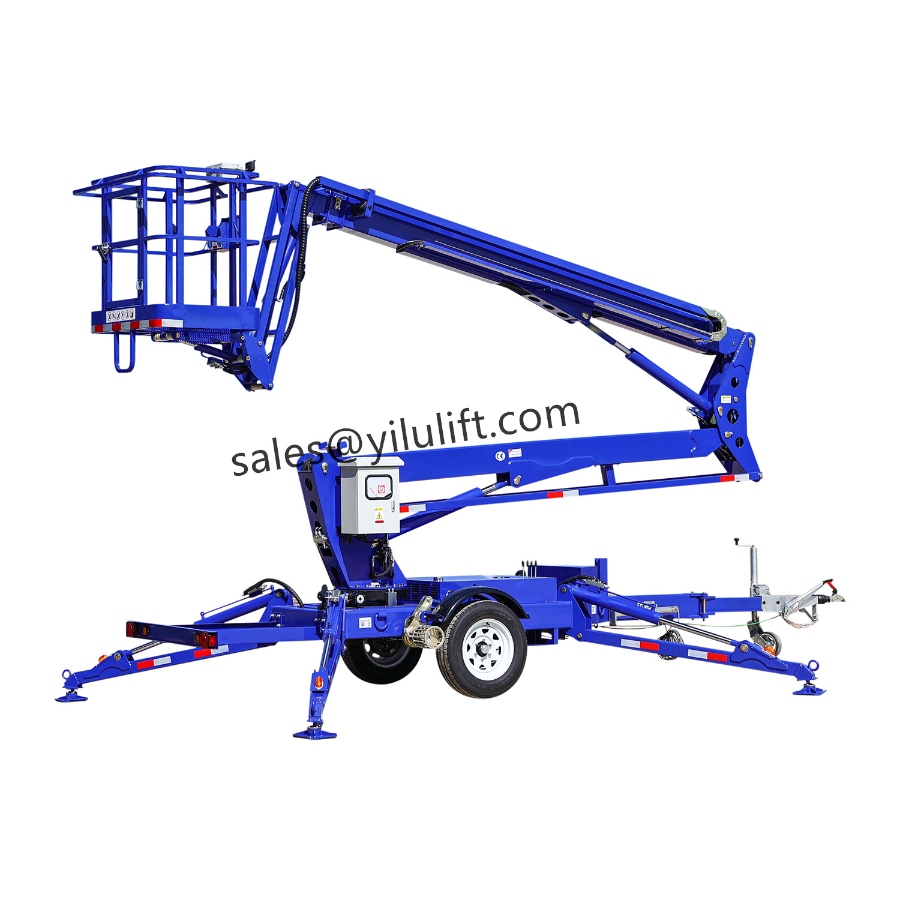
YILU LIFT builds advanced features into every electric towable boom lift. The self-leveling basket with anti-pinch design and automatic hydraulic outriggers show the focus on operator safety and steady performance. Each unit passes strict quality checks that match international standards before leaving the plant.
Service & Support for B2B Customers
The company offers full after-sales help that includes spare parts supply, technical advice, operator training programs, and warranty terms suited to business clients who need reliable uptime.
ROI & Total Cost of Ownership
Buying an electric towable model lowers fuel use and extends part life because there are fewer moving pieces than in combustion engines. This adds up to clear savings over time.
Conclusion
The electric towable boom lift has become a key tool for modern B2B maintenance access work that needs efficiency along with strong safety and environmental standards. Zero-emission performance and easy transport give real value across facility management and light construction projects.
Organizations that want durable equipment backed by responsive support can turn to YILU LIFT for solutions built around actual job needs. These choices help teams stay productive while keeping operating costs in check. Contact YILU LIFT today to review models that match specific maintenance requirements.
FAQs
Q1: What is the maximum working height of an electric towable boom lift?
A: Working heights usually fall between 12 to 26 meters (approximately 40 to 86 feet), depending on the model from makers such as YILU LIFT.
Q2: Can electric towable boom lifts be used indoors and outdoors?
A: Yes. Zero emissions and quiet running let them handle both factory interiors and outdoor construction areas.
Q3: What is the difference between a towable boom lift and a self-propelled one?
A: A towable boom lift weighs less, moves about more easily from site to site, and costs less money up front and for maintenance than a self-propelled unit. Self-propelled models reach farther but require more investment.
Q4: What safety standards should operators follow for these machines?
A: Operators should follow OSHA/ANSI guidelines for aerial work platforms. This covers pre-use checks on load limits and outrigger stability.
Q5: What are common maintenance requirements?
A: Regular battery checks, hydraulic system reviews using the built-in filtration alarm, lubrication of joints, and periodic inspection of electrical wiring help keep performance steady over the service life.